About this place
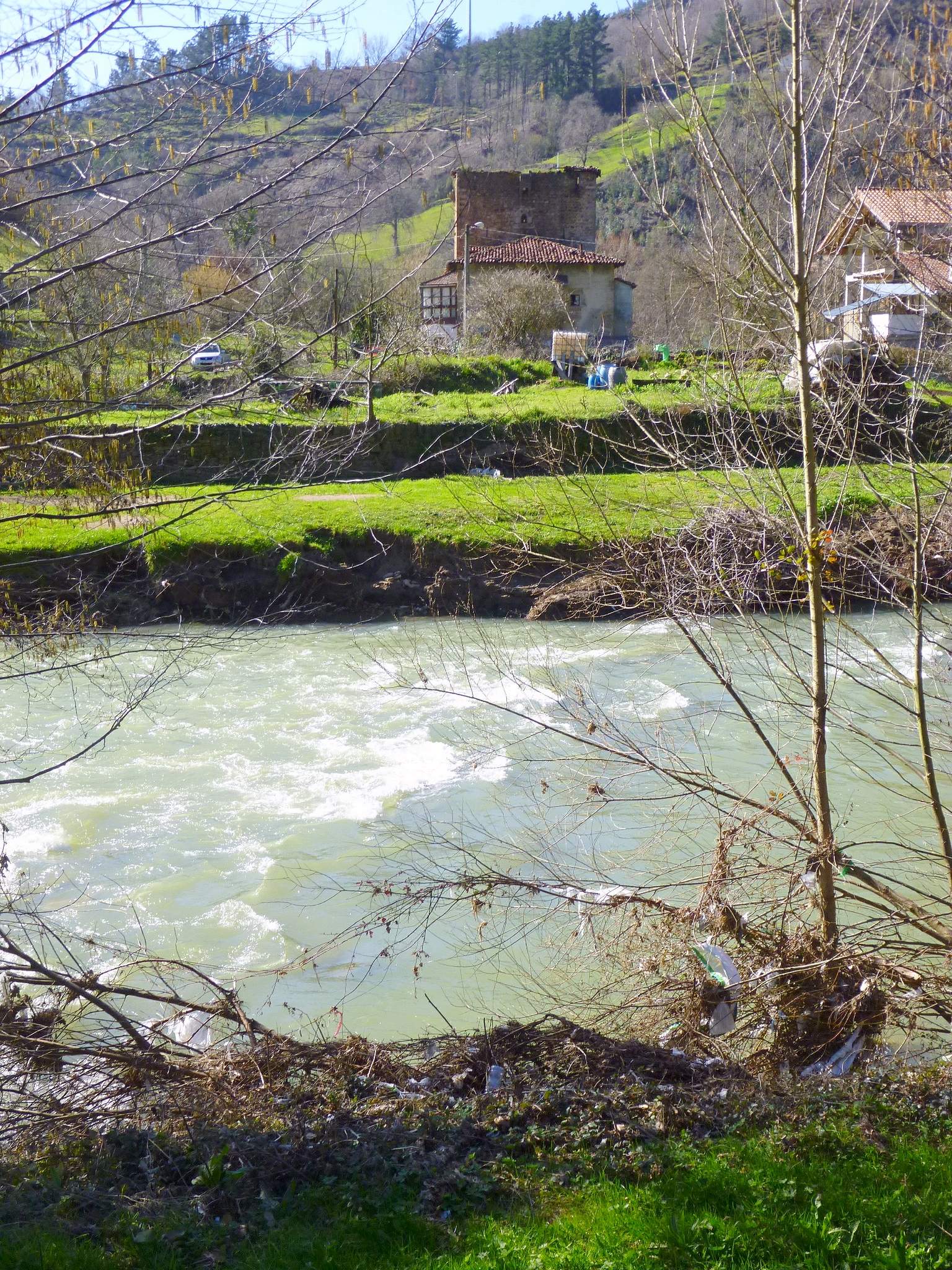
Molino de Olabarrieta is the surviving remains of an old water-powered industrial site on the Barbadun River, in Sopuerta, in Biscay, in the Basque Country.
Where is Molino de Olabarrieta located?
The site sits in the Las Barrietas (Olabarrieta) area of Sopuerta, on a stretch of the Barbadun valley that has been shaped by water-driven mills and ironworks for centuries. It forms part of the broader Barbadun River Basin Industrial Landscape, which also spans the neighboring municipalities of Artzentales, Galdames, and Muskiz — a region where river water once drove generation after generation of ironworking and milling machinery.
What is the history behind the site?
Before it became a mill, Olabarrieta was home to a ferrería, a traditional Basque water-powered forge that produced iron. Records show iron was already being produced here by 1550. Operations halted around the mid-17th century but resumed in 1690. In the second half of the 18th century, the facility was converted into a fandería, a plant equipped with water-driven rollers used to finish and cut iron bars. This process produced higher-quality iron than traditional forging while using less charcoal and manual labor. The fandería, however, had a short working life — production stopped in the early 19th century, and the site's water infrastructure was later put to milling use, which is reflected in the name it carries today.
What has survived to the present day?
Despite weathering and the gradual decay of its stone walls, the complex remains legible enough to trace its original layout. Visible remains include workshop areas, storage spaces, and buildings once used to store the charcoal needed for smelting iron. The centerpiece is the hydraulic system: a straight, solidly built masonry dam positioned upstream of an old railway bridge, along with a well-preserved channel that carried water to the machinery. Buttresses reinforce the walls of several structures, and vegetation has steadily spread across the ruins, giving the site the feel of a rediscovered industrial relic. The mill and its hydraulic infrastructure are listed in Ondarea, the Basque Cultural Heritage information system, as protected built and archaeological heritage.
Who is this site for?
Molino de Olabarrieta appeals mainly to visitors interested in Biscay's industrial heritage and to hikers exploring the Barbadun valley. It is not a conventional tourist attraction with visitor facilities — it is a set of field remains from the old iron industry, best combined with a visit to other stops along the same heritage trail, such as the still-operating El Pobal forge nearby in Muskiz.
Frequently Asked Questions
How did a fandería differ from a traditional ferrería? A ferrería produced iron through hammer-forging powered by a waterwheel, while the fandería that replaced it at Olabarrieta in the 18th century finished and cut already-smelted iron using rollers — a process that yielded better-quality iron while using less fuel and labor.
When was the site at its most active? Iron production here dates back to at least 1550, with a pause around the mid-17th century, and the peak of technological modernization came in the second half of the 18th century, when the fandería was built; it operated until the early 19th century.
Are the dam and canal still visible today? Yes — the surviving hydraulic system, including the dam upstream of the old railway bridge and the water channel, is one of the most recognizable parts of the whole complex.
Does the site have heritage protection status? Yes, the mill and its associated hydraulic infrastructure are listed in Ondarea, the Basque cultural heritage information system, as part of the Barbadun River Basin Industrial Landscape.
Nearby places

Earn badges for the places you visit
Download NextOnTrip, discover new places and check off your trails.