About this place
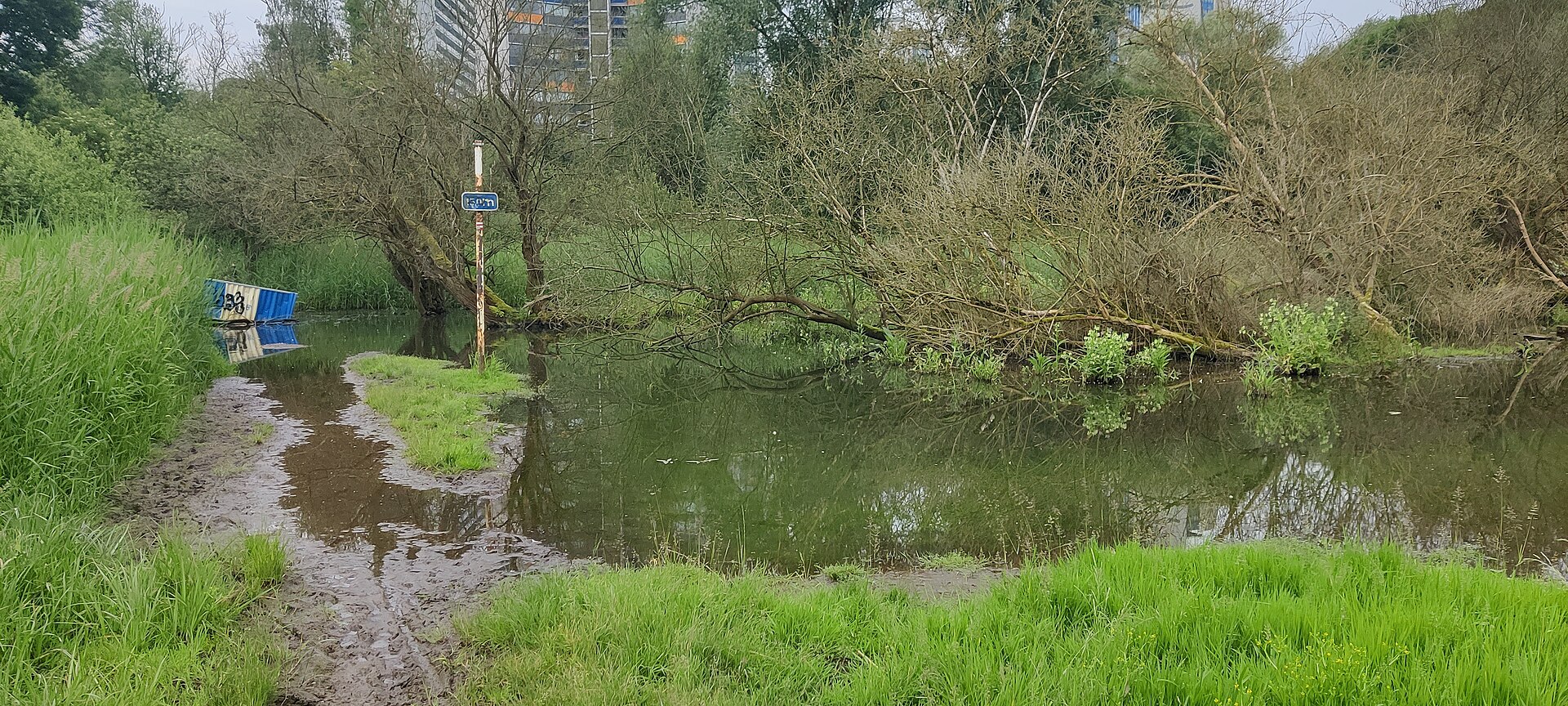
Moeraske is a nature reserve straddling the boundary between the districts of Evere and Haren, at the northeastern edge of Brussels. Covering roughly 14 hectares, it is the last preserved fragment of the marshy landscapes that once ran along the valley of the river Senne. The name "Moeraske" comes from a Flemish word meaning "little swamp" — and fittingly, this is the only such wetland habitat that has survived intact within the entire Brussels region, while comparable areas elsewhere were drained long ago to make way for development.
How did this place come to be?
The reserve's origins trace back to the construction of Belgium's first railway line, linking Brussels and Mechelen. The engineering works required straightening the course of the Senne and its tributaries, including the Kerkebeek stream, which still feeds the area today. Stations were built at Schaarbeek and at Haren, and to the south of the latter a stormwater retention basin was constructed as flood protection. It was here, as a result of these hydrological changes, that a wetland ecosystem gradually formed — one that survives today as a living record of what the Senne valley looked like before the 18th century.
What protected status does Moeraske hold?
The Brussels-Capital Region recognized the site as an area of high biological value as early as 1984, listing it on the inventory of natural heritage. A further step came on 9 March 1995, when the Region formally designated the wetland portion — about 4.5 hectares — as a nature reserve. Since 1989, the entire site has been looked after by the Brussels and Surroundings Environmental Commission (MOB), the organization responsible for its protection, management, and ecological monitoring.
What can visitors expect to see?
Moeraske is considered one of the richest biotopes for reptiles and amphibians anywhere in the Brussels region. In recent years it has also recorded the highest number of butterfly species of any natural area in Brussels — a striking indicator of just how diverse its vegetation and micro-habitats are. This wealth of flora and fauna makes the reserve a genuinely valuable pocket of nature within a densely built-up part of the city.
How can you explore the reserve?
A green promenade and a roughly 2-kilometer walking trail run through Moeraske. The site is open to the public year-round with no set visiting hours, except in cases of strong wind, when access may be temporarily restricted for safety reasons, given the risk of falling branches. The MOB also runs regular guided tours — typically on the second Sunday of each month — giving visitors the chance to learn about the reserve's history and ecosystem firsthand.
Frequently asked questions
Where exactly is Moeraske located? The reserve lies across the municipalities of Evere and Haren, in the northeastern part of the Brussels-Capital Region, near the former Schaarbeek-Formation railway station.
Is there an entrance fee? No, the site is freely accessible to the public, aside from occasional closures during severe weather.
Is it suitable for a family visit? Yes — the walking trail is short and easy, and the variety of wildlife on show (amphibians, reptiles, butterflies) makes it an appealing spot for nature-focused outings with children.
Who manages the reserve? Since 1989 it has been managed by the Brussels and Surroundings Environmental Commission (MOB), which also organizes monthly guided walks.
Nearby places

Earn badges for the places you visit
Download NextOnTrip, discover new places and check off your trails.