About this place
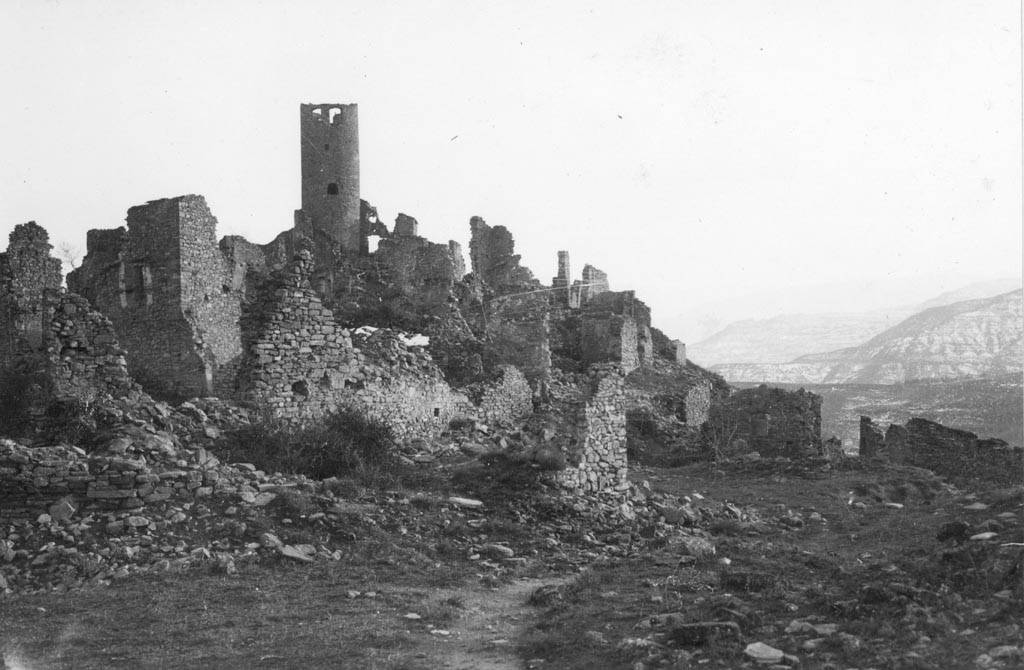
Mare de Déu de l'Esperança de Claret is a Romanesque parish church standing at the north-western edge of Claret, a small hamlet within the municipality of Tremp in the Pallars Jussà region (Lleida province, Catalonia). Built in the 12th century, the church carries the invocation of Our Lady of Hope today, although for centuries it was known simply as Santa Maria de Claret.
Where is Claret and its church located?
Claret sits roughly 5 kilometres southwest of Tremp, the main town of the Pallars Jussà region. The settlement most likely grew up around Claret Castle, first documented in 1099, and it was this fortified stronghold that gave rise to the village as it exists today. In 1654 the estate attached to the castle was elevated into a barony. The church itself is recorded as a parish from 1314, when it was placed under the archdeaconry of Tremp.
What survives from the original Romanesque building?
Over the centuries the church underwent numerous alterations that significantly changed both its interior and exterior appearance. Even so, parts of the west and south walls date back to the Romanesque period, and the remains of two windows from that era are still visible in the south-eastern corner. The masonry is irregular but carefully cut and polished, laid in even courses — a style typical of small Romanesque churches built across this part of the Pyrenean foothills. The church follows a simple plan of a single nave closed by a semicircular apse, the standard layout for rural Romanesque parish churches in Pallars Jussà.
Is the church still in religious use?
Mare de Déu de l'Esperança formally retains its status as a parish church, but it has stood unused for years. Without regular use, the building has been left exposed to gradual deterioration — a situation shared by many small rural churches across the sparsely populated valleys of Pallars Jussà, where depopulation of tiny hamlets has left few worshippers to sustain them.
What else is worth seeing near Claret?
About 200 metres north of the village stands another religious building, a Romanesque hermitage dedicated to Santa Helena. Having two small historic religious buildings within such a short distance of each other reflects how dense the Romanesque heritage is across this stretch of the Pyrenees, where nearly every village keeps a stone church or chapel dating back several centuries.
The name of the village itself, Claret, is thought to derive from the old Romance term "claretum," possibly referring to sparsely wooded or lighter-coloured terrain, or alternatively from the Catalan adjective "clar" (clear), which carries a similar meaning.
How do you get to the church?
The starting point is Tremp, from where a local road runs southwest to Claret, typically a drive of just a few minutes. The village itself is small, and the church sits on its outskirts, easy to spot by heading toward the north-western end of the built-up area.
Frequently Asked Questions
What was this church originally called? It was historically known as Santa Maria de Claret before taking on its current invocation, Mare de Déu de l'Esperança.
From what period does the building date? The church was built in the Romanesque style in the 12th century, though it is documented as a parish from 1314.
Can visitors go inside? The church has been unused for years and is at risk of deterioration, so access to the interior may be limited — it is worth checking locally before a visit.
What else is there to see in Claret? Besides the parish church, a Romanesque hermitage dedicated to Santa Helena stands about 200 metres north of the village.
Nearby places

Earn badges for the places you visit
Download NextOnTrip, discover new places and check off your trails.