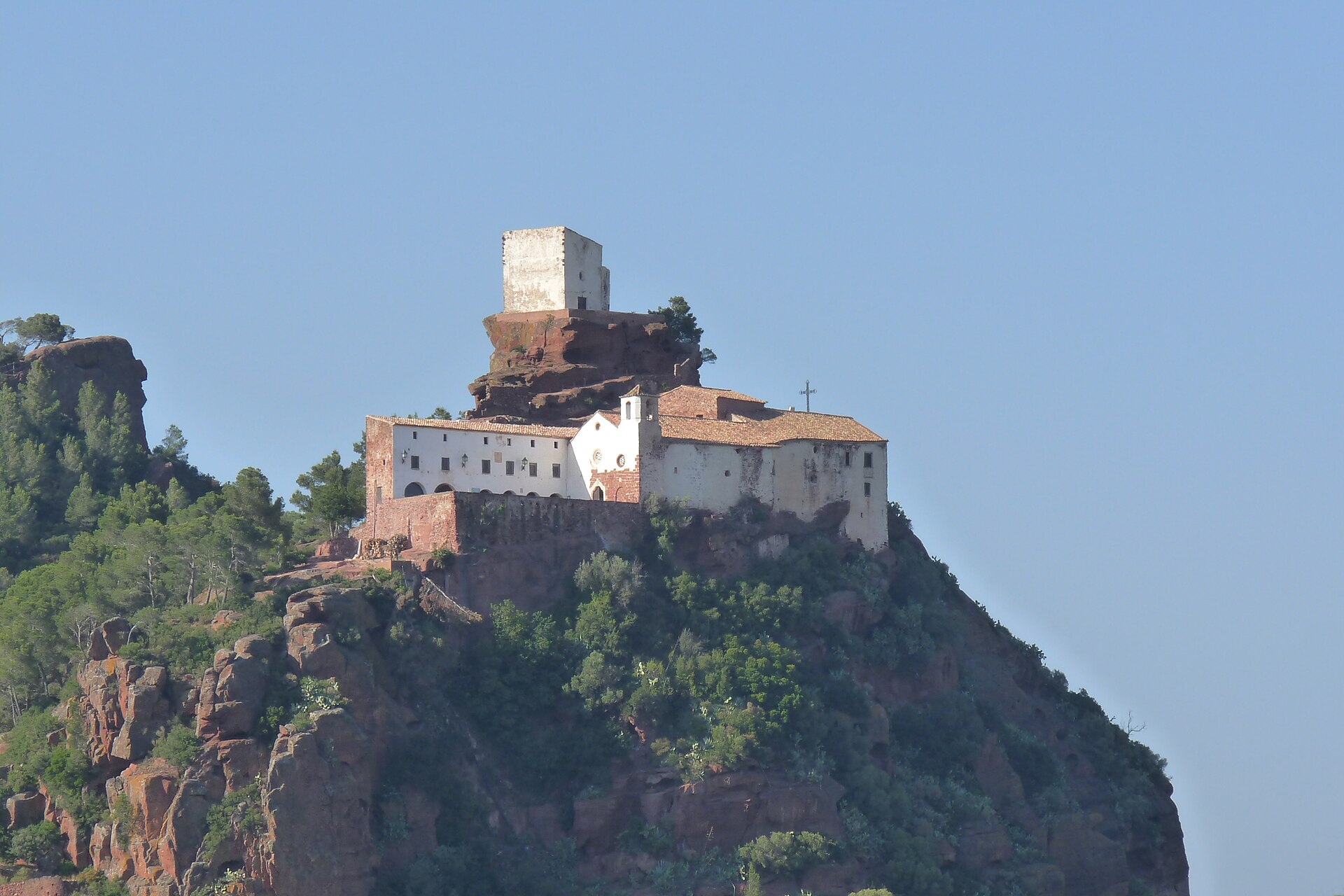
About this place
Mare de Déu de la Roca is a 16th-century hermitage perched above Mont-roig del Camp, partly carved into the red sandstone of a hill 294 meters above sea level. It is one of the most recognizable landmarks of the Baix Camp area and one of the best viewpoints over the Costa Daurada coastline near Tarragona.
How do you get there?
The hermitage sits a few kilometers from the center of Mont-roig del Camp, along a road that climbs into the hills. Driving from the town takes only about ten to fifteen minutes, and there is a parking area on site. A well-used walking and cycling trail also leads through the hills, and many visitors combine the climb with a stop at the nearby Roca Foradada, a pierced rock formation visible from a distance. The route is not technically demanding, but bring water — the open terrain gets hot in summer.
What will you see?
The chapel has a single rectangular nave, partly hewn out of the natural rock, with a small blind bell tower on the facade. The current building dates from 1592, a date confirmed by a stone inscription bearing the name Giberga that survives on the wall. The sanctuary was rebuilt after French troops passed through in 1811, and the original wooden image of the Virgin of la Roca was destroyed in 1936 during the war. The earliest mention of the site of worship goes back to 1230, found in the will of Guillem de Tarragona, which included a bequest to the Mare de Déu de la Roca. The hermitage building itself is documented from 1299, though Iberian pottery fragments found on the site suggest it was inhabited even earlier, in antiquity.
A legend recorded by Narcís Camós in the mid-17th century tells of a shepherd who found a wooden carving of the Virgin in the shade of a palm tree — the miraculous find is said to have taken place around 1153. The complex also includes the small chapel of Sant Ramon nearby. In 2022, the whole site was declared a Bé Cultural d'Interès Nacional (National Cultural Heritage Asset) in the Historic Monument category.
The place was a favorite of painter Joan Miró, who was born in Mont-roig del Camp — the hermitage and the surrounding rock formations left a mark on his work. From the terrace in front of the chapel, the view stretches over the Camp de Tarragona plain, the coastline and the Mediterranean beyond. A bar, a restaurant and overnight accommodation are available on site, making it a comfortable base for longer walks in the area.
When should you visit?
Spring and autumn are the best seasons, with mild temperatures and trails that aren't baking in direct sun. In summer, an early morning visit helps you avoid the heat on the climb up. On September 8th, the feast of the Mare de Déu de la Roca, patroness of the municipality, is celebrated with religious ceremonies and local festivities that draw people from across the region.
Frequently Asked Questions
Is there an entrance fee for the hermitage? No, the chapel is free to visit, though opening hours can vary depending on the season and religious events.
Can you walk there from Mont-roig del Camp? Yes, a marked hiking trail leads through the hills to the hermitage, popular with visitors who combine it with a stop at the nearby Roca Foradada.
What is the Roca Foradada? It's a distinctive pierced rock formation near the hermitage, one of the landmarks of the Mont-roig del Camp landscape, often visited on the same outing.
Is there anywhere to eat on site? Yes, the hermitage has a bar and restaurant, and it also offers overnight accommodation for visitors who want to stay longer.
Nearby places

Earn badges for the places you visit
Download NextOnTrip, discover new places and check off your trails.