About this place
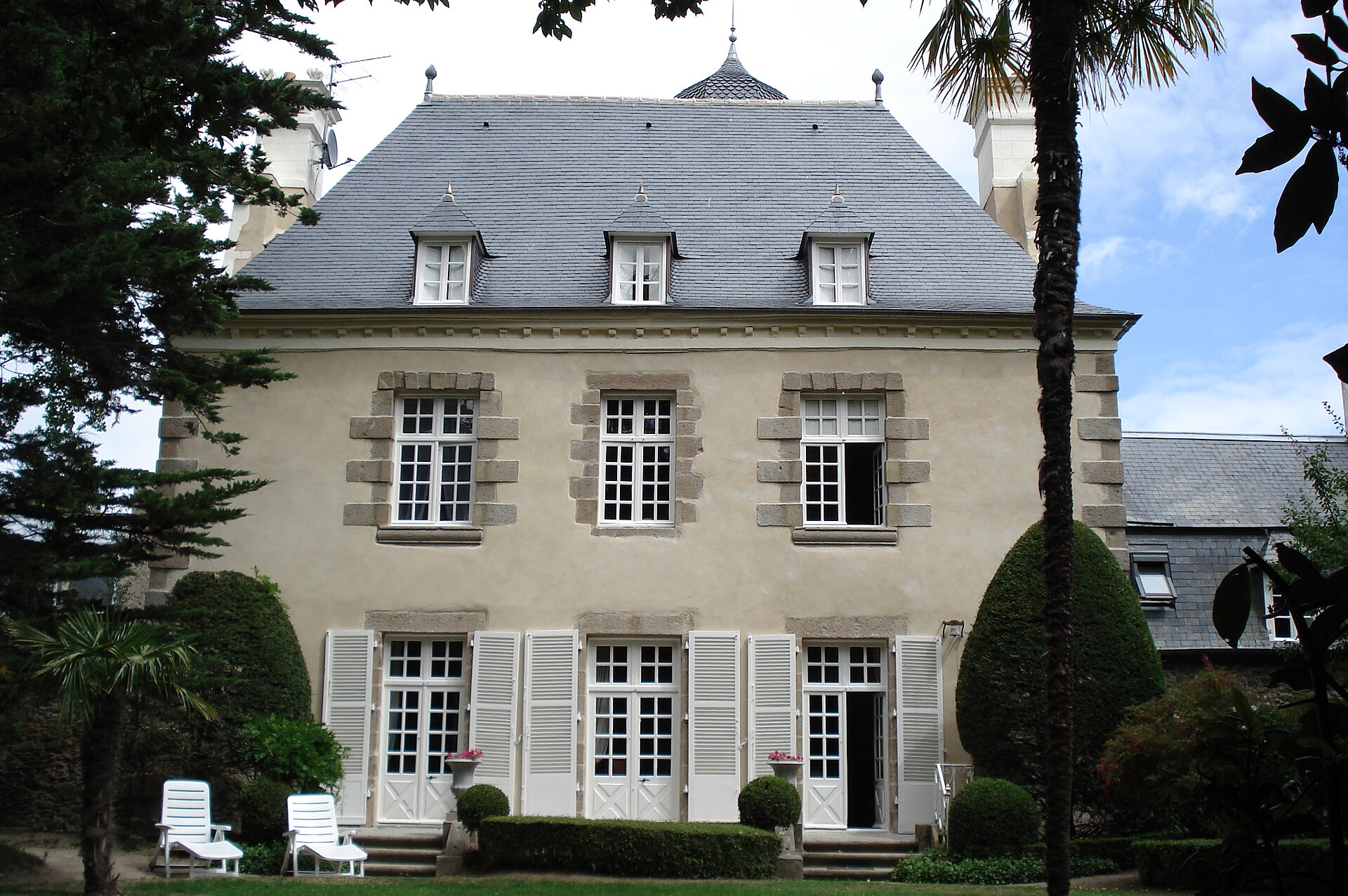
Malouinière du Puits Sauvage is an 18th-century country house tucked into the Saint-Étienne district of Saint-Malo, on rue du Puits Sauvage. Built between 1729 and 1732 for the shipowning Nouël de la Baronnie family, on the site of an earlier 15th-century manor, it now stands as one of the best-preserved malouinières in the region — open to visitors and known above all for its remarkable botanical garden.
What exactly is a malouinière?
Malouinières are country residences unique to the area around Saint-Malo, built by wealthy shipowners and privateer captains as retreats from the cramped walled city and the hardships of long sea voyages. The term dates back to the early 18th century, and Puits Sauvage, designed by architect Michel Marion, is a textbook example of the style: a plain, elegant house enclosed by high stone walls and set within a spacious park.
What is the story behind the property?
The house has passed through several well-known Saint-Malo families. In 1799 it was sold by the Le Fer de Chanteloup family — relatives of the privateer René Duguay-Trouin — to the Marion family, descendants of the architect who had built it. In 1807, Thérèse Marion married Louis Gauttier, a shipowner and privateer captain who was a friend of the famous corsair Robert Surcouf. The estate has stayed in the Gauttier family ever since, and its current owner, an architect specializing in heritage restoration, has spent decades methodically restoring the buildings — work recognized with a national award from the Association of Old French Houses in 2013. The malouinière and its outbuildings were listed as a historic monument in 1990, and the property has welcomed visitors since 1998.
What can you see on site?
The garden is the estate's main draw. Following the old Malouin custom of bringing exotic plants home from distant voyages, it holds a collection of more than 800 species of cacti and succulents originating from South America, South Africa, Madagascar and Australia — some cuttings dating back to the early 19th century, brought over by Malouin sea captains and shipowners themselves. Among the outbuildings, look out for the horse swimming pool dated 1734: fully paved and 2.5 metres deep, it is a rare surviving piece of period estate infrastructure unlike anything else in the region.
How do you get there, and when should you visit?
The malouinière sits in the quiet Saint-Étienne district, a short drive from the walled old town (intra-muros) of Saint-Malo. It makes a natural stop for anyone exploring the countryside around the city by car or bike, especially alongside the other malouinières scattered in the area. Given the garden's focus on cacti and succulents, spring and summer are the best times to visit, when the plants are at their most striking and the grounds are pleasant for a walk.
Frequently asked questions
When was Malouinière du Puits Sauvage built? It was built between 1729 and 1732 by architect Michel Marion, on the site of an earlier 15th-century manor.
What is the site best known for? Its botanical garden, home to more than 800 species of cacti and succulents brought back by Malouin sailors, and a historic horse swimming pool dating from 1734.
Can visitors go inside? Yes, the malouinière has been open to the public since 1998, and its owners continue restoration work on both the buildings and the garden.
Who owns the property today? It has belonged to the Gauttier family since the early 19th century; the current owner is a heritage-restoration architect who received a national preservation award in 2013.
Nearby places

Earn badges for the places you visit
Download NextOnTrip, discover new places and check off your trails.