About this place
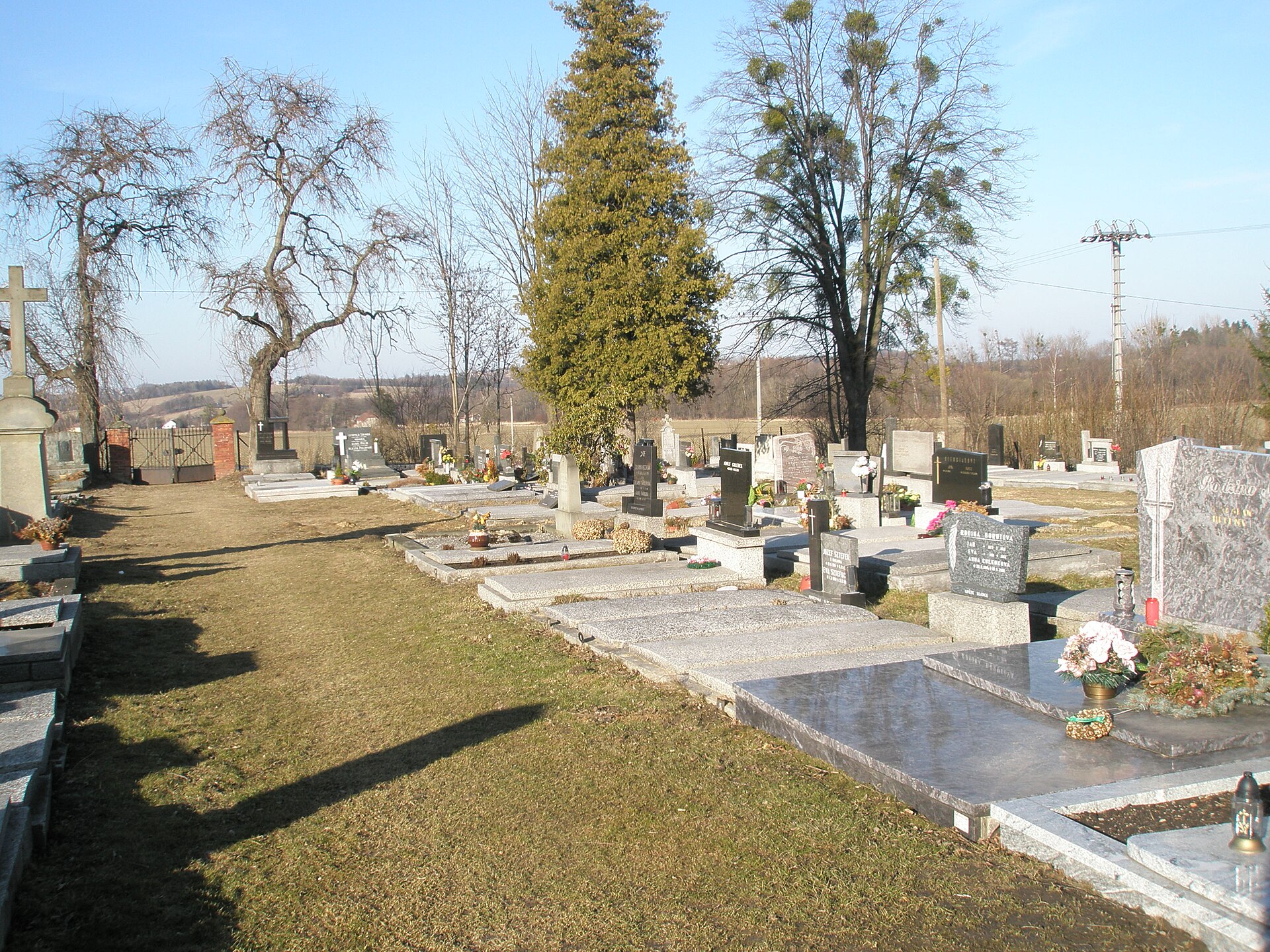
The Lutheran cemetery in Komorní Lhotka is a small, quiet burial ground attached to the local Protestant congregation in this Silesian village, close to the Polish border near Ligotka Kameralna. It belongs to a Lutheran community whose presence has shaped the religious landscape here since the late 18th century, and it remains an active burial site for families from the surrounding area to this day.
Where did this cemetery come from?
The cemetery's story is tied directly to the founding of the local evangelical congregation. The foundation stone of the first prayer house in Komorní Lhotka was laid on May 1, 1782, and the building itself, completed in 1782-1783 in a classical style, was erected under the so-called Patent of Toleration issued by Emperor Joseph II. For the Lutherans of this part of Cieszyn Silesia, the patent was the first chance in decades to legally build their own places of worship — on the condition that these buildings did not resemble traditional Catholic churches: no tower, and no entrance facing the road. The local community received permission to build under these rules, and the cemetery was laid out alongside the new prayer house.
How many people are buried here?
Over more than two centuries, an estimated two thousand members of the local congregation have been buried at the cemetery. That figure reflects how deeply rooted the Lutheran tradition is in this village — for generations of families from Komorní Lhotka and the surrounding villages, this was the natural, and often the only, family burial ground, tied to baptisms, weddings, and funerals held in the neighboring church.
What is there to see?
Among the graves, the richly decorated tomb of knight Jan Bohumil Tschammer and his wife Kristýna Beata stands out, dating from the mid-19th century. It is one of the few truly elaborate monuments in this otherwise modest, rural cemetery, and it points to the standing the Tschammer family held in the region. The evangelical church itself, next to which the cemetery lies, only received its tower in 1852 — seventy years after construction, once the restrictions of the Patent of Toleration era had long lost their practical meaning.
What is the cemetery like today?
The site has a modest, intimate character: rows of simple, mostly 20th-century gravestones surround the older, historic Tschammer tomb. The cemetery continues to serve the local Lutheran community, whose roots in Komorní Lhotka reach back to the late 18th century and remain very much alive. For visitors exploring the wooden and brick tolerance-era churches of Cieszyn Silesia, the cemetery offers a peaceful, reflective counterpoint to the region's better-known tourist sights.
Frequently asked questions
Is the cemetery open to visitors? Yes, as church grounds it is accessible to visitors, though it remains an active burial site and should be treated with appropriate respect.
What is the cemetery's main highlight? The decorated mid-19th-century tomb of the Tschammer family, which stands out among the more modest village gravestones.
How do you get to Komorní Lhotka? The village lies in the Frýdek-Místek district, close to the Polish border near Ligotka Kameralna, and can be reached by local roads from Třinec and Český Těšín.
Nearby places

Earn badges for the places you visit
Download NextOnTrip, discover new places and check off your trails.