About this place
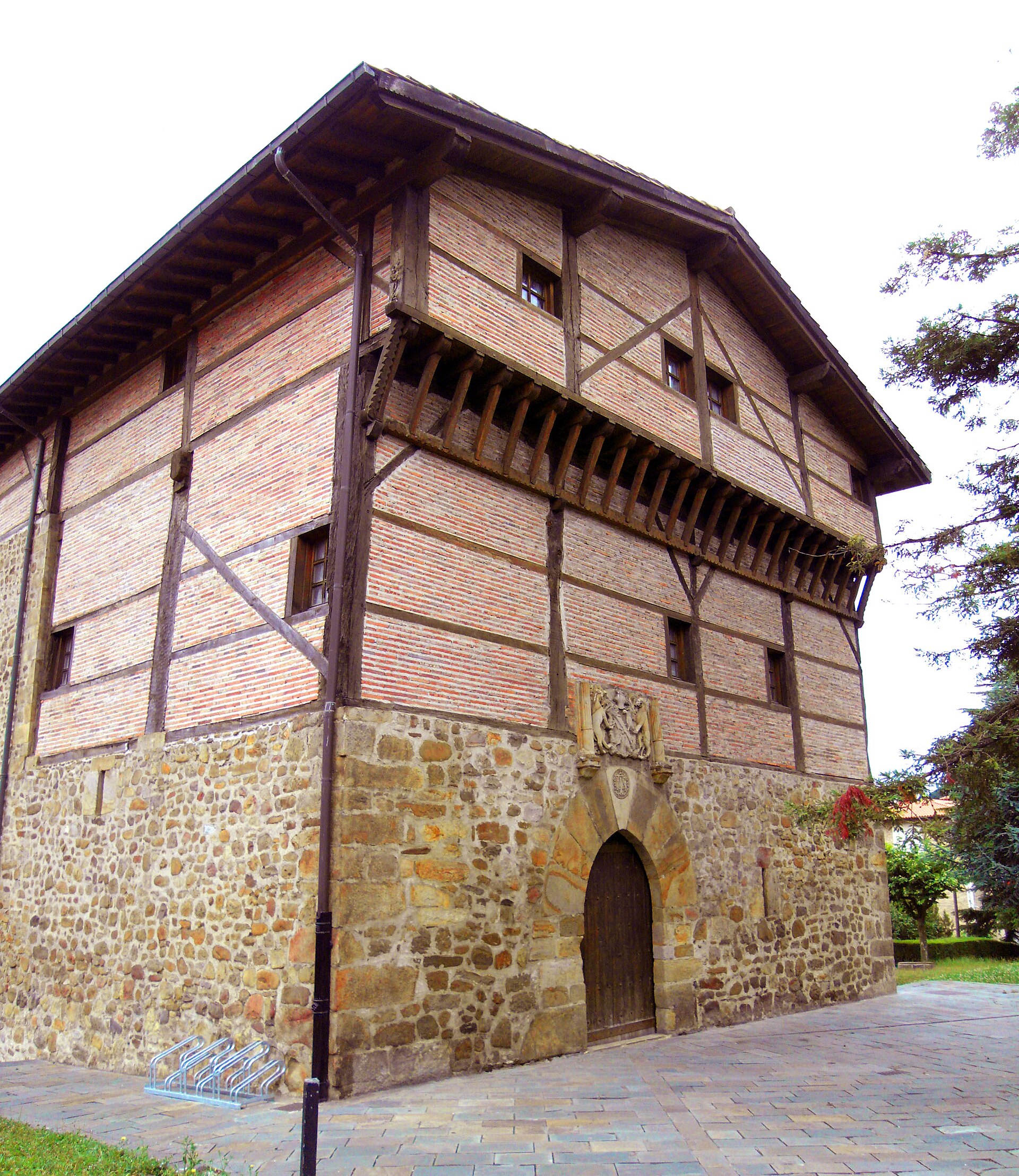
Legazpi Tower is a medieval tower house in Zumarraga, in the Basque Country, standing right across from the town's RENFE train station in the Urola Garaia region of Gipuzkoa.
What kind of building is this?
Legazpi dorrea, also known as Casa-Torre de Legazpi, combines two clearly distinct architectural phases. The lower section is a cubic stone structure with two floors plus a semi-basement dug into the sloping terrain — a textbook example of Gothic defensive architecture from Gipuzkoa dating to the 13th or 14th century. In the 17th century, an upper section was added on top of this stone base: a timber-framed body filled with brick, projecting outward beyond the lower walls and covered by a double-pitched roof. The result is a building with an unusual, manor-house silhouette — a stark medieval defensive tower crowned by a lighter, more residential addition from a later era.
Why does the tower carry the Legazpi name?
The building was inhabited from the start by the Legazpi family, one of the most influential lineages in the social, political, and ecclesiastical life of Zumarraga during the late Middle Ages. It is this family that gives the tower its most famous connection: Miguel López de Legazpi, the navigator and conquistador, whose life story is tied to this building as the family seat. That link is why Legazpi dorrea is regarded today not only as an architectural landmark but also as a reference point for the history of a family whose most notable member left his mark on the history of Spanish colonial expansion.
What is the history behind the tower?
The tower house was built in the 13th or 14th century, at a time when Basque noble families constructed this type of fortified residence to protect both their property and their standing amid local power struggles. Legazpi dorrea was directly caught up in the rivalry between the Gamboa and Oñaz factions — two opposing noble camps that split the Basque Country for decades during the late medieval period. As the seat of a family entangled in that conflict, the tower shared the fate of many similar buildings: it was partially dismantled by order of King Henry IV of Castile. When Pedro de Legazpi returned from exile, he rebuilt the family seat, this time using brick as the construction material — a change still visible today in the upper part of the building.
What is worth seeing on site?
The main appeal of Legazpi dorrea lies in the contrast between its two building phases: the austere stone defensive core and the lighter timber-and-brick residential addition above it. This layout — a defensive tower with a later residential section added on top — is typical of many Basque tower houses (dorretxe) in Gipuzkoa, but it rarely survives in such a clearly legible, two-part form. Standing directly opposite the train station, the tower is easy to reach for travelers exploring Zumarraga and the surrounding towns of the Urola Garaia region.
Frequently asked questions
Where exactly is Legazpi Tower located? The tower stands in Zumarraga, in the Urola Garaia region of the Gipuzkoa province, directly across from the town's RENFE train station.
Who was Miguel López de Legazpi? He was a navigator and conquistador connected to the Legazpi family, whose story is tied to this tower as the family's ancestral seat.
From which period does the building date? The stone section of the tower dates to the 13th or 14th century, while the upper timber-and-brick addition was built in the 17th century.
Why was the tower partially demolished? Legazpi dorrea became entangled in the conflict between the Gamboa and Oñaz factions, and King Henry IV ordered its demolition; after returning from exile, Pedro de Legazpi rebuilt the seat using brick.
Nearby places

Earn badges for the places you visit
Download NextOnTrip, discover new places and check off your trails.