About this place
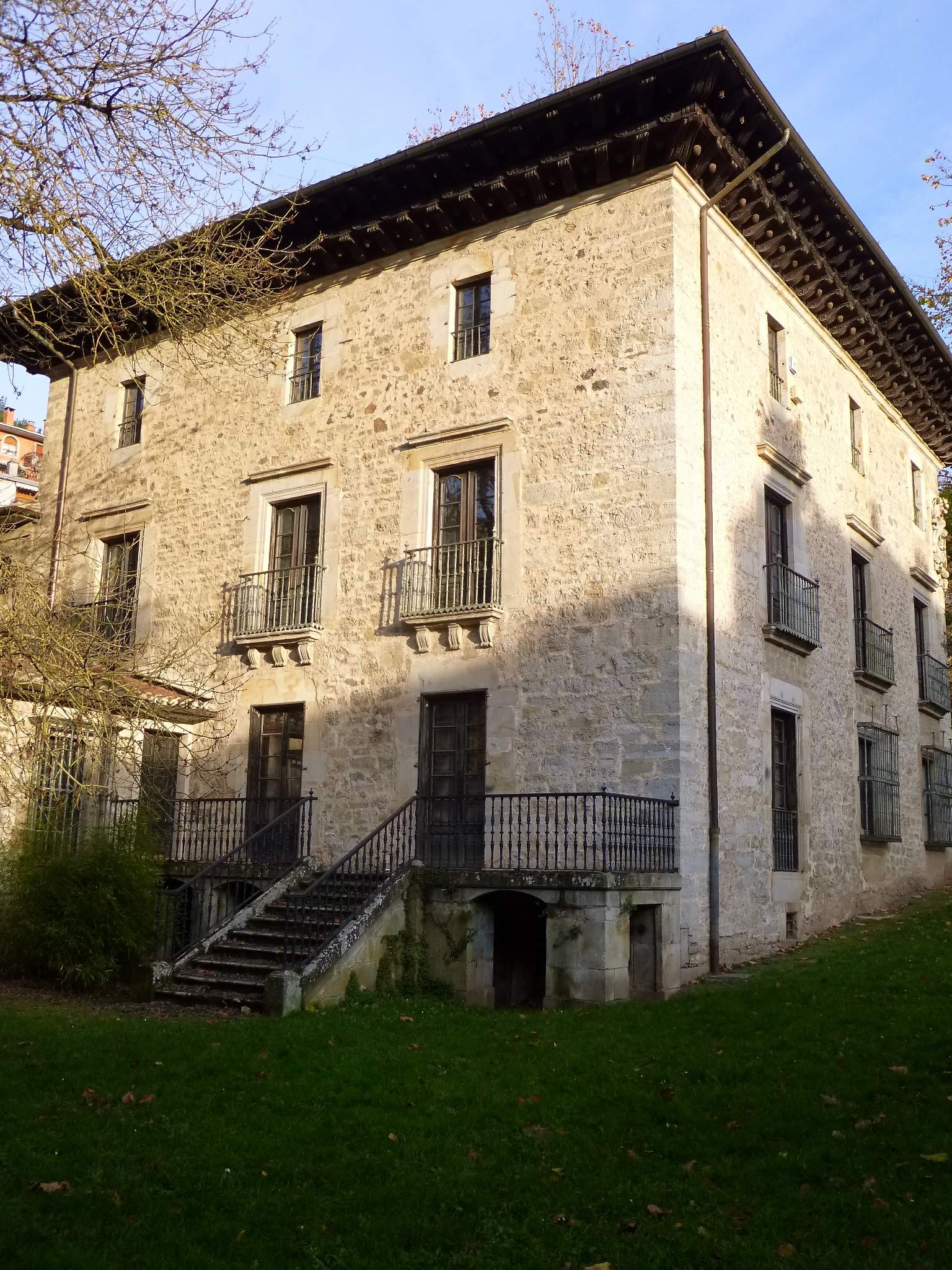
Errekalde Palace is a neoclassical building in Bergara, in the Basque Country, that today houses a science museum. It stands along the riverside promenade of Juan Irazabal and remains one of the town's most recognisable landmarks.
Where does the building come from?
Errekalde did not start out as a palace. A medieval defensive tower once occupied the site, remodelled in the 16th century to give it a grander, more residential appearance. Its history was far from smooth: during social unrest in 1718, the building suffered severe fire damage. It was only in the 19th century that a thorough renovation reshaped Errekalde into the romantic villa visitors can see today.
Who lived here?
Two figures of the Basque Enlightenment are tied to Errekalde. The Count of Peñaflorida, who served as director of the Royal Seminary of Bergara — an institution that ranked among Spain's most important scientific centres in the 18th century — lived in the building. It was also home to Valentín Foronda, another notable Enlightenment figure, an economist and diplomat. These two names give the palace a significance that goes beyond architecture, linking it to the region's intellectual history.
What stands out inside and around the palace?
Inside, the building is known for an impressive central staircase, one of its most distinctive architectural features. Errekalde borders a 19th-century garden designed to bring nature and science together, its layout echoing the building's current use. Both the house and the garden were equipped with a sophisticated water supply system for their time.
What is Errekalde used for today?
The palace now houses Laboratorium Bergara Zientzia Museoa, a science museum that pairs historic architecture with an educational purpose. It's an unusual combination: a noble residence where visitors find science exhibits instead of reception halls.
Frequently asked questions
Where exactly is Errekalde Palace located? It stands in Bergara, in the province of Gipuzkoa, on the Juan Irazabal promenade near the town centre.
What architectural style does the palace represent? It is a neoclassical building, shaped into its current form in the 19th century, though its roots go back to a medieval defensive tower.
Who was the palace's most famous resident? The Count of Peñaflorida, director of the Royal Seminary of Bergara, and Valentín Foronda, an Enlightenment-era economist.
Can the palace be visited today? Yes — it houses the Laboratorium science museum, open to visitors along with its adjoining garden.
Nearby places

Earn badges for the places you visit
Download NextOnTrip, discover new places and check off your trails.