About this place
Laurgain palace, in Aia, is a stone tower-house standing at the edge of Pagoeta Natural Park, in the Basque province of Gipuzkoa, northern Spain. It ranks among the oldest fortified residences still standing in the valley, and its bulk still dominates the road leading into the hamlet that carries its name.
Where is Laurgain palace located?
The building stands in the hamlet of Laurgain, part of the municipality of Aia, roughly 300 metres before the small village core where the Church of San Miguel, with its Baroque bell tower, is located. Set right beside the road, the palace is visible well before travellers reach it — its heavy stone front is the first thing that catches the eye on the way toward Pagoeta.
What does the building look like?
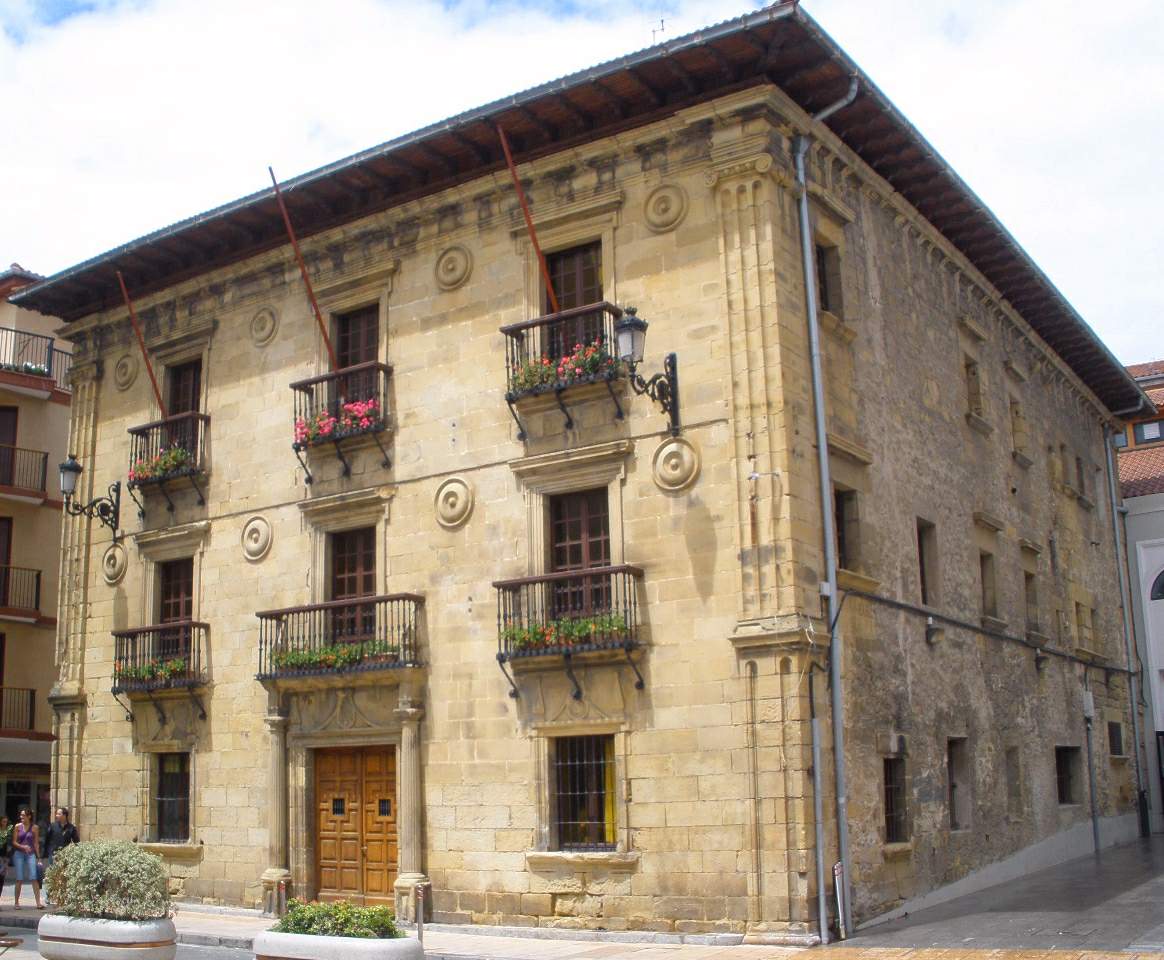
The palace has kept the profile of a medieval defensive tower. Its façade is built from dressed limestone blocks (sillería caliza), giving it the plain, weighty look typical of Basque tower-houses. Two features stand out: pointed twin windows (ventanas geminadas) and narrow arrow slits (saeteras), both original elements from the period when the structure had to double as a lookout post and a refuge during local conflicts. An 18th-century remodelling, carried out in line with the building conventions of the time, softened the tower's original military character without erasing it.
What is the history behind it?
Sources do not fully agree on the exact age of the building. Wikidata dates the current structure to the 16th century, while other material points to an earlier medieval origin for the tower — possibly the 14th century — followed by the 18th-century remodelling mentioned above. Whichever date is accurate, the building has long been tied to the lords of Laurgain, whose name the surrounding hamlet still carries. Today the palace houses the Fundación Manuel Ignacio de Altuna, a foundation named after a Basque Enlightenment-era thinker.
Can visitors go inside Laurgain palace?
The building currently serves as the foundation's headquarters, and available sources do not confirm regular opening hours or public access to the interior. The façade, however, is freely visible from the roadside as you pass through the Laurgain hamlet, and the twin windows and arrow slits are the main draw for anyone stopping here.
What else is worth seeing nearby?
A few hundred metres from the palace sits the small centre of Laurgain, with the Church of San Miguel and its Baroque tower clearly visible from the road. The area belongs to the Aia valley, right next to Pagoeta Natural Park, a popular destination for walkers in this part of Gipuzkoa. It makes a sensible base for anyone who wants to pair a look at the palace with a walk through the surrounding trails and Basque countryside.
Frequently Asked Questions
Where exactly is Laurgain palace? In the hamlet of Laurgain, in the municipality of Aia, Gipuzkoa province, on the road leading toward the village centre and the Church of San Miguel.
How old is the building? Sources vary: Wikidata lists the 16th century, while other material suggests an earlier medieval tower, possibly from the 14th century, later remodelled in the 18th century. Either way, it is a genuinely old defensive tower-house.
Is the inside open to the public? The building is the seat of a foundation, and no confirmed public visiting arrangements are documented. The façade can be freely viewed from the road.
What architectural details should visitors look for? The dressed limestone façade, the pointed twin windows, and the arrow slits — defensive features typical of Basque tower-houses, later tempered by the 18th-century remodelling.
Nearby places

Earn badges for the places you visit
Download NextOnTrip, discover new places and check off your trails.