About this place
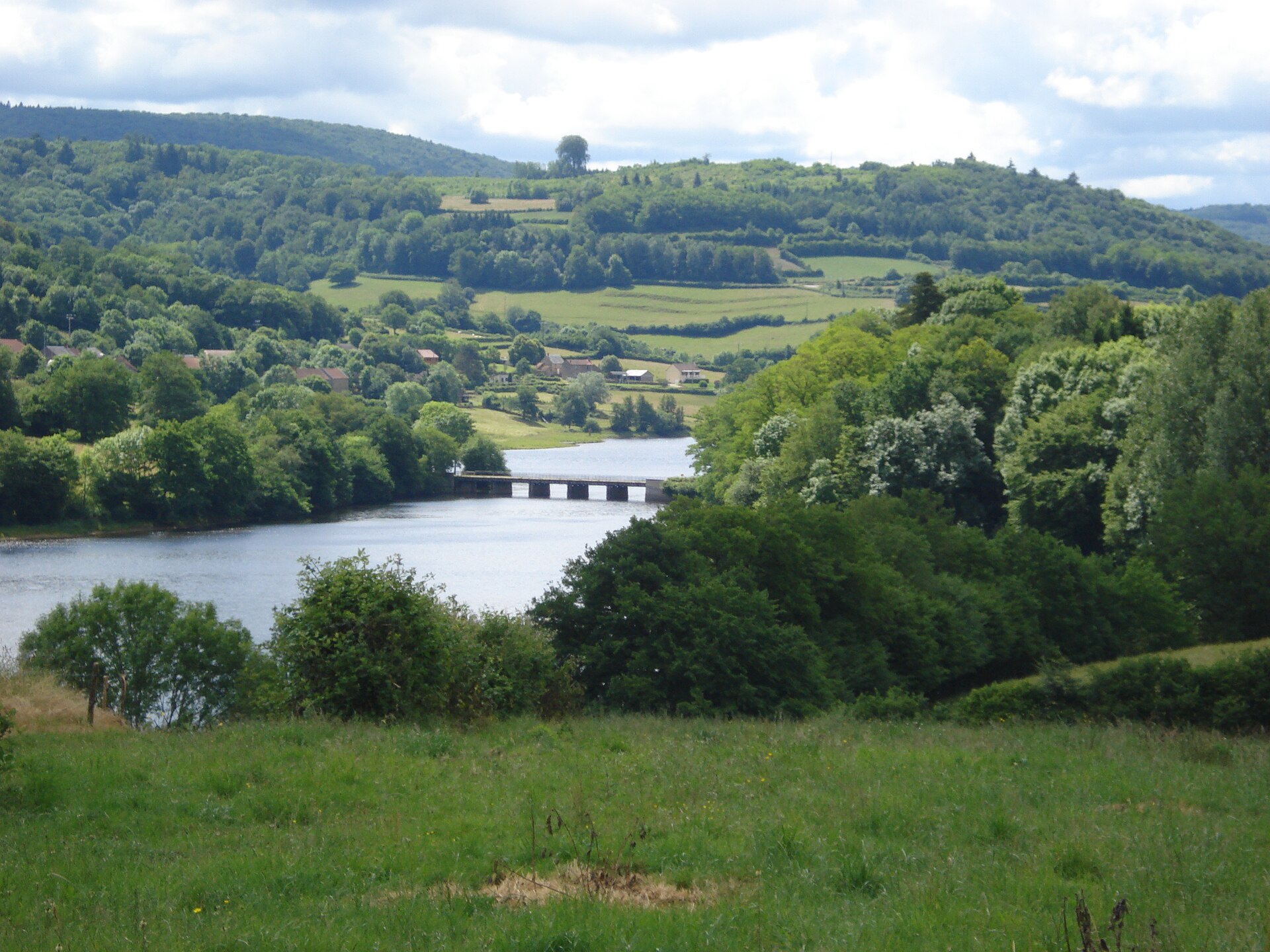
Lac du Crescent is a reservoir lake sitting on the border of the Nièvre and Yonne departments, right in the heart of the Morvan Regional Nature Park in France. Its name comes from the curved, crescent-like shape of its shoreline. The lake covers roughly 1.65 square kilometres, sits at an elevation of about 300 metres above sea level, and touches the territory of several communes, including Marigny-l'Église.
Where exactly is the lake located?
Lac du Crescent lies in the Morvan, a hilly and heavily forested area within Burgundy, close to the village of Marigny-l'Église. Its coordinates are approximately 47.3733°N, 3.9103°E. It ranks among the handful of large lakes scattered across the Morvan, a region defined by granite hills, dense woodland and a dense network of small rivers. The lake is fed by the Cure and Chalaux rivers, which wind down from the surrounding hills before reaching the basin.
Is it a natural lake or an artificial one?
Unlike glacial lakes found elsewhere in France, Lac du Crescent is an artificial reservoir, created by damming river water. Reservoirs of this kind were originally built across the Morvan to regulate water flow and to support log floating, a practice that once formed a significant part of the local economy. Today the lake serves mainly recreational and tourism purposes, though it still plays a role in the broader water management of the area.
What can visitors do at the lake?
The shoreline is equipped for outdoor leisure. Rest areas with picnic tables and children's play equipment make the spot a practical choice for a family outing, and marked footpaths circle the lake and continue into the surrounding Morvan forests, giving walkers a range of route lengths to choose from.
For those who prefer time on the water, canoes, kayaks, stand-up paddleboards, pedal boats and small sailing boats are commonly used on the lake during the warmer months, since motorised traffic is kept minimal. Swimming is also possible in designated areas along the shore.
Is the lake good for fishing?
Lac du Crescent has a strong reputation among anglers who target predatory fish. Its waters hold healthy populations of pike, perch and pikeperch (zander), and the lake is frequently mentioned as one of the better spots in the Morvan for predator fishing. Anyone wishing to fish needs a valid fishing licence and must follow the local rules that apply specifically to reservoir lakes.
How does the lake fit into the Morvan landscape?
The Morvan is a hilly, forested area in western Burgundy, characterised by granite bedrock, numerous springs and streams, and a climate that is noticeably cooler and damper than much of central France. The Morvan Regional Nature Park, which covers the area, protects both the natural environment and the traditional pattern of farmland and forest that shapes the region. Lakes such as Lac du Crescent are an integral part of this landscape, combining a practical role in water management with a long-standing function as a place of rest and recreation for both locals and visitors to the Morvan.
FAQ
How large is Lac du Crescent? The lake covers about 1.65 square kilometres and its shoreline extends across several communes in the Nièvre and Yonne departments.
Is Lac du Crescent a natural lake? No, it is an artificial reservoir created by damming the rivers that feed the valley.
Can families spend a day at the lake? Yes, picnic areas, children's play equipment and gentle walking paths around the shore make it suitable for a family visit.
What fish can be caught there? The reservoir is known for its pike, perch and pikeperch, making it a popular destination for anglers who fish for predatory species.
Where exactly is Lac du Crescent located? In the Morvan region of Burgundy, on the border between the Nièvre and Yonne departments, near the commune of Marigny-l'Église.
Nearby places

Earn badges for the places you visit
Download NextOnTrip, discover new places and check off your trails.