About this place
Grotte de Nermont is a cave above the Cure river valley, roughly 1.3 km northeast of the village of Saint-Moré, in the Yonne department of Burgundy, France.
Where exactly is it?
The cave sits about 50 meters above the valley floor, in a cliff face partly covered with ivy that hides some of its six entrances. Four of these openings meet inside a single large chamber, from which narrower galleries climb further into the rock. Nermont belongs to a wider group known as the Grottes de Saint-Moré, the region's second-most important cave cluster after the caves of Arcy-sur-Cure, a few kilometers further along the same river.
How do you get there?
A footpath runs along the base of the cliff that holds these caves, and the easiest way to reach Nermont is to start the walk in Arcy-sur-Cure and follow the Cure river — passing several other cave openings cut into the same rock wall along the way. Saint-Moré sits between Auxerre and Avallon, about 180 km southeast of Paris, making the valley an easy day trip from either town.
What will you see on site?
The most striking feature is the entrance porch, which opens onto a wide view over the Cure valley. Inside, the six openings and the connected main chamber form what feels like a natural maze — the same geology that has long drawn both cavers and archaeologists to the site.
Why does this cave matter for archaeology?
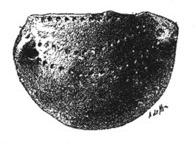
Nermont is considered the most important cave in the whole Saint-Moré group because of how rich its prehistoric layers are. The site was first described as early as 1852 and has been excavated several times since, notably by abbé Parat in 1897. In the 1930s, layer 4 and its third hearth turned Nermont into a reference site for the Late Bronze Age in France. That layer alone yielded a striking haul: around 4,000 flint flakes, 15 cores, 100 blades, 80 scrapers, 50 arrowheads, 30 flint axes, and 15 intact ceramic vessels. The sheer volume and variety of material is why the site still comes up regularly in the literature on Burgundy prehistory.
When is the best time to visit?
Given the terrain — a rock face, a riverside trail, entrances partly overgrown with ivy — spring and autumn work best, when vegetation doesn't block the openings and temperatures suit a longer walk along the Cure valley. In summer the trail gets busier, since it also serves visitors heading to the nearby Arcy-sur-Cure caves.
Frequently asked questions
Can you enter Grotte de Nermont on your own? The trail leads right up to the entrances, but this is primarily an archaeological and speleological site rather than a lit, guided show cave — going inside requires proper caving preparation.
How many entrances does the cave have? Six, some partly hidden by ivy; four of them converge in one large chamber, with narrower galleries branching off from there.
Why is the cave archaeologically significant? Since the 1930s it has served as a reference site for the Late Bronze Age, thanks to a rich layer containing thousands of flint and ceramic artifacts, and excavations here go back to 1852.
How do you get to Saint-Moré? The village lies in Yonne, between Auxerre and Avallon, about 180 km southeast of Paris; driving is the easiest option, and the trail to the caves starts nearby in Arcy-sur-Cure.
Nearby places

Earn badges for the places you visit
Download NextOnTrip, discover new places and check off your trails.