About this place
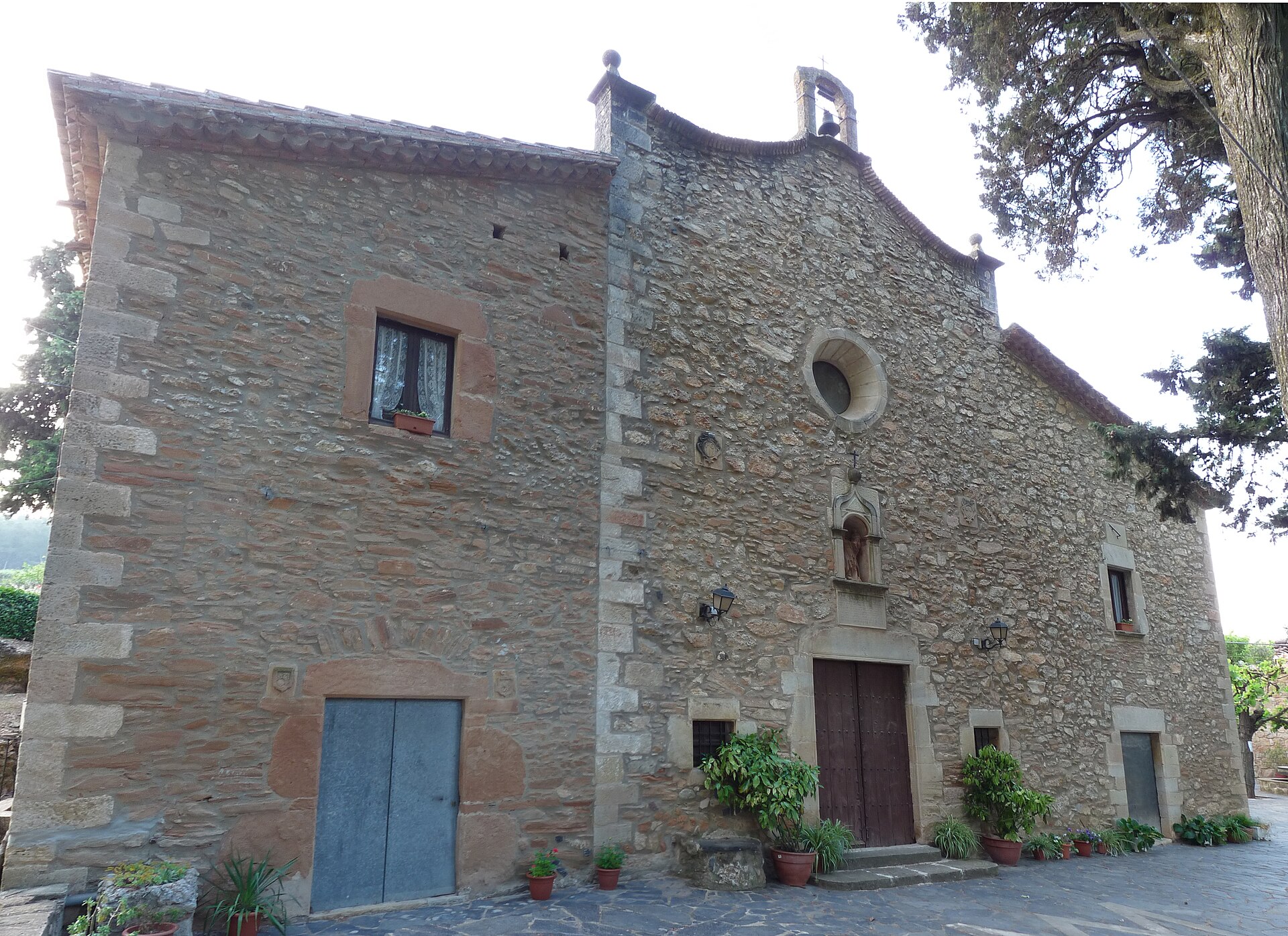
La Santíssima Trinitat is a hillside hermitage and sanctuary on the slopes of Mount La Pena, roughly 3.5 km from the town centre of l'Espluga de Francolí, in the Conca de Barberà. It sits in the valley of the Trinitat stream, surrounded by riverside woodland and dozens of springs — the area is locally known as Cent Fonts, "the Hundred Springs."
How do you get there?
A signposted footpath leaves from l'Espluga de Francolí and climbs about 3.5 km through the wooded valley alongside the stream to reach the sanctuary. The long-distance GR-175 trail, which links Montblanc with the monastery of Poblet, also passes through this spot, so many hikers treat Trinitat as a waypoint on a longer multi-day route. A popular loop extends the visit further, connecting the sanctuary with the Mirador de la Pena viewpoint and the Coll de la Vena pass — a good option if you want to turn the trip into a half-day walk through the hills above town.
What will you see?
The current sanctuary building dates from 1790 and was built in baroque style on the site of an earlier hermitage first recorded in the 15th century, which was originally looked after by monks from the nearby Poblet monastery. The church has a single nave covered by a barrel vault with lunettes, while the chancel is closed by a ribbed vault behind an ornate altarpiece. The wider complex includes the sanctuary itself, the chapel of the Guardian Angel, and an artificial grotto built into the rock.
The original interior did not survive intact: in 1936, during the Spanish Civil War, the altarpiece and the image of the Holy Trinity were destroyed. The figure seen today was carved in 1941 by the Catalan sculptor Frederic Marès, and the altarpiece was later rebuilt with eight painted scenes, including the old chapel of Saint Michael, Poblet monastery, the procession carrying the new Trinity image, the Annunciation, the hermit Saint Jerome, the archangel Michael, Saint Mary Magdalene doing penance, and the Coronation of the Virgin.
The woodland, springs and stream surrounding the sanctuary now form a protected natural reserve. In recent years a joint public-private commission was set up to manage the area, overseeing both the upkeep of the recreational grounds and the conservation of the Trinitat ravine's natural environment.
When should you visit?
The sanctuary is busiest during major religious dates, particularly Saint Ramon's feast day and Easter Monday, when residents of l'Espluga de Francolí and neighbouring towns traditionally walk up for processions and picnics in the surrounding woods. Outside these dates, the site and its forest setting make for a quiet day trip, especially in spring and autumn, when the springs and stream run fullest and the wooded path offers shade from the sun.
Frequently asked questions
How far is the sanctuary from the town centre? About 3.5 km on foot from l'Espluga de Francolí, along a path that follows the Trinitat stream through woodland.
Can you drive there instead of walking? Yes, an access road reaches the vicinity of the sanctuary, though many visitors prefer to walk as part of a wider outing through the surrounding hills.
What is the most notable thing inside the church? The 1941 image of the Holy Trinity by sculptor Frederic Marès, together with the rebuilt altarpiece and its eight religious scenes, which replaced the originals lost in 1936.
Is the area good for a longer hike? Yes — the surrounding Cent Fonts area links up with trails to the Mirador de la Pena viewpoint and the Coll de la Vena pass, as well as a stretch of the GR-175 long-distance trail between Montblanc and Poblet.
Nearby places

Earn badges for the places you visit
Download NextOnTrip, discover new places and check off your trails.