About this place
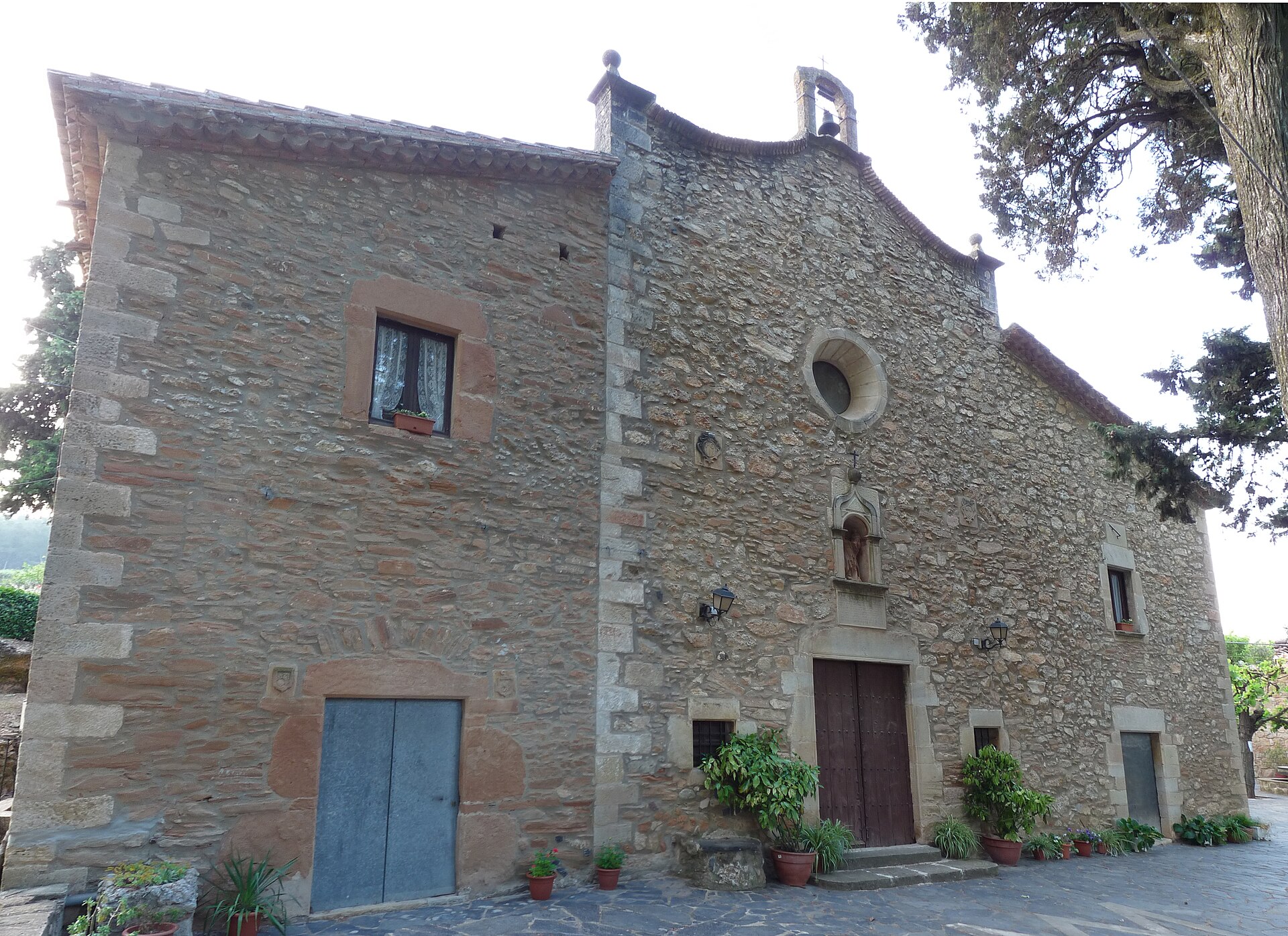
Santa Maria de Senan is a Romanesque parish church standing on the main street of the small village of Senan, in the Segarra comarca, Lleida province, Catalonia. It belongs to the dense cluster of rural Romanesque churches scattered across the hills of Segarra, and it's one of the reasons to take a detour off the main road between Cervera and the Urgell valleys.
What should visitors know before going?
The church was most likely built in the 13th century, though written records of it only start in 1279. Patronage rights over the building once belonged to the monastery of Santes Creus, one of the most important Cistercian centers in Catalonia — a detail that shows how closely tied local religious life was to the region's larger monastic institutions. Over the following centuries, up to the 15th century, the building was gradually extended with new elements, which explains the stylistic mix still visible today in its facade and interior.
What does the church's architecture look like?
The interior consists of a single nave covered by a pointed barrel vault, a solution typical of the later phase of Catalan Romanesque, when builders moved away from simpler semicircular vaulting toward sturdier pointed constructions. The chancel was originally closed by a semicircular apse, characteristic of earlier Romanesque work, but at a later stage this was replaced with a square-ended chancel (capçalera). Such a change was a common outcome of remodeling in rural churches across Segarra and Urgell, whenever liturgical needs or structural concerns forced a modification of the original plan.
Can you still see the original Romanesque fabric?
Over the centuries various additions were built onto the church, partly hiding its original Romanesque character. Restoration work later removed some of these later accretions, uncovering and re-exposing the original Romanesque sections of the walls and vaulting. The result lets visitors today clearly distinguish the oldest, 13th-century fabric of the building from its later additions.
Where exactly is the church located?
The church stands on the main street of Senan, a small settlement in the eastern part of the Segarra comarca. This is typical countryside for the region — low hills, grain fields, and scattered villages, almost each of which hides its own parish church with medieval roots. Senan, small as it is, fits neatly into that pattern as one of the many settlements making up Segarra's dispersed rural network.
Frequently Asked Questions
When was Santa Maria de Senan built? The church most likely dates from the 13th century, with the earliest written records mentioning it from 1279. Further elements were added up until the 15th century.
Who held patronage rights over the church? Patronage belonged to the Cistercian monastery of Santes Creus, one of the key monastic centers of medieval Catalonia.
How has the church's structure changed over time? The original semicircular apse was later replaced by a square-ended chancel. Restoration work also removed additions that had obscured the building's Romanesque character, bringing its oldest sections back into view.
Is Santa Maria de Senan a large church? No — it is a modest, single-nave rural church, typical of the many parish churches scattered across the Segarra comarca, built for a small local community rather than for grandeur.
Nearby places
-

Monastery of Santa Maria de Vallbona
Vallbona de les Monges
-
Mare de Déu dels Torrents
Vimbodí i Poblet
-
Capella del Castell de Sant Martí de Maldà
Sant Martí de Riucorb
-
La Santíssima Trinitat
l'Espluga de Francolí
-
Església parroquial de l'Assumpció de la Glorieta
Passanant i Belltall
-
Església de la Nativitat de la Verge Maria de la Sala
Passanant i Belltall
Earn badges for the places you visit
Download NextOnTrip, discover new places and check off your trails.