About this place
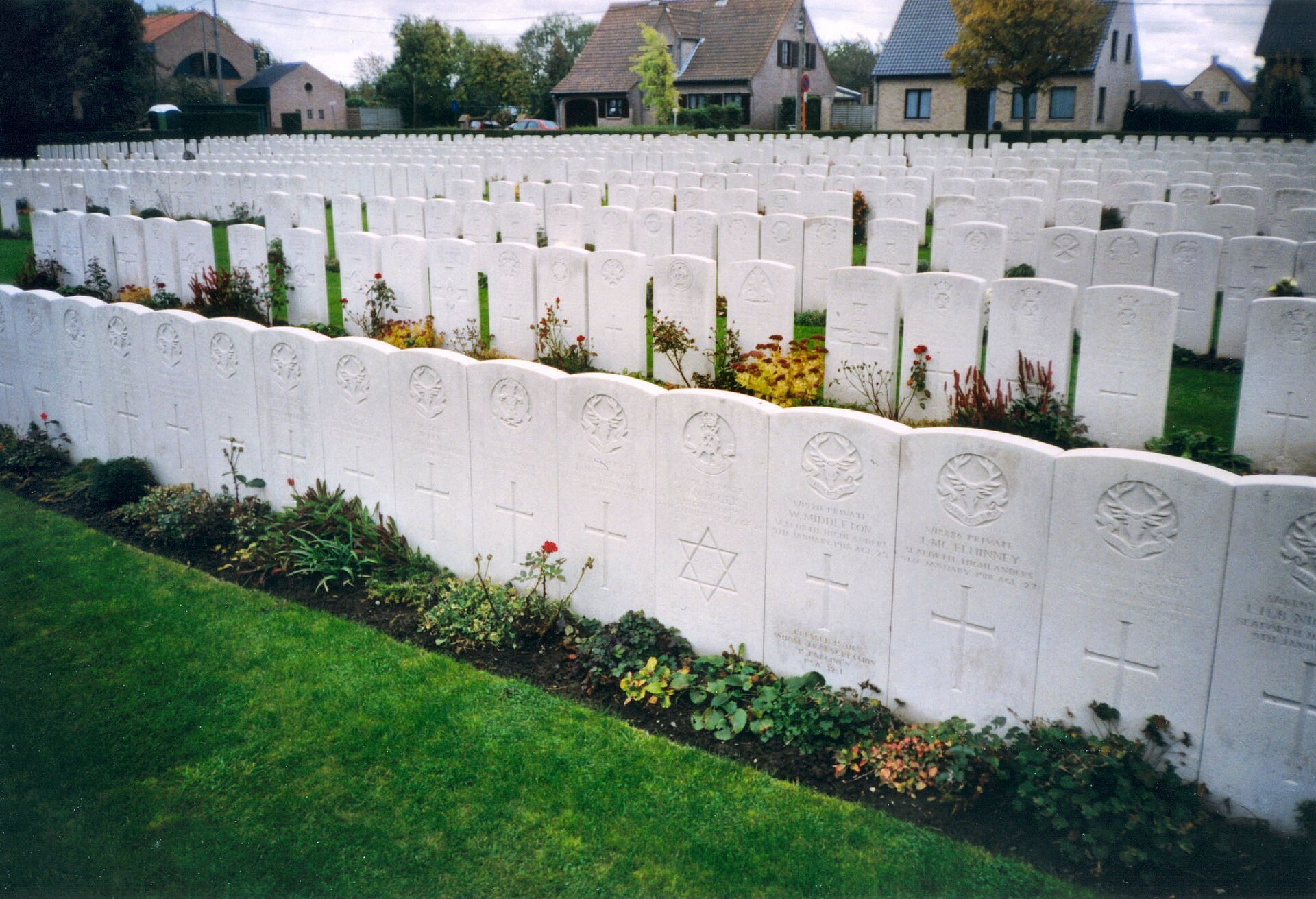
La Brique Military Cemetery No.2 is a First World War British military cemetery on the outskirts of Ypres (Ieper) in Belgium's West Flanders province, sitting within the Ypres Salient — one of the deadliest sectors of the entire Western Front. The name comes from the small hamlet of La Brique, itself named after an old brickworks that stood in the area before the war.
When was the cemetery established?
Burials began here in February 1915 and continued until March 1918, spanning nearly the whole period of the fiercest fighting around Ypres, including the second and third battles fought over the town. The original section, Plot I, held 383 burials arranged in 25 irregular rows — a layout typical of cemeteries started close to the front line, where the dead were interred as the fighting unfolded rather than to any pre-planned design.
What happened to the cemetery after the war?
Following the Armistice in 1918, additional graves were brought in from the surrounding battlefields, forming a new Plot II and extending the original layout. This concentration of scattered battlefield graves into larger, consolidated burial grounds was standard practice for the Imperial War Graves Commission (the forerunner of today's CWGC) during the 1920s, as the organisation worked to give every fallen serviceman a permanent, marked grave.
How many servicemen are buried here?
The cemetery now holds 840 Commonwealth servicemen from the First World War. Of these, 400 are unidentified — their identities could not be established despite the recovery of remains, a stark reflection of the scale of destruction in this part of the front. Special memorials mark the graves of some casualties known or believed to be buried among the unidentified.
Most of those buried here were British, but the cemetery also holds servicemen from across the Commonwealth: Canada, Australia, New Zealand, South Africa, and undivided India. The mix underscores just how global the war fought across the fields of Flanders truly was — men who had travelled thousands of kilometres now lie side by side, having served in the same campaign.
Who designed the cemetery?
The cemetery, like its neighbour La Brique Military Cemetery No.1, was designed by Sir Reginald Blomfield, one of the principal architects commissioned by the Imperial War Graves Commission to design war cemeteries across France and Belgium. Blomfield is also credited with the design of the Cross of Sacrifice, the memorial cross found at the great majority of Commonwealth war cemeteries worldwide.
Are there any notable burials here?
Yes — the cemetery is the resting place of Corporal Alfred George Drake, who was posthumously awarded the Victoria Cross, Britain's highest award for gallantry in the face of the enemy. His grave is one of the reasons the site draws not only battlefield tourists but also military history researchers.
Frequently asked questions
Is the cemetery open to visitors? Yes. Like all CWGC-maintained cemeteries, it is open to the public free of charge year-round.
How does it differ from La Brique Military Cemetery No.1? The two cemeteries lie close together, share a common history within the same sector of the Ypres Salient, and were designed by the same architect, but they are separate, independently numbered burial grounds.
How can visitors reach the site? The cemetery sits on the outskirts of Ypres, a short distance from the town centre, making it an easily accessible stop for anyone touring the First World War battlefields of the region.
Nearby places

Earn badges for the places you visit
Download NextOnTrip, discover new places and check off your trails.