About this place
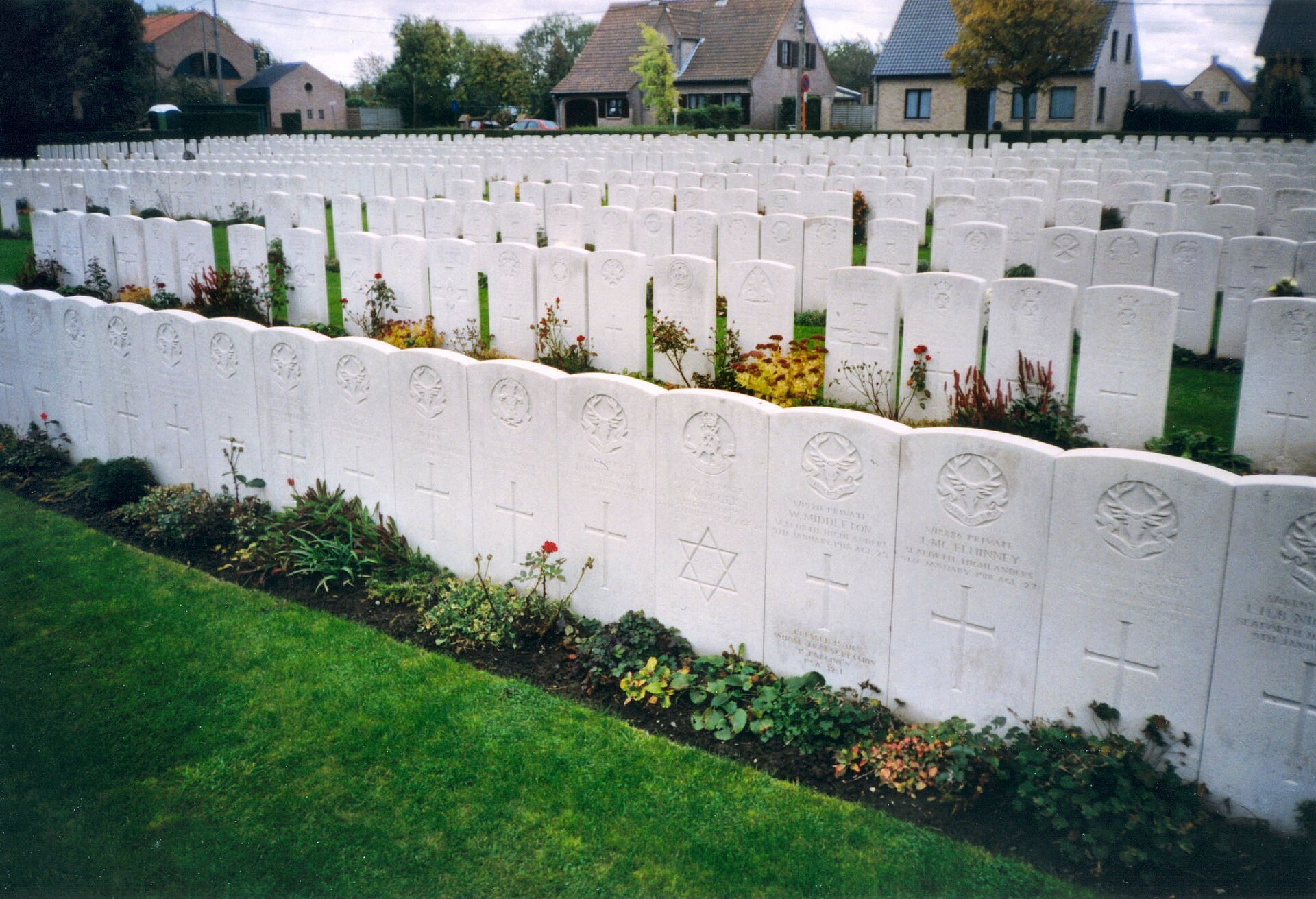
La Brique Military Cemetery No.1 is a small British war cemetery on the outskirts of Ypres (Ieper), in the Belgian province of West Flanders. It sits within the area once known as La Brique, named after a small brickworks that stood nearby before the First World War and has long since disappeared. The site lies within the Ypres Salient, the bulging stretch of front line around Ypres where some of the deadliest fighting of the entire Western Front took place between 1914 and 1918.
Why does this cemetery exist here?
Cemetery No.1 was begun in May 1915 and used until December of that same year — a working life of only a few months, coinciding with intense fighting around Ypres in the aftermath of the Second Battle of Ypres. It served as a burial ground for soldiers who died in the nearby trenches and dressing stations. Across the road stands its counterpart, La Brique Military Cemetery No.2, which remained in use for longer and holds far more burials. The two sites are separated today by the main road but are recorded and maintained as two distinct cemeteries.
Who is buried here?
Cemetery No.1 contains 91 First World War burials, four of which remain unidentified. Almost all of the identified casualties were soldiers of the United Kingdom. It is one of dozens of small, front-line burial grounds scattered across the Ypres Salient, each tied to a specific sector of the line and a specific window of fighting rather than to a single large battle.
Who designed the cemetery?
Both La Brique cemeteries were designed by Sir Reginald Blomfield, one of the principal architects who worked with what is now the Commonwealth War Graves Commission (CWGC) on cemeteries across Belgium and France after the war. The ground itself was granted to Britain in perpetuity by King Albert I of Belgium, in recognition of the sacrifices made by soldiers of the British Empire in the defence and liberation of Belgium.
How do you get there?
The cemetery lies on the edge of Ieper, reached by following Oude Veurnestraat, which becomes Diksmuidseweg and then Brugseweg, before turning left into Industrielaan at the traffic lights and right into Pilkemseweg. The cemetery is a short distance further along, on the right-hand side. The surrounding area today is quiet and semi-industrial, a world away from the battlefield landscape that once surrounded it.
Frequently asked questions
What's the difference between La Brique No.1 and No.2? No.1 is the smaller of the two and had a much shorter working life, from May to December 1915, while No.2 remained in use longer and contains considerably more graves. The main road now separates the two sites.
Where does the name La Brique come from? It comes from a small hamlet and an old brickworks (French: brique, meaning brick) that stood in the area before the First World War.
Who is buried at La Brique Cemetery No.1? Overwhelmingly soldiers of the United Kingdom who died in 1915 during fighting in the Ypres Salient, including four whose identities were never established.
Can visitors access the cemetery freely? Yes. Like almost all CWGC cemeteries in Belgium, it is open to visitors year-round with no need to book ahead.
Is it worth combining with other nearby sites? Yes — the countryside around Ieper contains dozens of similar CWGC cemeteries and memorials from the Ypres Salient, making it easy to build a fuller picture of the fighting on this stretch of the front in a single visit.
Nearby places

Earn badges for the places you visit
Download NextOnTrip, discover new places and check off your trails.