About this place
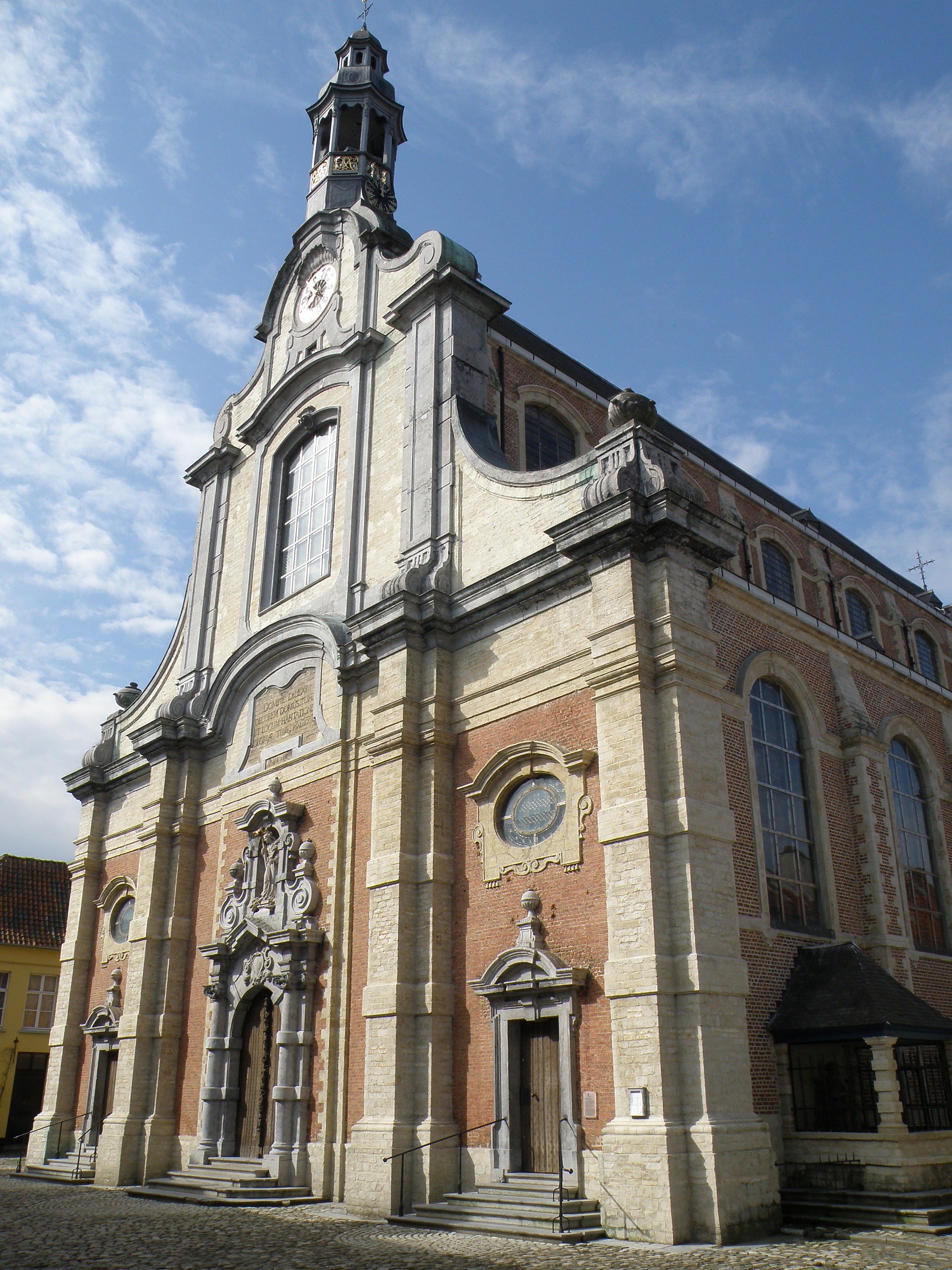
Kluizekerk is a Gothic church in Lier, a town in the Belgian province of Antwerp, whose roots reach back to the 13th century and are tied directly to the founding legend of the town's patron saint, Saint Gummarus.
Where does the name and founding legend come from?
The story of this site begins around 1262, when a small chapel was built here to commemorate a miracle attributed to Saint Gummarus. According to tradition, he miraculously restored a felled tree to life using his belt. Shortly after the chapel was built, a hermitage was added next to it — the Dutch word for hermitage, "kluis", is the origin of the church's popular name — and a hermit known as Jan the Hermit came to live there. It is this hermit tradition that gave the church its lasting nickname, Kluizekerk, literally "the hermitage church."
How did the building evolve over the centuries?
The original modest chapel and the hermitage beside it did not survive in their initial form. In 1410 the old hermitage was demolished to make way for construction of the actual church in the Gothic style. The work proceeded in stages: a nave was added in 1413, and six years later, in 1419, the choir was completed. Another significant milestone came in 1469, when a new hermitage was built to replace the earlier one. In 1479, at the very center of the choir — precisely where the miracle of the felled tree was said to have taken place — an iron framework shaped like a tree, bearing an image of Saint Gummarus, was installed. This symbolic feature permanently linked the church's architecture to the story that gave rise to it in the first place.
What role did the Dominicans play?
A major turning point in the history of Kluizekerk came in 1612, when the church passed into the hands of the Dominicans of Lier. The friars reached an agreement with the town authorities of Lier under which, in exchange for taking over Kluizekerk and the Sint-Anna almshouse, they committed to preaching, caring for the sick, and providing education to the local population. From that point on, the church functioned as part of a larger monastic complex, serving purposes that went beyond purely religious worship — it became a place where faith, social care, and teaching intersected.
What is the state of the church today?
Kluizekerk has been protected as a listed monument since 1938, a status that reflects its historical and architectural value for Lier and the wider region. Despite this protection, the building is no longer used for its original religious purpose — since 2020 it has stood empty, awaiting a new function. This is a situation shared by many historic churches across Belgium, where declining congregations and the high cost of maintaining heritage buildings have pushed municipalities and institutions to look for alternative uses, whether cultural, exhibition-related, or educational.
Why is Kluizekerk worth seeking out when visiting Lier?
For visitors exploring Lier — a town known for its picturesque main square, the Belfort tower, and its canals — Kluizekerk offers an interesting, less obvious stop on the itinerary. It is a site that layers several centuries of history: a medieval religious legend, Gothic architecture built up in stages throughout the 15th century, an episode tied to the Dominican order, and a very present-day question about how historic religious buildings can find new life after losing their original function. Although the interior is not open for regular visits, the church itself remains a defining feature of Lier's historic town center and a testament to the long continuity of this particular spot.
Frequently asked questions
Where does the name Kluizekerk come from? The name refers to the hermitage ("kluis" in Dutch) built next to the original chapel shortly after 1262, where a hermit named Jan came to live.
Which saint is this church associated with? The church is linked to the legend of Saint Gummarus, the patron saint of Lier, who is said to have miraculously brought a felled tree back to life.
Does the church still serve a religious function today? No — since 2020 the building has been out of use and is awaiting a new purpose, while remaining a protected monument since 1938.
Nearby places

Earn badges for the places you visit
Download NextOnTrip, discover new places and check off your trails.