About this place
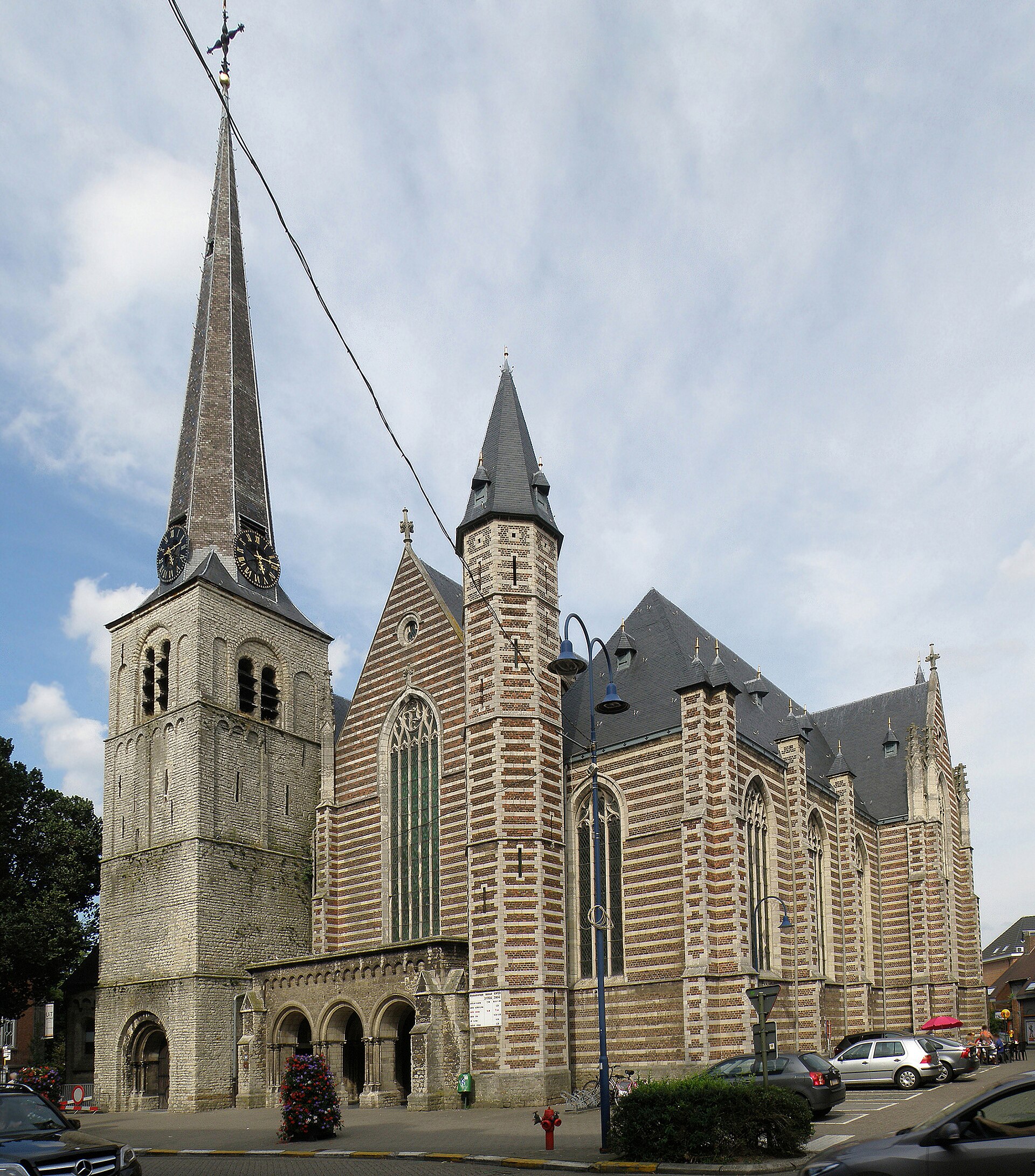
Sint-Martinuskerk is the parish church of Kontich, a small municipality in the Belgian province of Antwerp. Standing at the heart of the town, it has served as the main parish church for centuries, and its Romanesque tower ranks among the oldest surviving pieces of religious architecture in the region.
Where did the church come from?
The origins of the building go back to 1087–1149, when it was founded by the Berthout family, the local lords of the time. Interestingly, the church was originally dedicated to Our Lady rather than to Saint Martin. Only after a neighboring chapel dedicated to Saint Martin burned down was its chaplaincy transferred here — and it is from that transfer that the church took its present dedication.
What survives from the medieval period?
The oldest and most valuable part of the building is the west tower, raised around 1149 in the Romanesque style out of light-colored stone. It rises in three stories separated by horizontal string courses. The ground floor is pierced by a wide, round-arched portal set within a recessed panel. The first floor is left plain, with no ornament, while the second is decorated with rows of small arcades and pilasters and pierced by narrow loophole-like openings reminiscent of defensive slits. The top story is a later addition and shows more modern reworking, marked by triple rows of arches typical of the later building phases.
How did the church change over the centuries?
In 1502 the choir was renewed, and in the 16th century an elaborately carved sacrament house — a niche for the Blessed Sacrament typical of the Southern Netherlands at the time — was added. Disaster struck in 1572, when the church burned down completely. Reconstruction only began in 1604 and continued until 1612.
The 19th century brought further major change. In 1826, work began on enlarging the church in a Neoclassical style, to a design by the architect A. D. De Wolf. In the following century, in 1928, the church was enlarged a second time, this time to plans by Edward Careels, giving it much of the Neogothic character it retains today alongside its Romanesque tower.
The building did not escape the upheavals of war either — during the Second World War it suffered minor damage, which was repaired once the fighting ended. In January 2017, a further phase of renovation work on the building began.
What has been found during excavations?
The ground around the church holds traces of settlement far older than the current building. In 1924, excavation work was carried out in the churchyard, and in 1988 archaeologists from the AVRA society uncovered two pre-Romanesque graves just outside the tower — evidence that the site served a religious function long before the present church was built.
Frequently asked questions
How old is the church tower in Kontich? The Romanesque west tower dates to around 1149 and is the oldest surviving part of the church.
Why is the church named after Saint Martin if it was originally dedicated to Our Lady? The dedication changed after the chaplaincy of a neighboring, burned-down church dedicated to Saint Martin was transferred here.
When did the church burn down, and how long did reconstruction take? Fire destroyed the church in 1572, and reconstruction lasted from 1604 to 1612.
What did archaeologists find during excavations near the church? In 1988, AVRA archaeologists found two pre-Romanesque graves next to the tower, following earlier excavation work in the churchyard in 1924.
Nearby places

Earn badges for the places you visit
Download NextOnTrip, discover new places and check off your trails.