About this place
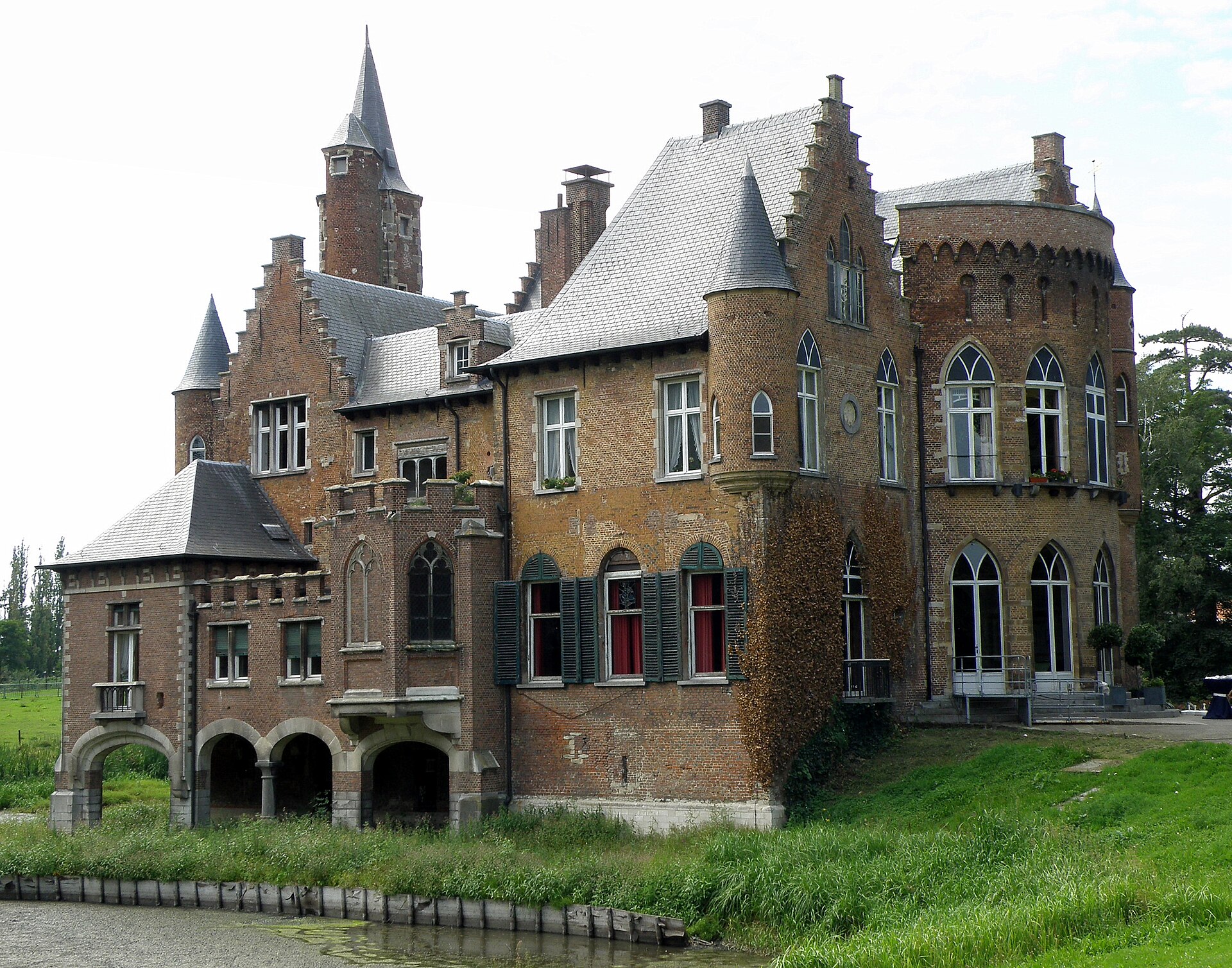
Kasteel Altena is a moated castle in Kruibeke, a municipality in the East Flanders province of Belgium, standing along Burchtstraat close to the Scheldt river valley. It belongs to a group of smaller historic noble residences that have survived in the region despite repeated fires and wartime destruction over the centuries.
How did the castle's history begin?
An earlier fortified building stood on this site before being completely destroyed by fire in 1584. The blaze left little of the original structure standing, forcing its owners to rebuild from scratch. A new castle rose ten years later, in 1594, this time built as a proper water castle surrounded by a moat — a defensive and representative feature that was standard for noble residences across the Low Countries and neighboring Flanders at the time.
Who owned Kasteel Altena?
For more than two and a half centuries, until 1850, the castle remained in the hands of the noble de Lanfranchye family, who held the lordship of Kruibeke. The family belonged to the local aristocracy and managed the estate tied to the castle across generations. After 1850, the property passed to Eduard le Boucq de Beaudignies, a figure of local importance who served as mayor of Kruibeke in 1848.
How did the building's appearance change?
Another major chapter in the castle's history came in 1878, when Julius le Boucq de Beaudignies commissioned an expansion of the residence. The work was carried out to designs by architect Joseph Schadde, a respected figure active in Belgium at the time. The expansion gave the residence a grander, nineteenth-century character while preserving the original layout of the moated castle.
What is the castle used for today?
The story of Kasteel Altena did not end with its residential role. For more than fifty years the building housed a rest home, serving as a care facility for elderly residents of the area. Afterward, the property was taken over by the Brothers of Charity (Broeders van Liefde) congregation from Ghent, who converted the former water castle into a study and training center for novices. This shift in purpose is common among historic residences in Belgium, many of which found new life as educational, care, or religious institutions once their residential function ended.
What should visitors know about the surroundings?
The castle sits in Kruibeke, a small town on the Scheldt river known for its scenic character and proximity to the river's flood-control wetlands. Its location on Burchtstraat makes the building a recognizable landmark within the historic center of the town, though as a facility run by a religious congregation, its interior is not always freely open to casual visitors.
Frequently asked questions
Can Kasteel Altena be visited? The castle now functions as a training center run by a religious congregation, so access to the interior can be limited — it is worth checking ahead of any planned visit.
When was the current building constructed? The current moated castle dates from 1594, built after the previous structure burned down in 1584, with a major nineteenth-century expansion added in 1878.
Who designed the 1878 expansion? The 1878 expansion was designed by architect Joseph Schadde, commissioned by Julius le Boucq de Beaudignies.
Nearby places

Earn badges for the places you visit
Download NextOnTrip, discover new places and check off your trails.