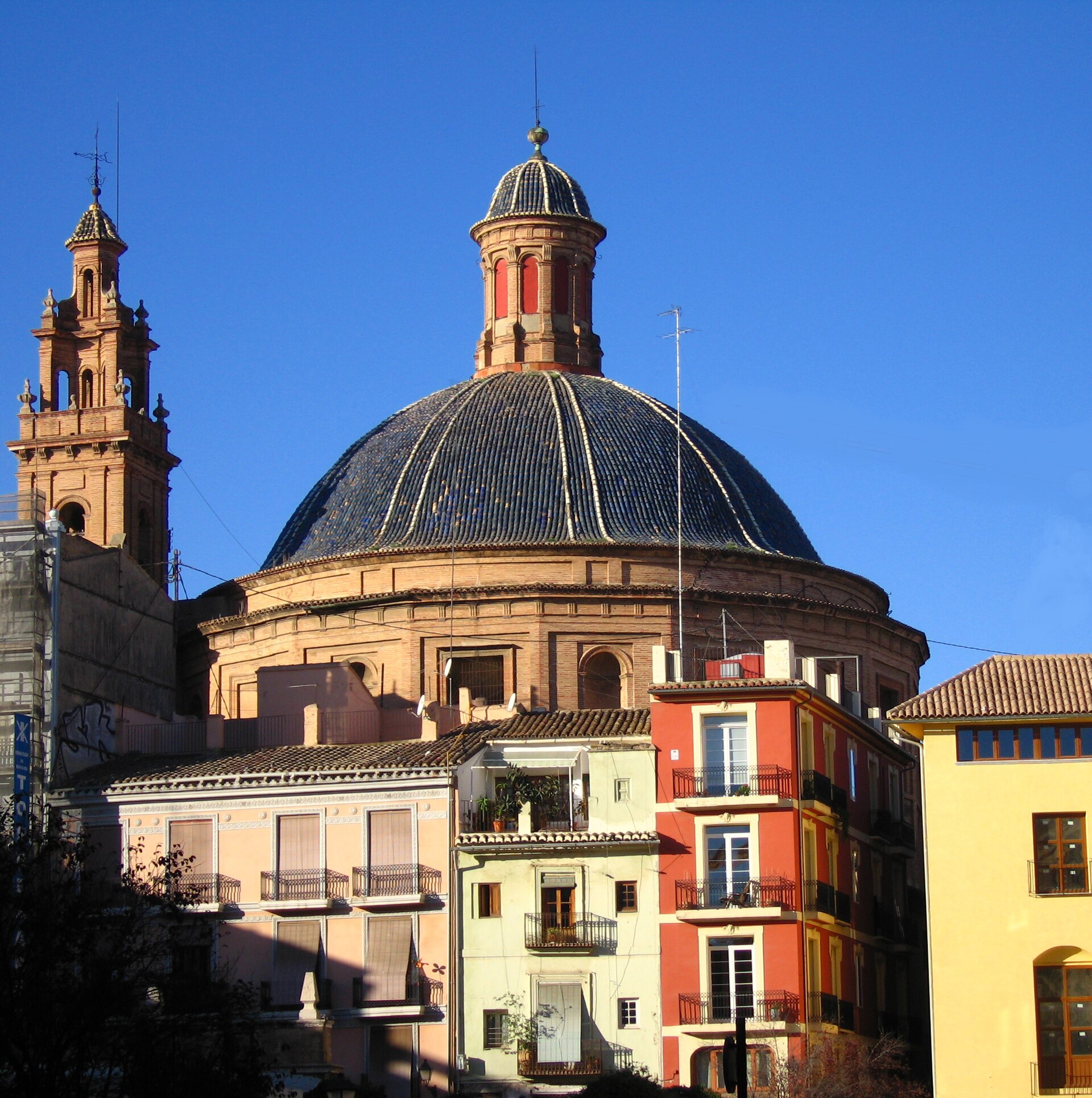
About this place
The Church of San José de Calasanz stands on Carniceros street in the Velluters district of Valencia, right at the edge of the old town (Ciutat Vella). It is a modest but historically significant building tied to the Piarist religious order, and today it serves as an active parish church.
How do you get to the church?
Velluters borders Valencia's historic centre, so the church sits well within walking distance of landmarks such as Plaza del Ayuntamiento or the Mercado Central — usually no more than a fifteen-minute walk. The district is well served by trams and city buses, and Carniceros street itself runs through the dense, partly historic street grid typical of this part of town. Because the lanes are narrow, walking or a shared city bike is the most practical way to reach it; driving and parking in Velluters can be a hassle.
What is the history behind this place?
Construction began in 1767 and finished in 1773. The church was built as part of the Colegio y Convento de las Escuelas Pías, the school and monastery complex of the Piarist order in Valencia. The Escuelas Pías were founded by José de Calasanz, born in 1557 in Peralta de la Sal, in Aragón. Calasanz is credited with opening the first free, popular Christian school in Europe — an institution open to children regardless of family background or means. The Valencia church took his name in recognition of that legacy, and for decades it served both the religious community and the students of the adjoining school.
Over time the building evolved into a parish church while keeping its ties to the Piarist tradition — a school run by the order still operates right next door. The building is listed as a cultural property in Valencia, underlining its importance to the city's religious and educational architectural history.
What will you see inside and around it?
The interior reflects the plainer, more functional style typical of 18th-century teaching-order churches, rather than the grand Baroque decoration found in some of Valencia's larger churches — but it is stylistically consistent with the wider monastery-and-school complex it belonged to. The surrounding streets of Velluters are worth a slow walk in their own right: a densely built neighbourhood where you can still get a feel for Valencia before large-scale tourist restoration projects reshaped other parts of the city. It's a good spot to step off the main sightseeing route and see a district where daily life still revolves around local schools, shops, and the parish.
When is the best time to visit?
Since the church functions as a working parish, plan your visit around service times and opening hours — access to the interior may be limited outside of Mass. Weather-wise, spring (March–May) and autumn (October–November) are the most comfortable seasons for exploring Velluters on foot, offering mild temperatures without the summer heat that can make longer walks around Valencia's city centre tiring.
Frequently asked questions
Is the Church of San José de Calasanz open to visitors? As an active parish, it is generally accessible mainly during services and set opening hours — check the current schedule before visiting rather than expecting free access at all times.
When was the church built? It was constructed between 1767 and 1773, as part of a larger school-and-monastery complex belonging to the Piarist order.
Who was José de Calasanz, the church's namesake? He was an Aragonese priest, born in 1557, who founded the Piarist order and opened the first free, popular school for children in Europe.
Is the Piarist school next to the church still operating? Yes, the educational tradition started by the Escuelas Pías continues — a school run by the order still operates in the immediate vicinity of the church.
Nearby places

Earn badges for the places you visit
Download NextOnTrip, discover new places and check off your trails.