About this place
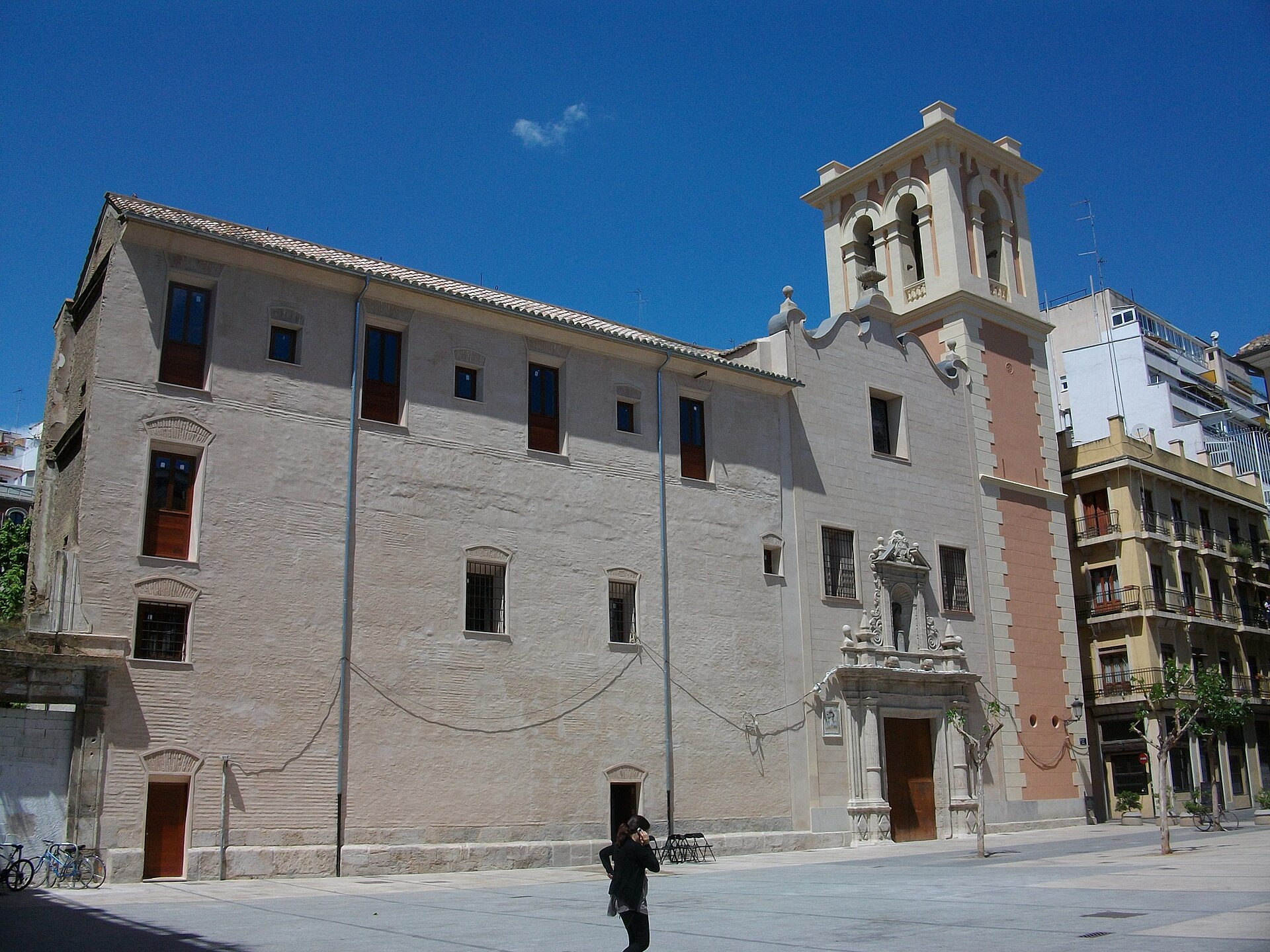
Iglesia del Pilar, formally the parish church of Nuestra Señora del Pilar y San Lorenzo, is a Baroque church in the heart of Valencia, on Guillem de Castro street. It's easy to walk past on the way to the city's bigger landmarks, but its interior counts among the best-preserved examples of Valencian Baroque decoration.
Where is the church located?
The church stands on Guillem de Castro, one of the main streets that trace the line of Valencia's old city walls, right on the edge of the historic center. It's a setting typical of the old town — narrow streets, tightly packed houses, and churches sitting shoulder to shoulder with everyday buildings. The church still functions as an active parish, so visiting hours may be limited around services.
What is the history behind the church?
The site dates back to 1611, when Dominican friars founded a convent here. The building standing today was actually the second church erected for the community — the first one proved inadequate. Construction of the current church, laid out on a Latin cross plan, began with the foundations in 1659. The nave vault took shape around 1675, the dome was finished in 1685, and the interior decoration was completed in 1692 — meaning more than three decades passed between the first foundations and a fully finished, decorated interior.
The stone facade visitors see today came somewhat later, in 1730, a date carved directly into the portal. The front elevation itself is fairly restrained: aside from three windows and the portal, there's little ornament beyond a mixtilinear cornice topped with stone balls at each end and a fluted pyramid at the center. That contrast between a sober facade and a richly decorated interior is one of the church's more striking features.
The building's fortunes changed in the 20th century. In 1964, the Dominican convent that had surrounded the church for centuries was demolished, leaving only the church itself, which has functioned ever since as a standalone parish within Valencia's urban fabric.
What should you look for inside?
The interior represents mature Baroque with clear Rococo touches. The layout follows the classic pattern for churches of the period — a Latin cross plan, a single nave, side chapels, and windows set along one side only. What draws the eye is the decoration: rosettes, decorative panels, and heavily gilded stuccowork that contrasts against white walls and vaults, creating an impression of lightness despite the density of ornament.
The decorative program belongs to a later, more evolved phase of Baroque — the forms are lush and naturalistic, even though the actual surface covered in ornament is smaller than in earlier Baroque interiors. Particularly worth seeking out are the twin portals in the transept, built with characteristic estipite pilasters that echo Michelangelesque models filtered through the work of Vignola. The ensemble is completed by an 18th-century tiled baseboard decorated with floral motifs and narrative scenes — a detail easy to overlook but well worth a closer look.
When is the best time to visit?
Since the church is an active parish, its accessibility follows the rhythm of religious services, so it's worth checking current information locally or with the parish before visiting. For anyone interested in architecture and sacred art, quieter hours outside of Mass times allow for a more unhurried look at the stuccowork and tiled baseboard.
Frequently Asked Questions
Is Iglesia del Pilar the same as the Basilica del Pilar in Zaragoza? No. This is a separate, much smaller church in Valencia — its full name is the parish church of Nuestra Señora del Pilar y San Lorenzo, unrelated architecturally or administratively to the basilica in Zaragoza.
When was the church built? The foundations of the current building were laid in 1659, and the interior decoration was completed in 1692. The facade with its portal dates from 1730.
Is the Dominican convent still active next to the church? No, the convent that once surrounded the church was demolished in 1964. Only the church building survives, now functioning as an independent parish.
What is the main highlight inside? The gilded Baroque stuccowork, the twin transept portals built with estipite pilasters inspired by Michelangelesque models, and the 18th-century tiled baseboard with floral and narrative scenes.
Nearby places

Earn badges for the places you visit
Download NextOnTrip, discover new places and check off your trails.