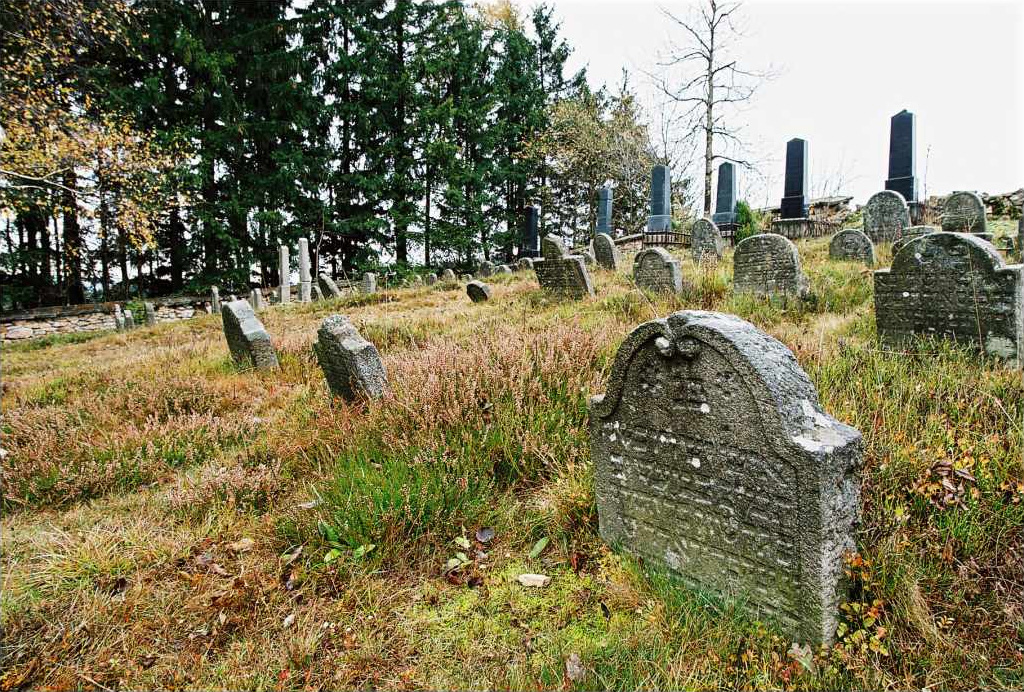
About this place
The New Jewish Cemetery at Olšany is the largest Jewish burial ground in the Czech Republic and one of the most significant sites of Jewish heritage in Prague. It sits in the Žižkov district, right next to the Line A metro station Želivského, between Želivského and Nad Vodovodem streets.
How did the cemetery come to be?
The cemetery was established in 1890, after the older Jewish cemetery on Fibichova Street in Žižkov could no longer meet the needs of Prague's growing Jewish community. City authorities decided to found a new, much larger burial ground designed to serve the community for at least a century. Covering more than 10 hectares, it was planned to hold approximately 100,000 graves. Today it contains over 27,000 tombstones, making it the country's largest Jewish cemetery both by area and by number of burials. In 1958 it was declared a national cultural monument.
What can visitors see on the grounds?
Near the entrance stands a Neo-Renaissance ceremonial hall with a dignified prayer room, a purification house used for funeral rites, and administrative buildings, all enclosed by a protective wall. The cemetery is laid out in sections that were developed one after another over the decades, so walking through it feels like tracing the evolution of architectural styles — from Neo-Gothic through Neo-Renaissance, Prague and Viennese Art Nouveau, Classicism, Purism, and the Constructivism of the 1920s and 1930s. The tombstones vary widely in shape, ornamentation, and inscriptions, reflecting the changing tastes and social standing of the families buried there.
Where is Franz Kafka's grave?
The cemetery's best-known grave belongs to Franz Kafka and his parents, located at plot number 21–14–21. The tombstone takes the form of a hexagonal crystal pillar with the names and dates of the deceased on its front face. To find it, follow the main avenue eastward, turn into row 21, then turn left along the wall — the Kafka family grave sits at the corner of that block. Other notable people buried at Olšany include rabbis Dr. Nathan Ehrenfeld and Dr. Gustav Sicher, writer Ota Pavel, and poet Jiří Orten.
What rules should visitors follow?
The cemetery is closed on Saturdays and on Jewish holidays, so it's worth checking opening times before planning a visit. Male visitors are expected to cover their heads — head coverings are usually available to borrow at the entrance. Visitors should keep quiet and respectful, remembering that this remains an active burial site rather than a purely touristic attraction.
Frequently asked questions
How do you get to the New Jewish Cemetery at Olšany? The easiest way is by Line A metro to Želivského station, which lets out right by the cemetery entrance.
Is admission free? Entry rules and any fees are worth confirming shortly before your visit, since they can vary by season and day of the week.
Can you take photographs? Photography is generally allowed as long as visitors remain respectful of the site and other people present, and it's best avoided in ways that would disturb the solemn atmosphere of the cemetery.
Is this the same cemetery where Franz Kafka is buried? Yes — the writer's grave, together with those of his parents, is located within the New Jewish Cemetery at Olšany.
Nearby places

Earn badges for the places you visit
Download NextOnTrip, discover new places and check off your trails.