About this place
The Jewish cemetery in Mašťov is one of the better-preserved, if still little-known, traces of a centuries-long Jewish presence in northwestern Bohemia. It lies in a small wooded patch surrounded by fields, roughly 750 metres northwest of the centre of Mašťov, a small town in the Chomutov district of the Ústí nad Labem region.
When was the cemetery founded?
The cemetery was established as early as the 15th century, making it one of the older Jewish burial grounds on the territory of today's Czech Republic. The Jewish community of Mašťov itself is first documented in the first half of the 16th century, although it likely existed earlier still. Apart from a gap between 1617 and 1647, the community lived and worshipped in the town continuously until the Second World War, reaching its peak size during the 19th century. As the community grew, the cemetery was extended several times, eventually reaching its current area of 4,335 square metres.
How many gravestones have survived?
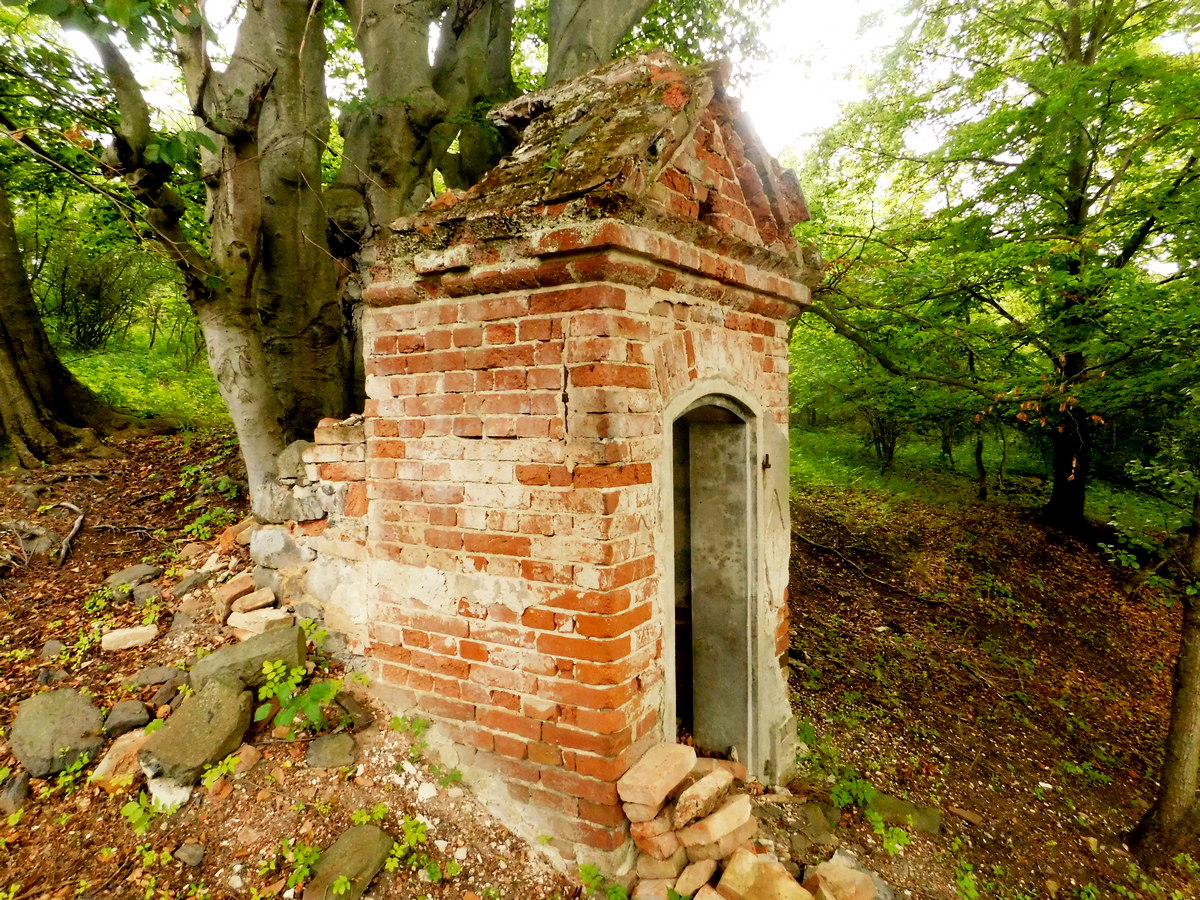
Around 170 tombstones remain on the site today, the oldest dating back to the 18th century. That is a substantial number for a cemetery serving such a small town, and it reflects the standing the local Jewish community held in the region for several centuries. A mortuary building once stood within the cemetery grounds; today only fragments of its surrounding walls remain, and the cemetery's own boundary wall is likewise partly damaged.
What happened to the cemetery during the Second World War?
The cemetery's fortunes changed sharply in 1938, when Nazi Germany annexed the Czechoslovak borderlands, Mašťov among them. The cemetery was closed and deliberately damaged: most of the tombstones were toppled, and those considered the most valuable were removed from the site altogether. A stranger footnote to this history involves 49 of the gravestones, which ended up in the hands of filmmakers and were used away from the cemetery; today those stones stand in the new Jewish cemetery in Teplice, far from the ground they originally marked.
What does the cemetery look like today?
As recently as around 2010, the site was heavily overgrown with self-seeded and invasive vegetation, and a number of the surviving tombstones lay toppled on the ground. That changed with a restoration effort carried out in August and November 2011 by volunteers from the Union of Jewish Youth, working together with the Jewish community of Teplice. Their work cleared the undergrowth and set the gravestones back in order where possible, restoring a measure of dignity to the site.
Can visitors walk around the cemetery?
Yes, the cemetery is freely accessible to visitors. Because it sits in a small woodland patch amid open fields, it is best reached on foot or by bicycle from Mašťov itself — a quiet walk through the rural landscape of the Kadaň–Karlovy Vary highlands.
Why is it worth a visit?
The Jewish cemetery in Mašťov compresses into a single site the whole arc of Jewish settlement on the Bohemian borderlands — from its medieval beginnings, through a 19th-century peak, to Nazi-era destruction, decades of postwar neglect, and finally a modern effort to preserve what remains. It is a meaningful stop for anyone interested in the history of Jewish communities in Central Europe and in the material heritage of the Sudeten borderlands.
Frequently asked questions
Where exactly is the Jewish cemetery in Mašťov located? About 750 metres northwest of the centre of Mašťov, in a small wooded area surrounded by fields.
How old is the cemetery? It was founded in the 15th century, with surviving tombstones dating from the 18th century onward.
How many gravestones remain on site? Around 170 tombstones.
What happened to the cemetery during the Second World War? After the Nazi annexation of the borderlands in 1938, the cemetery was closed and vandalized, and a number of tombstones were removed; 49 of them ultimately ended up in the new Jewish cemetery in Teplice.
Can the cemetery be visited today? Yes, it is freely accessible; it was cleared and restored by volunteers during a 2011 revitalization effort.
Nearby places

Earn badges for the places you visit
Download NextOnTrip, discover new places and check off your trails.