About this place
The Jewish cemetery in Podbořanský Rohozec is a small, secluded burial ground set on a hillside in the Louny district of northwestern Bohemia, Czech Republic, near the town of Podbořany. The site dates back to the second half of the 19th century, a period when many Czech Jewish families were relocating to larger towns, leaving smaller rural communities like this one to maintain their own dedicated cemeteries.
Where is the cemetery located?
The cemetery sits in a quiet, rural setting on a hill close to water, a short distance from the built-up area of Podbořanský Rohozec. Its coordinates are approximately 50.208° N, 13.271° E. There is no signpost marking the site, and reaching it involves crossing private land, so visitors are encouraged to be respectful and discreet when approaching.
What does the site look like today?
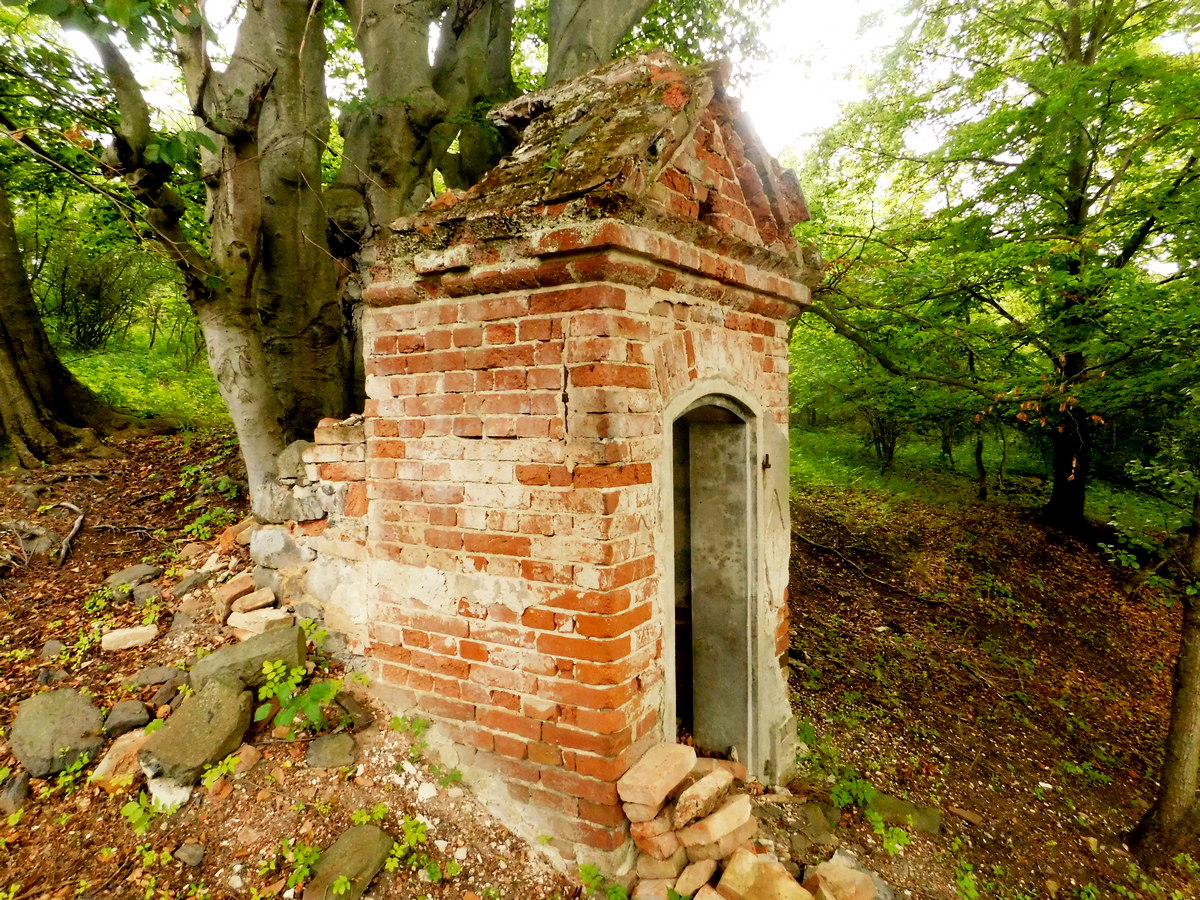
The cemetery covers roughly 1,493 square meters, a footprint that has remained unchanged since before the Second World War. A masonry wall, partly damaged, encloses the grounds, and the gate is left unlocked, making the site technically accessible to anyone who wishes to visit. Somewhere between twenty and one hundred gravestones survive on the grounds, dating mainly from the second half of the 19th century through the 20th century.
What do the gravestones look like?
The headstones are carved mainly from granite and sandstone, finely smoothed and shaped. Their inscriptions are bilingual, combining Hebrew and German — a reflection of daily life for Jewish residents of this Czech-German borderland, who moved between religious tradition and the predominantly German-speaking culture of the wider region at the time.
Why does this place matter historically?
The cemetery stands as physical evidence of a small but organized Jewish community that once lived in this part of Bohemia. The town of Podbořanský Rohozec is also known as the birthplace of Eduard Glaser (1855–1908), a noted explorer and scholar of South Arabia, which gives the location a historical significance that extends beyond its role as a burial site. Following the Holocaust and the subsequent expulsion of the German-speaking population from Czechoslovakia after World War II, the local Jewish community effectively disappeared, leaving the cemetery as one of the few remaining material traces of its former presence.
Is it worth visiting?
This is not a conventional tourist attraction with visitor facilities — it is a memorial site that calls for quiet and respect rather than casual sightseeing. For travelers interested in Czech Jewish history, genealogy, or lesser-known corners of the Louny region, it offers an authentic and meaningful stop off the beaten path in western Bohemia.
Frequently asked questions
Is the cemetery open to the public? Yes, the gate is unlocked, though access crosses private land in part, so visitors should approach discreetly and respectfully.
How many gravestones remain? An estimated twenty to one hundred stones survive, in varying states of preservation.
How old are the oldest graves? The cemetery came into use in the second half of the 19th century, and its oldest surviving inscriptions date from that period.
Who is the most notable person connected to this place? The explorer and Orientalist Eduard Glaser, born in Podbořanský Rohozec in 1855.
Nearby places

Earn badges for the places you visit
Download NextOnTrip, discover new places and check off your trails.