About this place
The Jewish cemetery in Bzenec ranks among the best-preserved and most carefully maintained Jewish burial grounds in Moravia, located in the town of Bzenec in the Hodonín district of southeastern Czechia. Spread across more than 6,200 square meters, it holds roughly a thousand surviving gravestones (matzevot), some dating back to the turn of the 17th and 18th centuries.
Where did the Jewish community of Bzenec come from?
Jewish settlement in Bzenec dates back to the second half of the 14th century, making the local community one of the oldest documented in Moravia. Over the following centuries the community grew steadily, reaching its peak in the mid-19th century: in 1857 nearly a thousand people of Jewish faith lived in the town. From that point the population declined gradually, and by 1930 fewer than 150 Jewish residents remained, reflecting the broader trend of Jews moving from small towns toward larger urban centers.
How did the cemetery evolve over the centuries?
The exact founding date of the cemetery is unknown, though it likely dates to the medieval period alongside the town's earliest Jewish settlers. The grounds preserve valuable Baroque and Classicist tombstones, originally carved from sandstone, granite, and marble, with later stones made of black granite and marble. This variety of materials and styles reflects the changing funerary tastes of successive generations of Bzenec's residents.
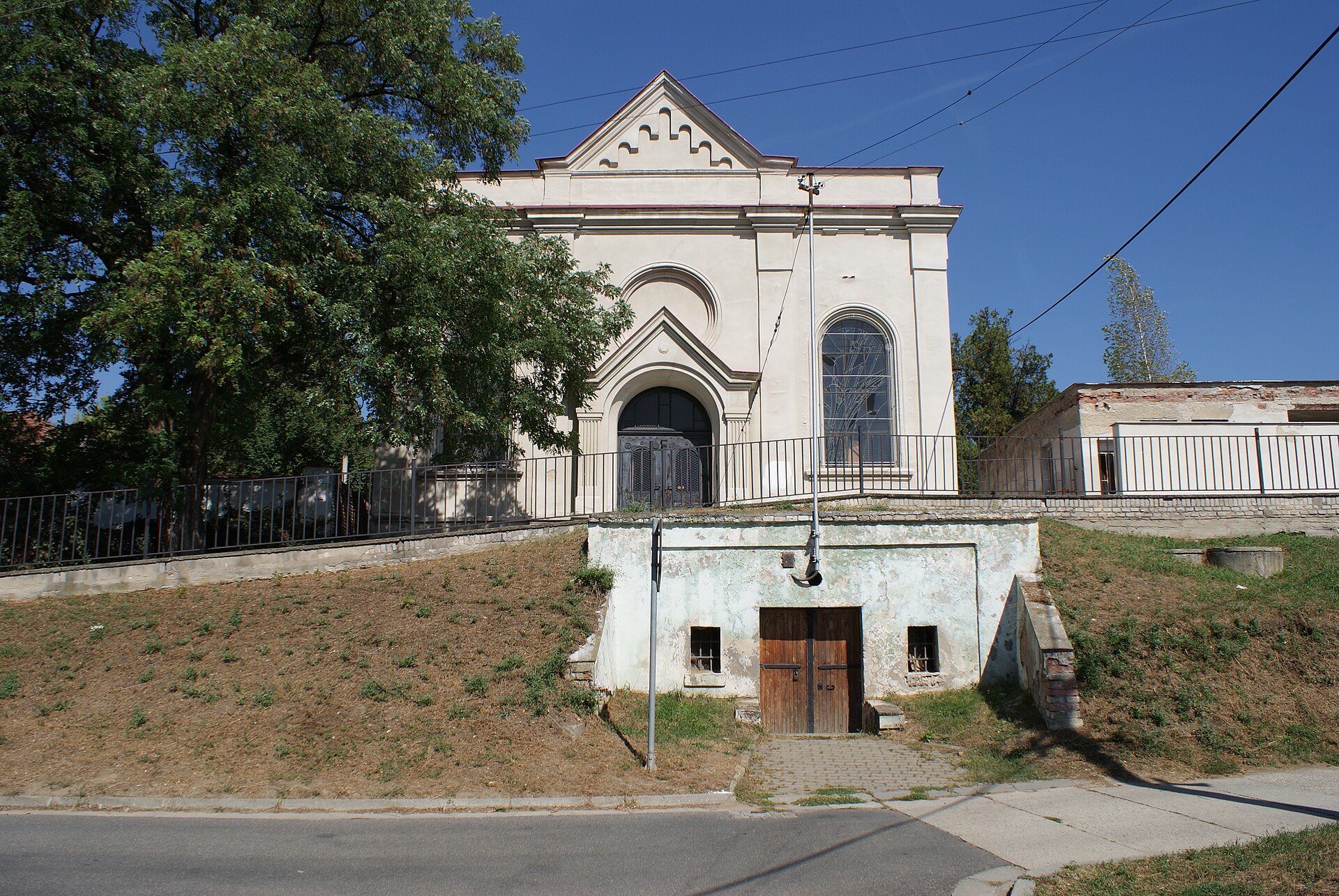
At the cemetery entrance stands a ceremonial hall, built in 1909 in a historicist style by local builder Bedřich Holomek. After World War II the building lost its original purpose and served for decades merely as storage space.
What happened to the community during World War II?
The fate of Bzenec's Jewish community, like that of Jews across Czechia, was sealed by the Holocaust. The local Jewish community formally ceased to exist in 1940, and in January 1943 the town's remaining Jewish residents were deported to the Theresienstadt ghetto, from where most were sent on to the Auschwitz extermination camp. Despite the destruction of the community, burials continued at the cemetery for some time after the war ended.
What does the cemetery look like today?
Since 1988 the cemetery has been protected as a cultural monument. The ceremonial hall has undergone extensive restoration: efforts to return it to its original condition were initiated in 2017 by local resident Libor Kuchař, while the building itself has been owned since 2003 by the Federation of Jewish Communities in the Czech Republic. Thanks to these efforts, the Bzenec cemetery is today considered one of the best-preserved and most well-kept Jewish cemeteries in the Moravian region.
Frequently asked questions
How large is the Jewish cemetery in Bzenec? The cemetery covers more than 6,200 square meters and holds approximately one thousand surviving gravestones.
When was the cemetery established? The exact founding date is unknown, but it likely dates to the medieval period, tied to Jewish settlement from the second half of the 14th century.
Can visitors tour the ceremonial hall? The 1909 ceremonial hall has been restored after years of use as storage; it is cared for by the Federation of Jewish Communities in the Czech Republic.
What happened to Bzenec's Jewish community? The community formally ceased to exist in 1940, and in January 1943 its remaining members were deported to Theresienstadt and Auschwitz.
Nearby places

Earn badges for the places you visit
Download NextOnTrip, discover new places and check off your trails.