About this place
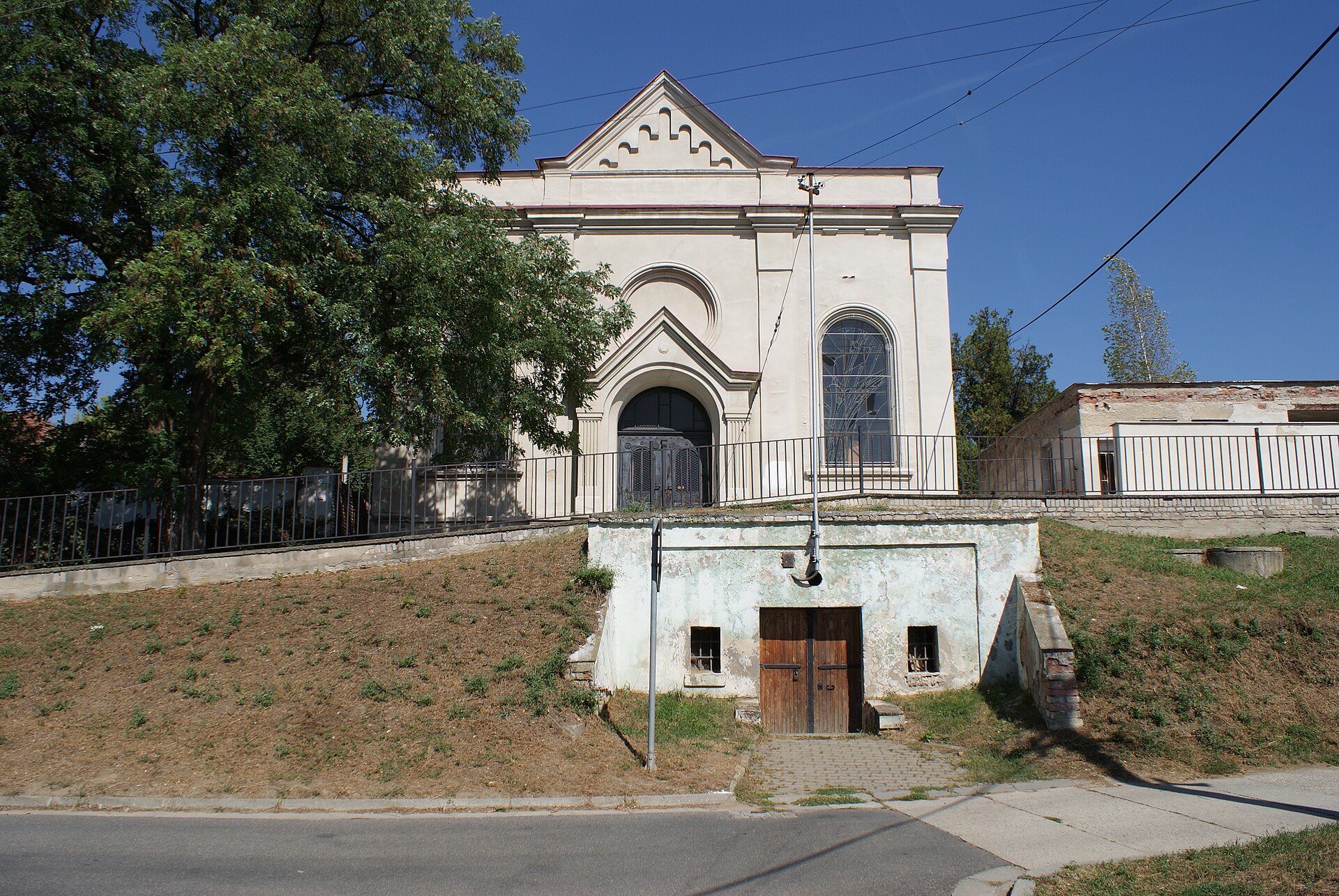
The Jewish ceremonial hall in Bzenec stands at the entrance to the Jewish cemetery in Bzenec, a small town in South Moravia, Czechia. The building once served as the local Jewish community's pre-burial hall and remains closely tied to the history of one of the region's better-preserved Jewish cemeteries.
What was the ceremonial hall used for?
The hall functioned as a pre-burial house (beit olam, literally "house of eternity"), where the deceased were ritually prepared before burial according to Jewish custom. It stands right by the gate leading into the cemetery grounds, making it the natural point of entry for anyone visiting the site today. The building's facade still carries a restored Hebrew inscription that translates as "house of eternity" - a term traditionally used across Jewish communities for burial grounds and their associated structures.
When was the building constructed, and by whom?
The hall was built in 1909 in a historicist style, designed and constructed by local builder Bedřich Holomek. By the time it went up, the cemetery itself had already served the Bzenec Jewish community for centuries - its origins likely reach back to the 16th century, with the oldest surviving tombstones dating from the turn of the 17th and 18th centuries.
What happened to the building after World War II?
After the war, the hall lost its original purpose and for a long period was used only for storage. In the 1980s, the town of Bzenec bought the building from the Jewish Religious Community in Brno. In 1985 its interior was rebuilt and modernized, and it was converted into an inter-denominational funeral hall serving the neighboring municipal cemetery as well.
What is the situation today?
In 2003, ownership passed to the Federation of Jewish Communities in the Czech Republic. Restoration work has been underway since 2018, guided by historical photographs and surviving architectural plans, with the goal of returning the hall to its appearance before the postwar alterations. Once restoration is complete, the building is intended to serve as a space for exhibitions and cultural events tied to the history and heritage of the local Jewish community.
What is notable about the cemetery itself?
The Jewish cemetery in Bzenec covers more than 6,200 square meters and ranks among the more significant sites of its kind in Moravia. Around a thousand tombstones survive there, including valuable Baroque and Classicist examples. The cemetery has been protected as a cultural monument since 1988. Visitors can access the grounds through the adjoining municipal cemetery or by prior arrangement - information on how to enter is posted directly at the gate.
Frequently asked questions
What was the Jewish ceremonial hall in Bzenec used for? It served as the local Jewish community's pre-burial house, where the deceased were ritually prepared before burial in the adjoining cemetery.
When was the building built? It was built in 1909 in a historicist style, designed by local builder Bedřich Holomek.
What does the inscription on the facade mean? The surviving Hebrew inscription translates as "house of eternity," a traditional Jewish term for burial-related buildings.
Can the hall be visited today? The building is currently undergoing restoration; the cemetery grounds it stands beside can be accessed through the municipal cemetery or by prior arrangement on site.
Who owns the building now? Since 2003, ownership has belonged to the Federation of Jewish Communities in the Czech Republic.
Nearby places

Earn badges for the places you visit
Download NextOnTrip, discover new places and check off your trails.