About this place
The Saint-Marcel d'Ardèche Caves form one of France's largest underground networks, stretching for roughly 57 kilometres beneath the hills of the commune of Bidon in the Ardèche department. The system runs between Bidon and Saint-Martin-d'Ardèche, right in the heart of the Gorges de l'Ardèche, one of southern France's best-known canyons. Thanks to their unusual rock formations and traces of past human and animal presence, the caves have long drawn geologists, archaeologists and speleologists for research.
Where are the caves located?
The visitor entrance sits in the commune of Bidon, on a plateau overlooking the Ardèche canyon, at roughly 44.332 N, 4.541 E. The area is popular with travellers exploring the Gorges de l'Ardèche by kayak or by road, and the caves make a natural stop alongside sights such as the Pont d'Arc.
How were the caves discovered?
Their modern history begins with chance: in October 1836, a hunter chasing a wounded rabbit stumbled into the cavity. He came back in July 1838 with friends, and that visit revealed just how vast the system was and how rich its rock formations were. Word spread quickly, and with it came a problem — visitors began breaking off and carrying away pieces of the formations. To stop the damage, the local mayor, the Marquis de Bernis, organised the first supervised visits starting in October 1838. The name "Grottes de Saint-Marcel" became established over the following decades of the nineteenth century, and after adaptation works the cave reopened to the public in 1882. In 1934 the site was placed under heritage protection in recognition of its speleothems and its prehistoric archaeological finds.
What is inside the caves?
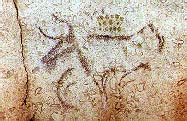
The interior is known for the sheer variety of its concretions — stalactites, stalagmites, draperies and gour pools. A particular highlight is a cascade formed of terraced gour basins, considered a formation without equal elsewhere in Europe. The extensive galleries and chambers have served for years as a research ground for scientists studying karst geology, palaeontology, and evidence of human presence dating back thousands of years.
What is a visit like?
The section open to the public is visited on a guided tour lasting about an hour. The guide covers the cave's geological history, its archaeological significance and its past wildlife, while lighting design highlights the shapes of the formations along the route. Since 2013, part of the underground space has taken on an extra role: the "Cave Naturelle des Gorges de l'Ardèche," a wine-ageing cellar located roughly 80 metres below ground. This made the site the first in France to combine a cave visit with wine tourism, and visitors can round off the tour with a tasting of local wines.
Frequently asked questions
How long is the Saint-Marcel cave system? It runs for about 57 kilometres of galleries, making it one of the largest cave complexes in France.
When were the caves discovered? Their modern discovery dates to 1836, with the first organised visits beginning in 1838 at the initiative of the local mayor.
Can visitors go inside the caves? Yes — the accessible section offers a guided tour of about an hour, with the option of a wine tasting in the underground cellar.
Why are the caves protected? They have been under heritage protection since 1934 because of their unique rock formations and prehistoric archaeological finds.
Where exactly are the caves? In the commune of Bidon, in the Ardèche department, within the Gorges de l'Ardèche canyon, between Bidon and Saint-Martin-d'Ardèche.
Nearby places

Earn badges for the places you visit
Download NextOnTrip, discover new places and check off your trails.