About this place
Chabot Cave is a Paleolithic engraved cave tucked into the limestone cliffs of the Ardèche gorge, roughly 2.3 km northwest of the village of Aiguèze in the Gard department. Also known as Jean-Louis Cave or Mammoth Cave, it sits on the right bank of the river and has been a listed French historic monument since 1903.
How do you get there?
Aiguèze sits right at the edge of the Ardèche gorge, so the easiest approach is by car along the roads tracing the canyon from Saint-Martin-d'Ardèche or Vallon-Pont-d'Arc, then on foot or by canoe along the riverbank toward the cave's location on the right side. The cave itself is not open to visitors — its interior stays sealed off to protect the fragile engravings from humidity, carbon dioxide, and physical damage — so it's best treated as a scenic landmark along a canoe trip or riverside walk rather than a site you actually step inside.
What will you see?
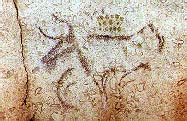
Even though you can't go in, the setting alone is striking: a steep rock face rising above the river, cloaked in Mediterranean scrub, holding one of the oldest documented galleries of Paleolithic art anywhere in the world. Inside, spread across two panels and the ceiling, are engravings of mammoths, horses, deer, and other animals, alongside abstract lines and marks with no clear figurative shape. Bone dating from the cave points to occupation roughly 20,000 to 22,000 years ago, placed in the early Solutrean period.
The cave holds a distinctive place in the history of archaeology. Prehistorian Léopold Chiron explored it in 1878 and published his account of the engravings in 1889. Their authenticity was initially met with skepticism by the scientific community, but was ultimately confirmed after further discoveries at La Mouthe and Pair-non-Pair caves in 1896. That vindication made Chabot Cave the first Paleolithic decorated cave officially recognized as genuine — a year before the paintings of Altamira in Spain gained the same acceptance. That precedent helped break down resistance to the idea that Ice Age humans were capable of such sophisticated art.
When should you visit?
Spring and early autumn are the best times to explore the Ardèche gorge area, with milder temperatures than the height of summer and fewer crowds on the trails and canoe routes. Summer brings heat and heavy canoe traffic through the gorge, which can make a quiet visit to the area around the cave harder to pull off. Whatever the season, keep in mind that the cave itself stays closed to the public year-round — this is a destination for taking in the landscape and the history, not for stepping inside.
Frequently asked questions
Can you go inside Chabot Cave? No. The cave is closed to visitors to protect engravings that are thousands of years old and extremely fragile. Only researchers carrying out conservation and scientific work are granted access.
How far is the cave from Aiguèze? It lies about 2.3 km northwest of the village, on the right bank of the Ardèche river, within the gorge.
Why is Chabot Cave historically significant? Because it was the first Paleolithic painted cave whose engravings were officially recognized as authentic by scientists — a year before Altamira — which helped change how experts viewed Ice Age art.
What animals appear in the cave's engravings? Mostly mammoths, along with horses, deer, and other harder-to-identify figures, plus abstract lines and marks that aren't figurative at all.
Nearby places

Earn badges for the places you visit
Download NextOnTrip, discover new places and check off your trails.