About this place
Grotte de la Tête du Lion is a decorated cave holding Paleolithic rock art in the commune of Bidon, in southern Ardèche, France. You cannot walk inside, but the story of its discovery and the age of its artwork make it a worthwhile stop for anyone exploring this limestone region famous for its painted caves.
How was the cave found?
The discovery was accidental. In March 1963, workers building the D290 departmental road used explosives that blasted open the entrance to a previously unknown cave. Days later, on March 15, speleologists Robert Brun and Michel Pagès went inside and found a wall panel covered in ancient markings. The find was significant enough that the road's route was altered that same year to avoid destroying the rock outcrop containing the cave — the original plan had called for its complete removal.
What do the paintings show?
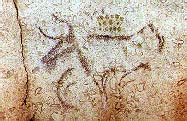
The rock art sits in a side recess of a small chamber known as "la Rotonde," in the middle section of the cave. Researchers place the paintings between the Gravettian and Solutrean periods, deep in the Upper Paleolithic. The panel includes the outline of an aurochs (likely a female Bos primigenus), two heads of male ibex with their distinctive curved horns, and an unfinished deer figure. Clusters of red and yellow-green dots complete the composition, and their exact meaning is still debated among specialists. In total, about 70 meters of the cave have been explored, divided into three sections: a short entrance gallery with a few traces of red pigment, the Rotonde chamber holding the main painted panel, and a long terminal passage that shows no signs of prehistoric use.
Can you go inside?
No. Because the paintings are fragile and require careful protection, the cave is closed to visitors. It was listed as a French historic monument by decree on June 15, 1964, which further formalized the restriction on public access. The commune of Bidon owns the site, and the entrance stays sealed to prevent unauthorized entry — partly to preserve the delicate microclimate inside the chamber that keeps the artwork stable.
How to get there and what to know before visiting
The cave lies along the D290 departmental road in the commune of Bidon, right in the heart of Ardèche — a region known for its limestone gorges and karst caves, including the far more famous Grotte Chauvet nearby. Since the interior isn't accessible, the best way to experience this site is to combine a brief stop near the discovery spot (the rock outcrop and roadside area can be viewed from outside) with a visit to regional venues dedicated to prehistoric rock art, where replicas and educational displays about local sites are often on show. Spring and autumn are good times to plan a visit, since Ardèche summers can get hot and the surrounding roads busier with traffic.
Frequently asked questions
Is Grotte de la Tête du Lion open to visitors? No, the cave is closed to the public to protect the paintings from damage.
When was the cave discovered? In March 1963, by chance, during roadworks on the D290 in the commune of Bidon.
What do the cave paintings depict? An aurochs, two ibex heads, an unfinished deer, and clusters of red and yellow-green dots, dated to the Gravettian-Solutrean period.
Who owns the cave? The site belongs to the commune of Bidon, and it has been listed as a French historic monument since 1964.
Nearby places

Earn badges for the places you visit
Download NextOnTrip, discover new places and check off your trails.