About this place
Jardim Nuno Álvares, also known as Jardim de Santos, is a small public garden in Lisbon's Santos neighbourhood, in what is now the Estrela parish (formerly Santos-o-Velho). It sits on Largo de Santos, covers about 0.39 hectares and is run by Lisbon City Council.
Why visit?
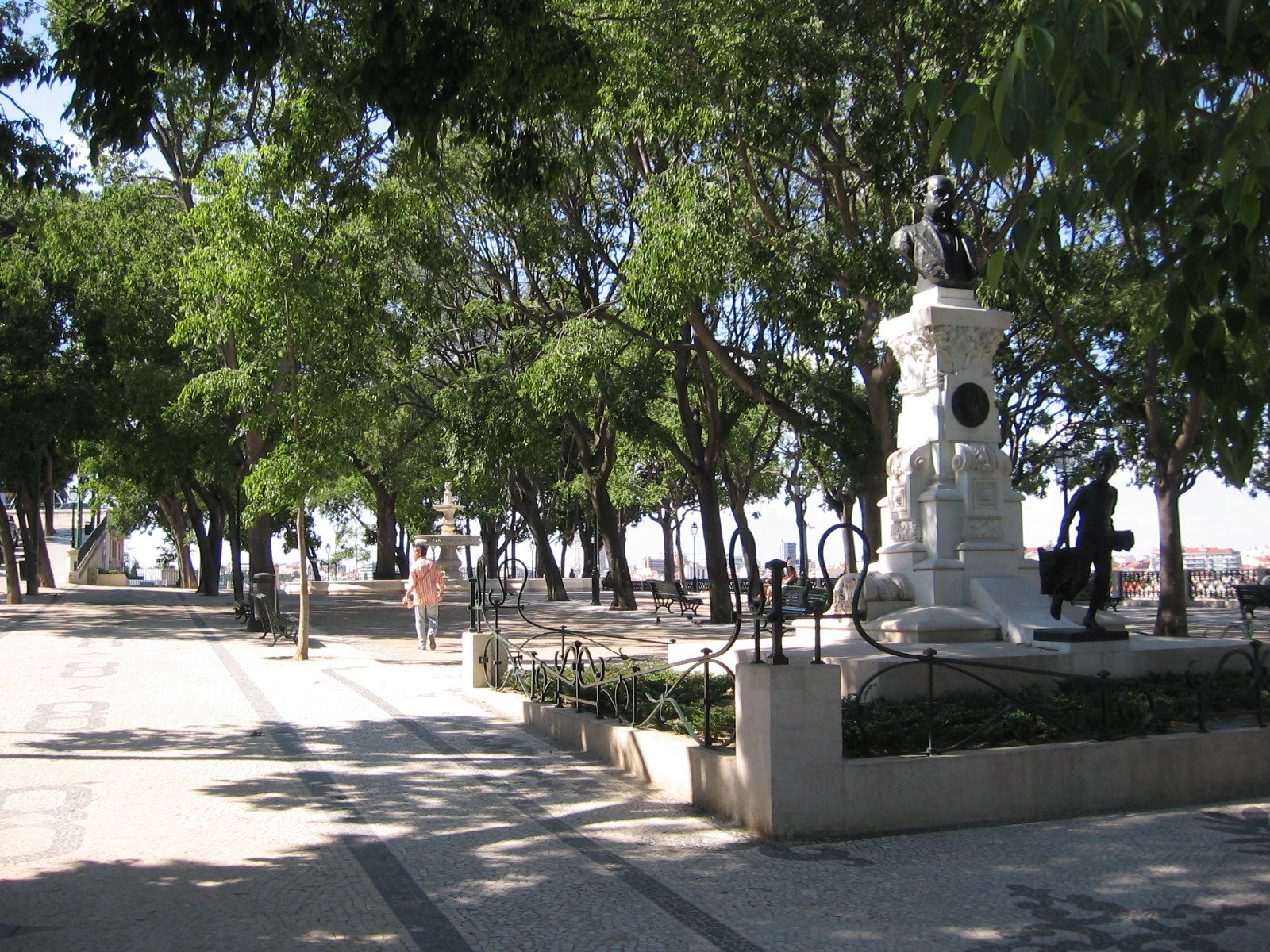
It is a green pocket in the middle of the historic city. The garden has a romantic, nineteenth-century character: the vegetation is very dense, and the trees grow as tall as the surrounding buildings. Earthen paths wind between the plants, with benches along the way. In summer it is a good place to escape the heat, since shade is almost everywhere.
Where does the name come from?
The garden is named after Nuno Álvares Pereira, the Portuguese military commander known as the Santo Condestável, or Holy Constable. The alternative name, Jardim de Santos, comes from the neighbourhood where the garden lies.
What is there to see?
The main landmark is a life-sized bronze statue of Ramalho Ortigão, the Portuguese writer. The sculptor Numídico Bessone modelled it in 1954. Lisbon's city council commissioned the monument, and it was unveiled in 1957. You will also find benches, a small children's playground and at least one drinking fountain.
Is the garden always open?
No. The garden is fenced with railings, so it has set opening and closing times. It is closed at night, partly to protect it from the noise and pollution of Santos's nightlife. Check the current hours before you go.
Frequently asked questions
Is Jardim Nuno Álvares the same as Jardim de Santos? Yes, they are two names for the same garden. The official name honours Nuno Álvares, while locals often use the neighbourhood name.
Where is it? In Lisbon, on Largo de Santos, in the Estrela parish.
How big is it? About 0.39 hectares, so it is a small, intimate park.
Is it suitable for children? Yes. There is a small playground, plenty of shade and a drinking fountain.
Who does the statue depict? Ramalho Ortigão, a Portuguese writer. It was unveiled in 1957.
Is there an entrance fee? No fee is documented. It is a municipal garden open during its opening hours.
Who is it for?
It suits anyone who wants a short break from the city bustle: a rest in the shade, a brief stroll or a pause between sights in Lisbon. It is also a good stop for people who enjoy small, quiet gardens and local monuments rather than only the city's biggest attractions.
Nearby places

Earn badges for the places you visit
Download NextOnTrip, discover new places and check off your trails.