About this place
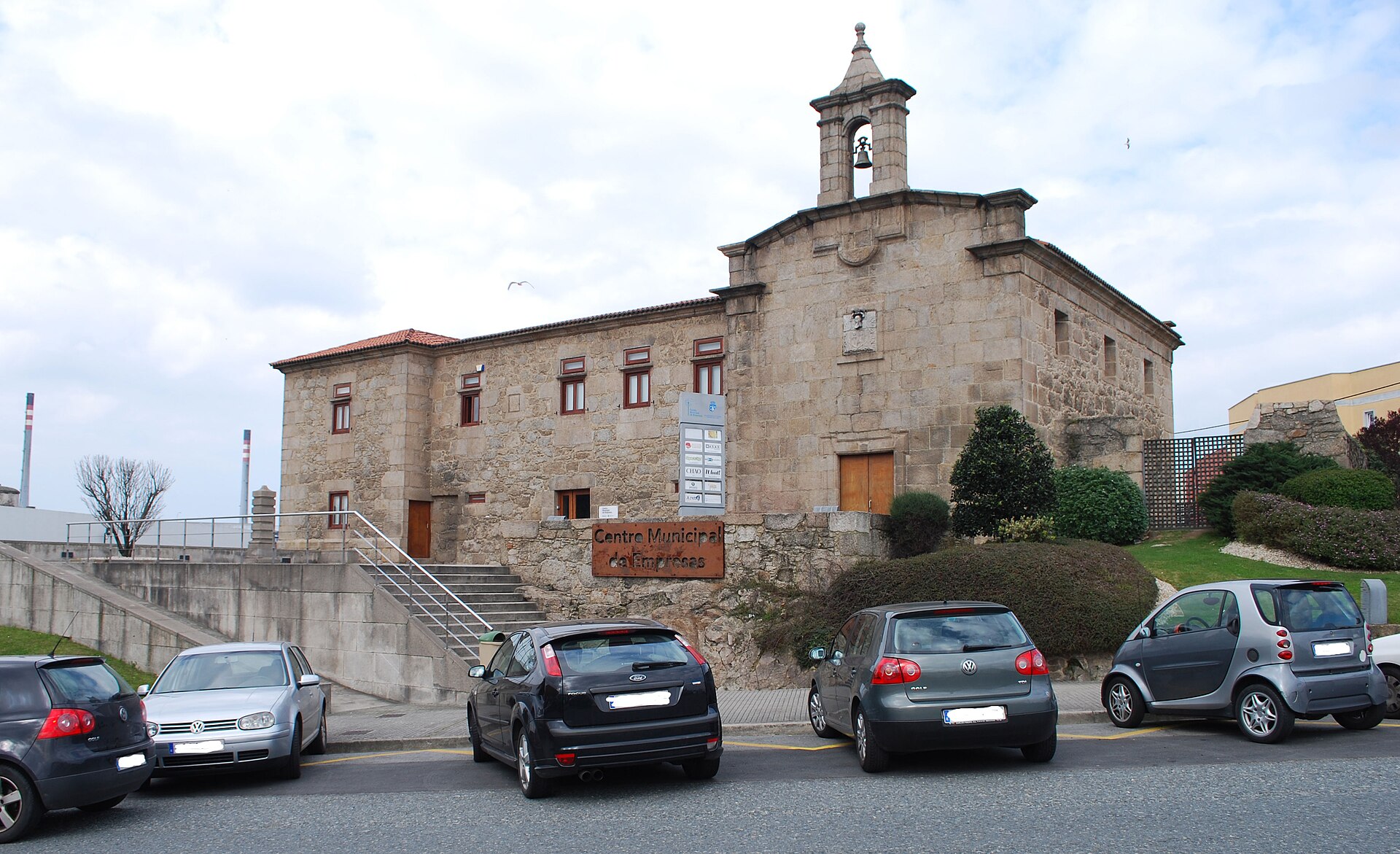
Igrexario da Grela is a small chapel-and-residence complex tucked into the A Grela district of A Coruña, within the parish of San Cristovo das Viñas. Surrounded today by the offices and warehouses of the Parque Empresarial da Grela business park, the building has kept its Baroque character intact and rewards a short detour for anyone curious about the city's lesser-known heritage sites.
What kind of building is this?
"Igrexario" is the Galician term for a compound combining a chapel with an attached chaplain's house. The Grela foundation dates back to June 1724, established by a deed signed in Cádiz by Antonio Pardo. The resident chaplain was expected to live on site, conduct religious services, and give free lessons to local children — an educational role that was part of the foundation's charter from the start.
The building itself went up later, between 1754 and 1765, under two Baroque master builders linked to Santiago de Compostela: Simón Rodríguez and Clemente Ferrer Sarela. Their involvement explains the stylistic kinship between the facade here and the Compostela architectural school of the period.
What will you actually see?
The church has a single nave covered by a barrel vault. The facade is deliberately plain, dominated by a large stone plaque bearing the founder's coat of arms, and topped with a small bell gable in a style closer to folk art than high Baroque. The most distinctive detail is the doorway itself: a vertical opening framed with "ear-shaped" moulding, a decorative flourish typical of Galician Baroque and found across many rural churches in the region.
Next to the church stands the former convent building, once home to a small religious community and the resident chaplain. The complex also retains a granite wayside cross (cruceiro), set on a truncated pyramidal platform with a cubic, chamfered-corner pedestal, a cylindrical shaft, and an octagonal cross topped with fleur-de-lis-style finials — one of many such crosses found at crossroads and churchyards throughout Galicia.
How has the site changed over time?
During the 20th century, as public schools were built in the surrounding area, the foundation supporting the igrexario ran out of funds, and the property passed into municipal ownership. Today the former religious buildings house the Centro Municipal de Empresas, a city-run business support centre. It's an unusual pairing: a Baroque chapel and convent now form part of A Coruña's entrepreneurship infrastructure, without losing their original architectural identity.
Getting there and best time to visit
Igrexario da Grela sits in the A Grela district, just a few hundred metres from the Parque Empresarial de Agrela business park — an easily reachable part of the city, with no need to leave A Coruña proper. It suits travellers interested in off-the-beaten-path corners of the city, and pairs well with a walk through the surrounding residential neighbourhoods. Since the building now functions as an office space, weekdays during business hours are the best time to visit, when the grounds are accessible from outside.
Frequently asked questions
Can you go inside? The building now operates as the Centro Municipal de Empresas, so access to the chapel's interior may be limited — but the facade and the cruceiro can be viewed freely from outside.
Where does the name "igrexario" come from? It's a Galician word for a chapel-plus-residence complex; many such sites exist across Galicia, each tied to a local religious foundation.
Who built the chapel? Construction between 1754 and 1765 was carried out by Simón Rodríguez and Clemente Ferrer Sarela, architects connected to the Santiago de Compostela Baroque school.
What's worth photographing? The doorway with its ear-shaped moulding typical of Galician Baroque, and the granite cruceiro standing beside the complex — both capture the local tradition of stone craftsmanship well.
Nearby places

Earn badges for the places you visit
Download NextOnTrip, discover new places and check off your trails.