About this place
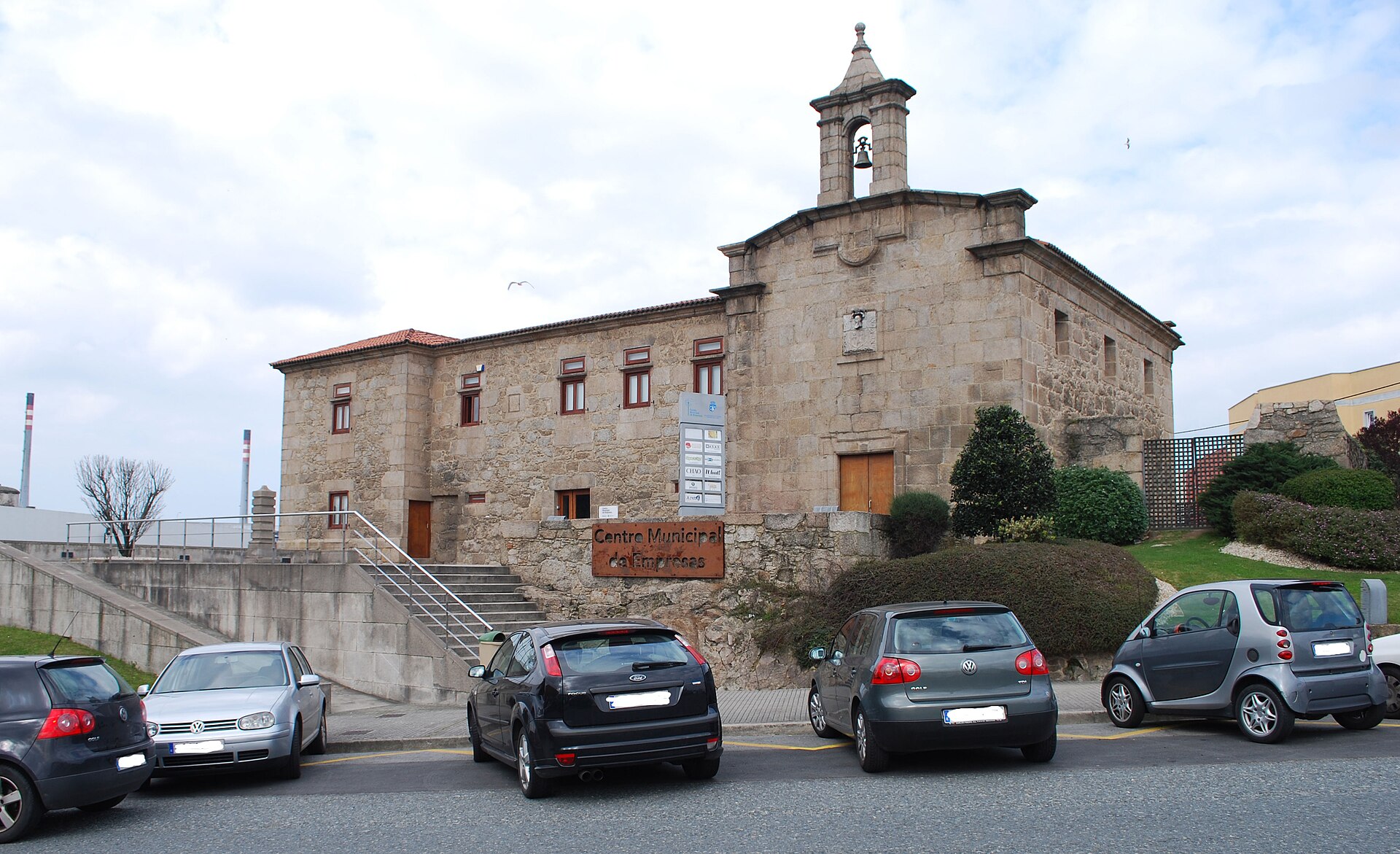
Convento de Santa Bárbara is an enclosed convent of Poor Clare nuns tucked into a quiet corner of A Coruña's Old Town, right on the small square that bears its name, close to the line of the city's former walls. It's easy to walk past without noticing, yet it holds several centuries of local history and still runs on its own cloistered rhythm.
How do you get there?
The convent sits inside the pedestrian core of A Coruña's Cidade Vella, so walking is by far the easiest option. From Plaza de María Pita it's only a few minutes through narrow lanes toward the old fortifications. There's no dedicated parking right at the square, so drivers are better off leaving the car at one of the car parks bordering the old town and finishing the approach on foot. The square itself is small and calm, a deliberate contrast to the busier streets nearby.
What's the history behind it?
The earliest known reference to the site appears in a document from 1444. Before the convent existed, the spot hosted a modest beaterio — a community of women following the Third Order of Saint Francis, living in a house with a small chapel donated by Dominga de Acosta. The name Santa Bárbara comes from an earlier hermitage dedicated to that same saint on the same ground. The convent's foundation was formally approved in 1491 by Pope Alexander VI, and from the 16th century onward the community grew steadily thanks to donations from the townspeople of A Coruña, which funded ongoing expansion of the buildings.
The current structure was raised over a 15th-century chapel. From that earlier medieval building, the main surviving element is a relief above the main door, installed in 1613, depicting the Last Judgment; researchers believe it may have originally belonged to a Gothic canopy or sarcophagus from the 14th century. Throughout the 17th and 18th centuries the convent underwent repeated remodeling and expansion. The wall enclosing the dormitory wing was designed by Fernando de Casas Novoa, one of the leading architects of Galician Baroque, also known for his work on the Obradoiro façade of Santiago de Compostela's cathedral. Construction on this section continued until 1786, a date still visible on the façade today.
What can you actually see?
Because the Poor Clare sisters live here under strict enclosure, the interior isn't open for general visits. From outside, you can take in the entrance courtyard leading to the church, the convent's small lookout tower, and — most notably — the carved Last Judgment relief above the door. The square itself, framed by old stone walls and largely free of tourist traffic, is worth a slow pass on its own; it's one of the more genuine, lived-in corners of the old town.
What should you take home?
The nuns support the community partly through handmade sweets, and their signature product is an almond tart. These are sold through the torno, a small revolving hatch built into the convent's entrance — a traditional cloistered-convent arrangement that lets a purchase change hands without the sister and the buyer seeing each other. Around midday services, visitors passing the square sometimes catch the sound of the nuns singing from inside the church.
Frequently asked questions
Can visitors go inside the convent? No. It's an enclosed convent, so the interior stays closed to the public — you can view it from the square and buy sweets through the torno window.
How old is the convent? The site is documented as far back as 1444, and the convent's foundation was officially approved in 1491 under Pope Alexander VI.
What's worth buying there? The almond tart and other pastries baked by the Poor Clare nuns, sold through the traditional torno hatch at the entrance.
Is it an important historic site in A Coruña? Yes — the convent complex was recognized as a site of historic value in 1971 and remains one of the landmarks of the Cidade Vella.
Nearby places

Earn badges for the places you visit
Download NextOnTrip, discover new places and check off your trails.