- Sacred Monuments
- Religious monuments
Igrexa do Colexio da Nosa Señora da Antiga de Monforte de Lemos
About this place
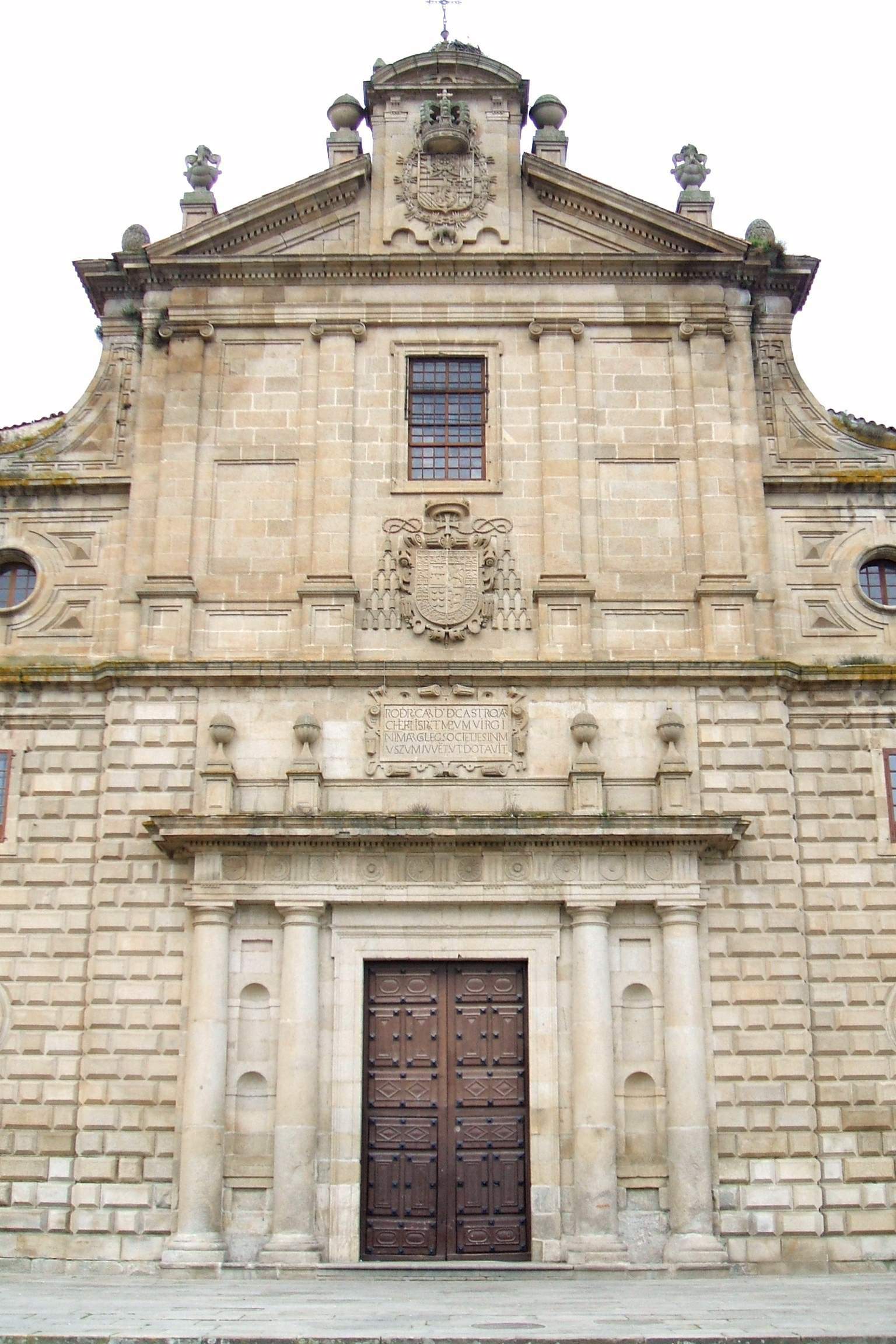
Colegio de Nuestra Señora de la Antigua is a monumental church-and-school complex in Monforte de Lemos, a town in the province of Lugo, in the heart of Galicia's Ribeira Sacra region. Raised from the late 16th century onward at the initiative of Cardinal Rodrigo de Castro, the building is often called the "Galician Escorial" for its austere Herrerian style, a rarity in this part of Spain.
Who built the college, and why?
The founder was Cardinal Rodrigo de Castro, from one of Galicia's most powerful noble families, who wanted his home town to have a grand center of learning. Construction began in 1593 and proceeded in stages, repeatedly interrupted by funding and organizational setbacks. The Jesuits initially ran the institution, giving the church its severe architectural character, modeled on the order's mother church, Il Gesù in Rome. The building still shows a Latin-cross floor plan with shortened transept arms and a crossing dome capped by a lantern.
Everything changed in 1767, when Charles III's pragmatic sanction expelled the Jesuits from Spain. Traces of their presence were deliberately erased — inside the church, visitors can still spot the blank space where the order's coat of arms was pried off the main altarpiece carved by Francisco de Moure. Afterward, until the last quarter of the 18th century, the building served as a Royal Seminary of Studies, one of the institutions that later gave rise to higher education in Galicia. Today the complex is run by the Piarist Fathers (Escolapios), who operate a school on the site, under the patronage of the House of Alba.
What is there to see inside?
The main draw for visitors is the museum housed in the church's former sacristy. It holds two paintings attributed to El Greco's workshop, along with five painted panels linked to the workshop of the Italian artist Andrea del Sarto. The collection is rounded out by personal objects and memorabilia belonging to Cardinal Rodrigo de Castro himself. It is an unusual chance to encounter works of this caliber in a small Galician town, far from Spain's major museums.
The church interior, austere and monumental in its own right, contrasts sharply with the richly carved main altarpiece by Francisco de Moure, one of the leading sculptors of Galician Baroque art. That tension between plain, weighty architecture and intricate woodcarving is a large part of why the complex ranks among the most important religious monuments in the region.
How can you visit?
The church and museum are open to the public through guided visits organized by the foundation that manages the site. Groups depart at set times throughout the week, from Monday to Sunday, and admission carries a fee. Advance booking is not required — visitors simply need to arrive a few minutes before the scheduled time at the entrance to the complex. It is nonetheless worth checking the current visiting schedule directly with the foundation beforehand, since times can shift with the season and the school calendar.
Monforte de Lemos sits at the center of Ribeira Sacra, a region famous for its terraced vineyards overlooking the canyons of the Sil and Miño rivers, as well as for its Romanesque monasteries and churches. Thanks to its scale and its art collection, the Colegio de Nuestra Señora de la Antigua serves as a natural starting point for exploring the area and remains one of the town's most-visited landmarks.
Frequently Asked Questions
What is the Colegio de Nuestra Señora de la Antigua? It is a former educational complex with a Herrerian-style church, built from 1593 at the initiative of Cardinal Rodrigo de Castro and now run by the Piarist Fathers.
Why is it called the "Galician Escorial"? Because of its austere, monumental Herrerian style, echoing Madrid's Escorial, which is unusual in Galician architecture.
What artworks can be seen in the college's museum? The former sacristy houses a museum with two paintings attributed to El Greco, panels linked to Andrea del Sarto's workshop, and memorabilia of the founding cardinal.
Do you need to book in advance to visit the church and museum? No, visits take place as paid, guided group tours at set times throughout the day without advance reservation, though it is worth checking the current schedule first.
Nearby places

Earn badges for the places you visit
Download NextOnTrip, discover new places and check off your trails.