About this place
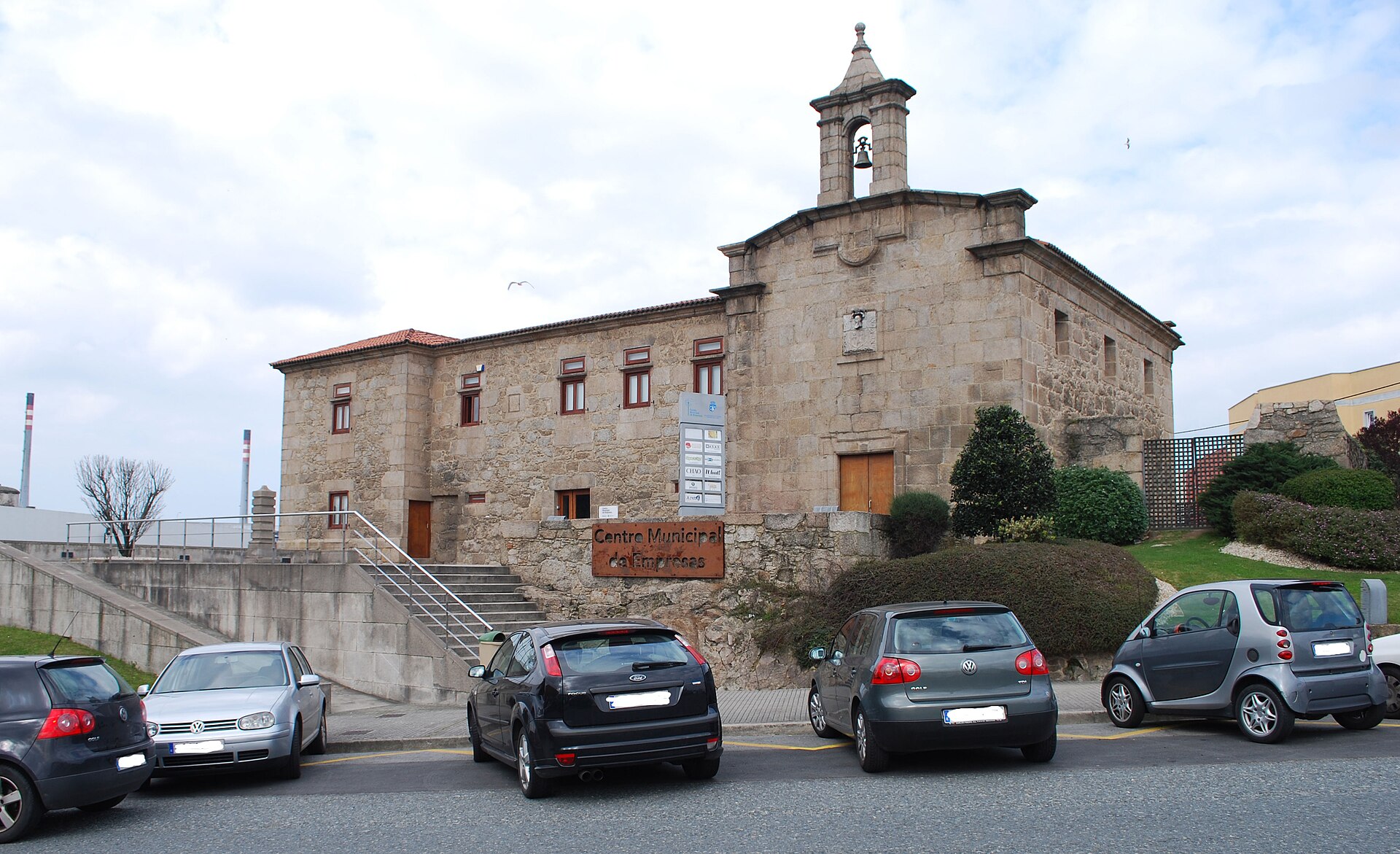
Igrexa de Santo Adrán de Corme Aldea is a small parish church in Corme Aldea, part of the municipality of Ponteceso in the A Coruña province, along Galicia's rugged Costa da Morte.
What makes this church worth a stop?
The building standing today dates from the late 18th century, raised on the site of an earlier, considerably older church dedicated to the same saint. Excavation work near its ruins uncovered old graves, confirming that this exact spot had been a place of worship long before the current structure was built. The church follows a Latin cross floor plan, with a sacristy added at a later stage as an extension to the original layout. It stands in the hamlet of A Aldea, set apart from the fishing settlement of Corme-Porto — it's this inland location, rather than the harbour village itself, that holds the oldest religious roots in the area.
The parish of Corme Aldea counted 284 residents in 2018 (138 men, 146 women), spread across seven separate population entities — a settlement pattern typical of the Costa da Morte, where small parish churches serve scattered rural hamlets rather than a single village core.
What legend surrounds the church?
The village's patron is Saint Adrián, tied to a local oral tradition claiming he tamed a plague of serpents that once tormented the region. The story connects directly to the nearby Pedra da Serpe (Serpent Stone), a granite outcrop carved with the relief of a winged serpent, generally considered a pre-Christian motif. Local tradition holds that the cross now crowning the rock was added later, to Christianize what had originally been a pagan carving. This overlap of patron-saint legend and pre-Christian stone-carving makes Corme Aldea a genuinely interesting stop for anyone curious about the folk beliefs of the Costa da Morte.
How do you get there, and what else is nearby?
The church sits at coordinates 43°16'08.9"N, 8°56'20.0"W, postal code 15111, a short drive from the center of Ponteceso. The surrounding coastline forms part of the Camiño dos Faros, a coastal hiking trail of more than 200 kilometres that traces the cliffs of the Costa da Morte — the church lies close to one of its stages.
Nearby, in Corme-Porto, a picturesque fishing harbour is worth the detour — one of the most characterful along this stretch of coast, where the catch is dominated by shellfish: goose barnacles (percebe) and sea urchins are the star products sold at the local fish market, alongside octopus, spider crab and horse mackerel. The coastline also offers several beaches: the sandy, sheltered Arnela (around 100 metres, good for families), the larger Osmo (over 300 metres, framed by mussel-farming platforms known as bateas), and Ermida beach, which preserves the remains of a castro (Celtic hillfort) and an old chapel.
When's the best time to visit?
Spring and summer are the most rewarding seasons, with weather suited to walking the cliffside trails and relaxing on the beaches, while the fishing harbour is at its liveliest during the seasonal barnacle catch. The Costa da Morte can turn windy and wet outside summer, so rain gear is worth packing regardless of the season.
Frequently asked questions
Where exactly is the church located? In the hamlet of A Aldea, part of the Corme Aldea parish, within the municipality of Ponteceso, A Coruña province, on the Costa da Morte coastline.
How old is the current building? The church in its present form dates from the late 18th century and replaced an earlier, older church dedicated to the same saint.
What is the Pedra da Serpe? A nearby granite outcrop carved with the relief of a winged serpent, thought to be pre-Christian in origin and linked to the legend of Saint Adrián taming a plague of serpents.
Are there beaches close by? Yes — Arnela, Osmo and Ermida beaches are all nearby, and the coast here forms part of the Camiño dos Faros hiking route.
Nearby places

Earn badges for the places you visit
Download NextOnTrip, discover new places and check off your trails.