About this place
Iglesia de Santiago Apóstol is the parish church of Villares de Órbigo, a small village in the province of León that sits directly on the Camino Francés, the most popular route of the Camino de Santiago. Standing at Calle Iglesia 2, the church has long been the spiritual heart of a village whose patron saint is Saint James the Apostle himself.
How do you get there?
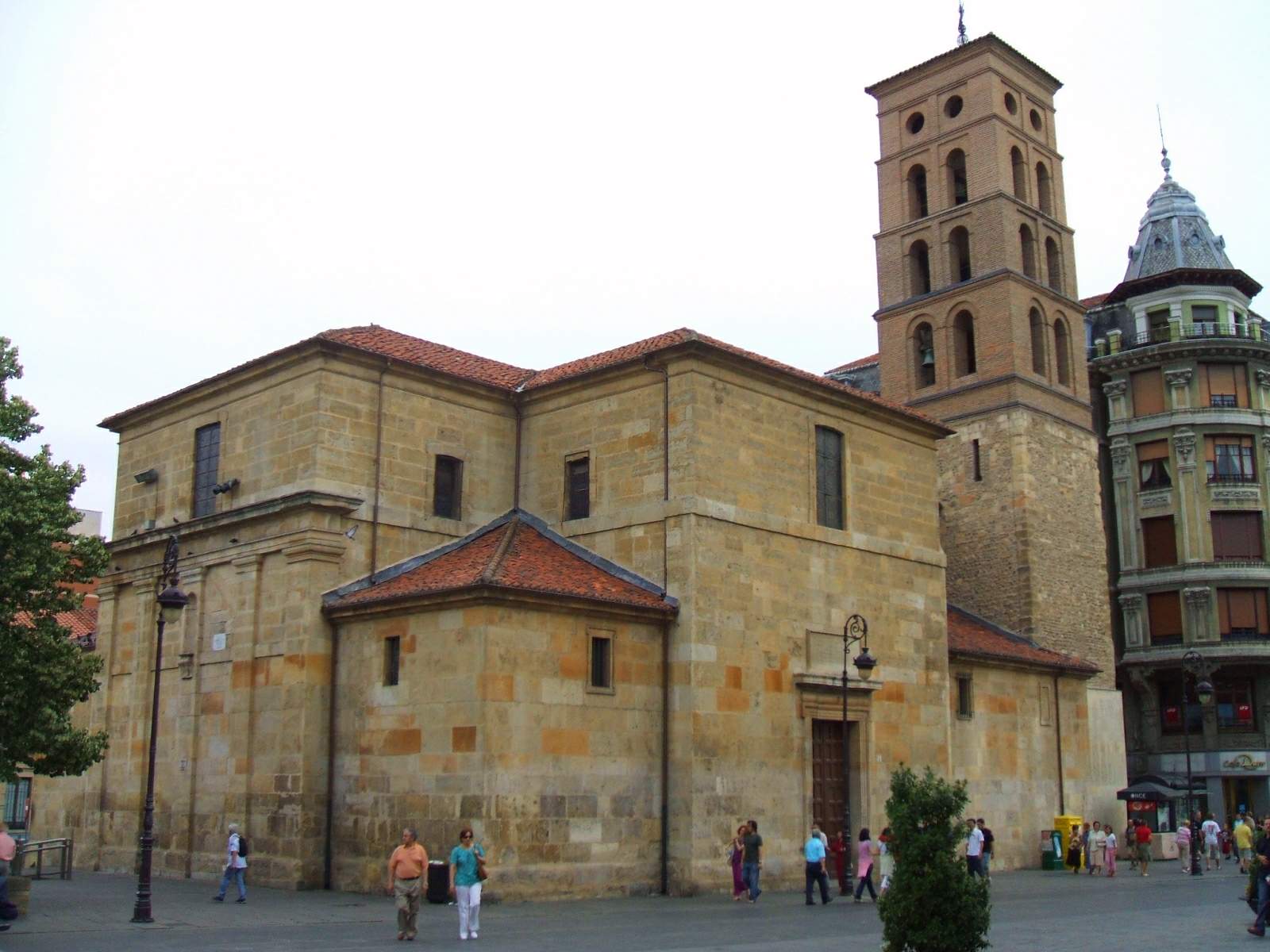
Villares de Órbigo lies on the pilgrimage route between Astorga and Hospital de Órbigo, in the Castilla y León region. Pilgrims walking the Camino Francés pass right beneath the church's walls — its brick-and-stone tower is visible from a distance and has long served as a landmark for travelers looking for lodging or a rest stop in the village. For those arriving by car, nearby Astorga is the easiest reference point, just a short drive away on local roads.
What will you see?
The earliest written mentions of the building appear in account books dated between 1607 and 1676, though historians believe construction itself began in the mid-17th century. The architecture blends Romanesque elements with a later, far more ornate Baroque phase — the result of several centuries of alterations, the most recent major restoration having taken place in 2007.
On the south side stands a distinctive Castilian portico with a Baroque arch decorated with coffered panels. Crowning the doorway is a Jacobean motif — a scallop shell, the enduring symbol of pilgrims walking to Santiago de Compostela. It's a small detail easy to miss, yet one that directly ties this particular church to the identity of the entire route.
Inside, the main retable from 1693 draws the eye immediately. Carved in the Churrigueresque style typical of the 17th-century Astorga-Castilian school, it was gilded in 1717. In the central niche stands a walnut-wood carving of Santiago Matamoros on horseback, dating to 1630 — the saint depicted in classic Jacobean pilgrim garb, complete with a scallop shell on his hat. The figure is flanked by images of San Roque and San José, with the Christ Child placed above.
The church also holds several side retables worth seeking out individually: an altarpiece to Nuestra Señora del Rosario, brought from León and gilded in 1725, along with altars to San Antonio de Padua, San Francisco de Asís (installed in 1740), and San Diego de Alcalá. Together they form a surprisingly rich sacred interior for a rural parish, evidence of the local community's prosperity and devotion across several centuries.
When should you visit?
The church opens for Mass: weekdays at 8:00 PM and Sundays at noon. These are the most reliable times to see the interior without prior arrangement — outside service hours, access can be limited, so it's worth planning ahead or contacting the parish by phone in advance. The building has a wheelchair ramp and accessible parking nearby, making it manageable for visitors with reduced mobility.
The most notable date on the calendar is July 25th, the feast of Saint James, when the village holds religious ceremonies and local festivities in honor of its patron.
Frequently asked questions
Is the church on the Camino de Santiago route? Yes. Villares de Órbigo sits on the Camino Francés between Astorga and Hospital de Órbigo, and the church stands right along the path pilgrims walk through the village.
What's the most important piece inside? The 1693 main retable, centered on a walnut-wood carving of Santiago Matamoros on horseback dating from 1630 — one of the oldest and most valuable elements of the church's decoration.
When can you go inside? The easiest times are during Mass: weekdays at 8:00 PM, Sundays at noon. Access outside those hours may be restricted.
Is the site accessible for visitors with disabilities? Yes, the church has a wheelchair ramp and accessible parking close by.
Nearby places

Earn badges for the places you visit
Download NextOnTrip, discover new places and check off your trails.