About this place
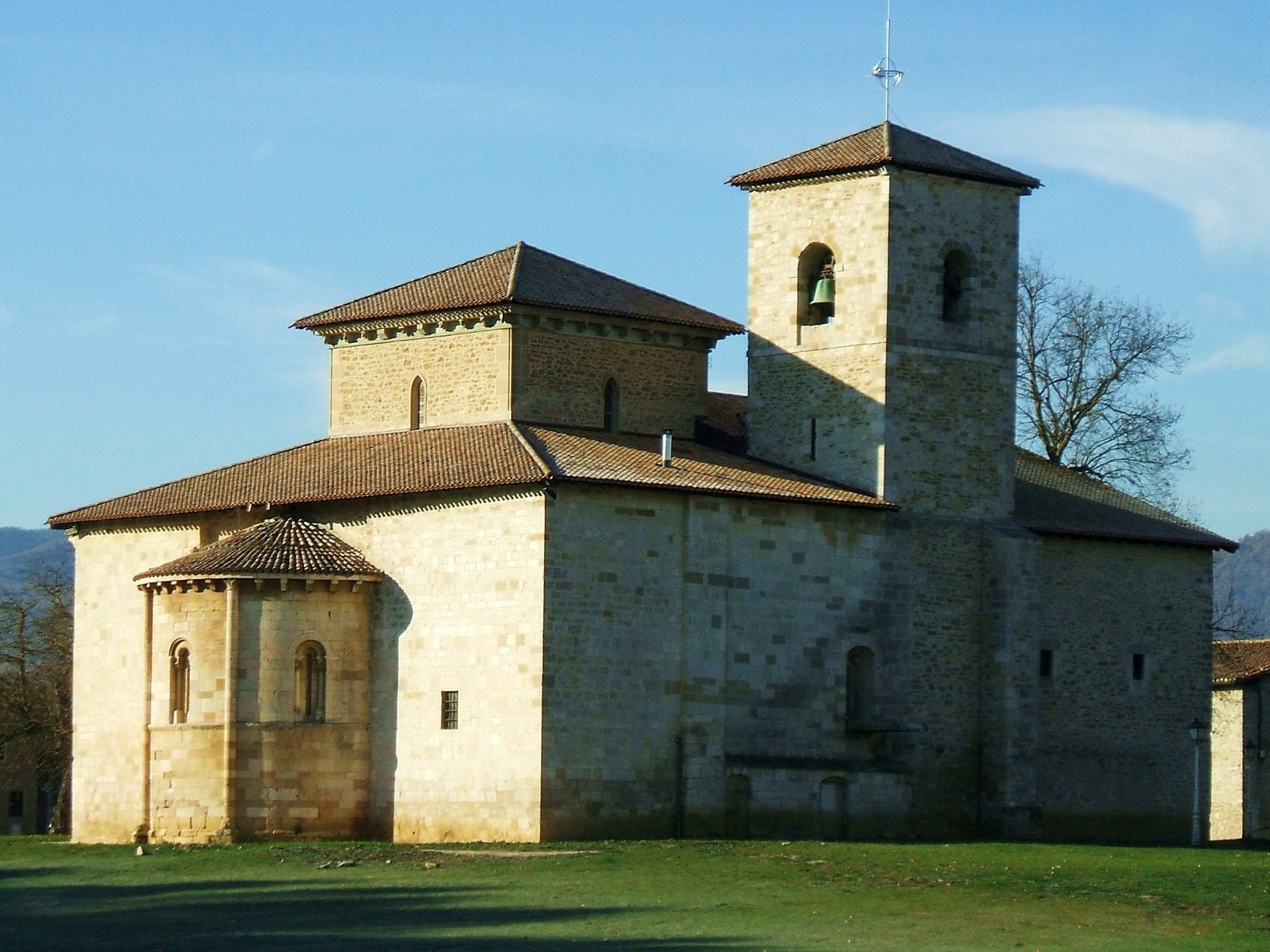
Iglesia de Santiago is a Romanesque church-and-tower complex in Urbina de Basabe, a village within the municipality of Cuartango in the province of Álava, Basque Country. It stands as one of the oldest religious buildings in the region and a rare surviving example of a private, family-owned church attached to a fortified tower.
Where is Iglesia de Santiago located?
The complex sits in Urbina de Basabe, a small village that forms part of the municipality of Cuartango, in the province of Álava within the Basque Autonomous Community. The setting is rural and sparsely populated, tucked into the interior of the province, away from the coastal routes most visitors to the Basque Country follow.
What is the history behind the church?
The church dates to the 12th century, making it one of the oldest religious buildings in Álava. It was founded by the Urbina family, a local noble lineage that also built a defensive tower adjoining the church on its western side. Pairing a parish church with a family-owned fortified tower was a common medieval strategy for noble houses to assert both religious patronage and secular power in one site. The complex reached the form it retains today in 1458, following successive phases of construction and expansion.
What can visitors see inside?
The interior holds several notable pieces. The most prominent is the tomb of Martín Ortíz de Urbina, archpriest of Cuartango and a relative of the renowned captain Juan de Urbina; his tomb is marked by an elaborate recumbent effigy, typical of medieval burials for knights and high-ranking clergy. Nearby stands an alabaster sarcophagus. A particularly striking piece is a Roman funerary stele dating to the 4th century AD — a stone slab over a meter tall and roughly half a meter wide, dedicated by a husband to his deceased wife, carved with a large solar disc motif characteristic of Romano-Basque funerary steles from that era.
Why is this church worth visiting?
Iglesia de Santiago in Urbina de Basabe is considered one of the best-preserved examples of a private, family-run church anywhere in the Basque Country. The combination of Romanesque religious architecture with defensive elements offers a rare glimpse into how local noble families operated in the Middle Ages, acting simultaneously as parish patrons and owners of a fortified residence. It appeals to visitors interested in Romanesque architecture, the medieval history of Álava, and lesser-known, intimate heritage sites away from the crowds drawn to the Basque Country's more famous landmarks.
Frequently Asked Questions
How old is Iglesia de Santiago? The church was built in the 12th century, making it one of the oldest religious buildings in the province of Álava. The complex took its current form in 1458.
Who founded the church? It was founded by the Urbina family, a local noble house that also used the adjoining defensive tower as its family seat.
What can be seen inside the church? Inside are the tomb of Martín Ortíz de Urbina with its recumbent effigy, an alabaster sarcophagus, and a 4th-century Roman funerary stele carved with a solar disc motif.
What makes this complex distinctive compared to other regional churches? It is one of the best-preserved private, family-owned churches in the Basque Country, combining a religious function with a defensive one through the adjoining Urbina family tower.
Nearby places

Earn badges for the places you visit
Download NextOnTrip, discover new places and check off your trails.