About this place
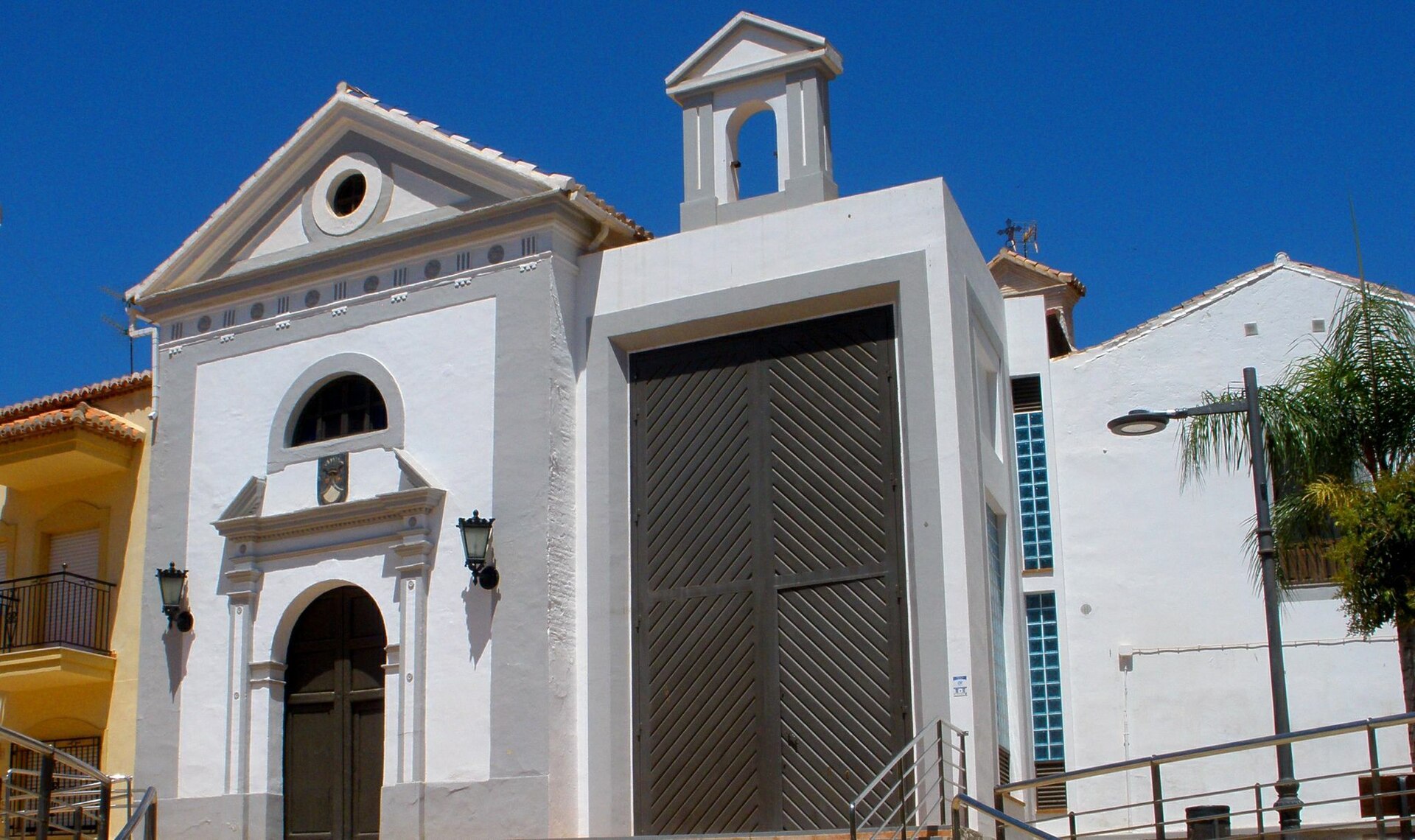
Iglesia de Lújar, formally the parish church of Santo Cristo de Cabrilla, stands on Plaza Generalísimo in Lújar, a small town in the province of Granada set on the slopes of the Sierra de Lújar, not far from the Costa Tropical coastline. It is the town's principal architectural landmark and remains an active center of religious life for its residents.
When was the church in Lújar built?
Construction is dated to 1614–1618, placing the building at the very start of the seventeenth century. It was raised in the Mudéjar style, the distinctive Andalusian blend of Christian and Islamic building traditions that flourished across the former Kingdom of Granada after the Reconquista. The whitewashed exterior walls are simple and unadorned, a construction approach typical of rural parish churches from this region and period.
What makes the interior notable?
Inside, the church is divided into three naves separated by semicircular arches resting on pillars. The central nave is taller and wider than the two side aisles, and its ceiling is the building's standout feature: a wooden artesonado, a coffered ceiling built using Mudéjar carpentry techniques. The ceiling is decorated with paired braces and patterns of figure-eight loops and double squares, the work of master carpenter Diego Ximénez, completed in 1660. It survives today as one of the best-preserved examples of this craftsmanship in the surrounding area. Outside, the eaves are finished with modillions and a "sparrow-beak" molding profile, a detail characteristic of Mudéjar woodwork and stonework.
To which saint is the church dedicated?
The parish is dedicated to the Santo Cristo de Cabrilla and belongs to the Archdiocese of Granada. The image of Christ of Cabrilla is the object of particular devotion among the people of Lújar, and religious life in the parish revolves around it throughout the year, most intensely during the patronal festivities.
When are the patronal festivities held?
The liturgical feast of the patron falls on September 14, but the town's main and most elaborate celebrations take place during the third week of August. That is when Lújar is at its liveliest, with locals and visitors filling the streets and the church serving as the focal point for both religious ceremonies and the accompanying local events.
How do you get to the church?
The church sits in the very center of Lújar, on Plaza Generalísimo, the town's main square, reachable on foot from anywhere in the village. Lújar is located in the mountainous inland stretch of Granada province, within easy reach of the Costa Tropical coast, making it a straightforward stop for anyone exploring this part of Andalusia.
Frequently Asked Questions
What is the official name of the church in Lújar? Its full name is Iglesia Parroquial del Santo Cristo de Cabrilla, the parish church of the Holy Christ of Cabrilla.
From which period does the building date? The church was built between 1614 and 1618, at the start of the seventeenth century, in the Mudéjar style.
What is the most valuable feature of the interior? The wooden artesonado ceiling above the central nave, crafted in 1660 by carpenter Diego Ximénez and decorated with figure-eight loop and double-square motifs.
When is the best time to visit for the patronal festival? The main celebrations honoring the Santo Cristo de Cabrilla take place during the third week of August, while the saint's liturgical feast day falls on September 14.
Nearby places

Earn badges for the places you visit
Download NextOnTrip, discover new places and check off your trails.