About this place
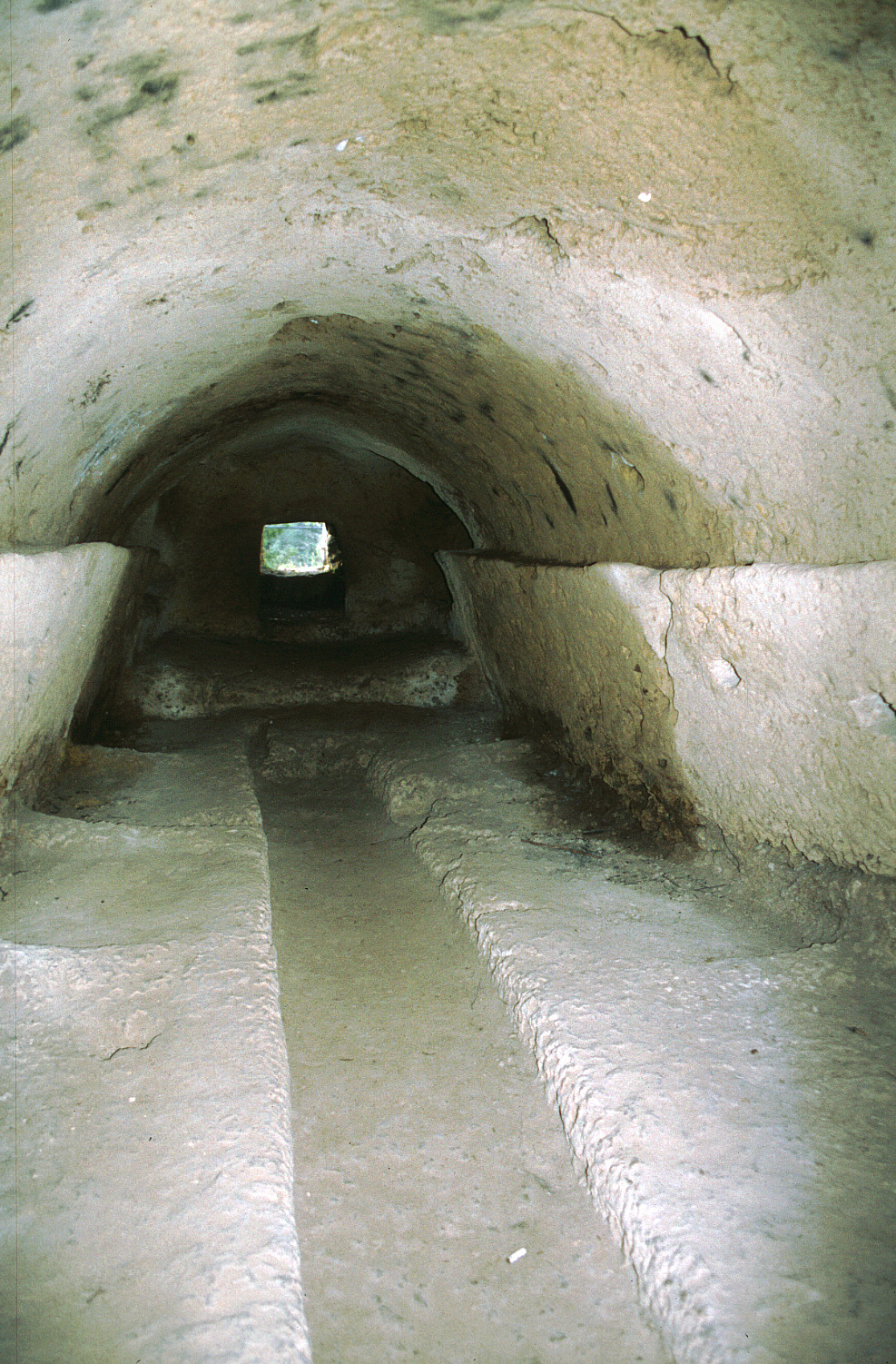
Hypogeum of Cala Sant Vicenç is a group of prehistoric rock-cut burial chambers located in Cala Sant Vicenç, within the municipality of Pollença on Mallorca.
What exactly is a hypogeum?
A hypogeum is a tomb carved directly into solid rock rather than a structure built above ground. At this site, several such burial chambers survive, dating back to the Bronze Age. Visitors today can see eight visible caves, though when the British archaeologist Wilfrid James Hemp studied the site, fifteen were recorded. The difference reflects how the site has changed over time, with erosion and shifting terrain making some of the original chambers harder to identify or reach today.
How old is this site?
The chambers date to the Bronze Age, placing them thousands of years before written history on the Balearic Islands. That makes the hypogeum one of the older traces of settlement and burial practice on Mallorca, predating the Talaiotic culture that later left the island its distinctive stone towers and megalithic structures.
Is everything at the site original?
No. Some features visible at the site are modern additions rather than prehistoric remains. The clearest example is a stone statue resembling a taula — the T-shaped stone element typical of Talaiotic architecture — placed at the entrance to the site. This statue does not date from the Bronze Age; it is a modern piece styled to echo prehistoric forms, but it is not part of the original burial complex. Worth knowing before assuming everything on site is an authentic artifact.
Where exactly is it located?
The site sits within Cala Sant Vicenç, a popular coastal town on Mallorca's northern coast, administratively part of the municipality of Pollença. Its coordinates are roughly 39.9153 N, 3.0485 E. Cala Sant Vicenç is best known for its turquoise-water coves, and the hypogeum offers a rarer archaeological counterpoint to the area — a stop for travelers who want to pair beach time with traces of earlier settlement.
Is it worth visiting?
If prehistoric archaeological sites interest you, the hypogeum of Cala Sant Vicenç is a worthwhile addition to a visit, especially combined with time at the cove itself. It is a more niche stop than Mallorca's larger Talaiotic sites, so visitors shouldn't expect extensive tourist infrastructure or crowds — it's more of a discovery for those looking beyond the standard beach itinerary.
Frequently Asked Questions
How does a hypogeum differ from other Bronze Age tombs on Mallorca? A hypogeum is a tomb carved directly into rock, rather than a structure built above ground or arranged as stone circles. Rock-cut burial chambers like these were one of the burial methods used in the Balearics during the Bronze Age.
How many chambers can be seen today? Eight chambers are currently visible. When Wilfrid James Hemp studied the site, fifteen were documented, showing how the site has changed over time.
Is the statue at the entrance a genuine Bronze Age artifact? No. The taula-style stone statue at the entrance is a modern addition, not an original prehistoric object.
Where on Mallorca is this site located? It's located in Cala Sant Vicenç, within the municipality of Pollença, on the island's northern coast.
Nearby places

Earn badges for the places you visit
Download NextOnTrip, discover new places and check off your trails.