About this place
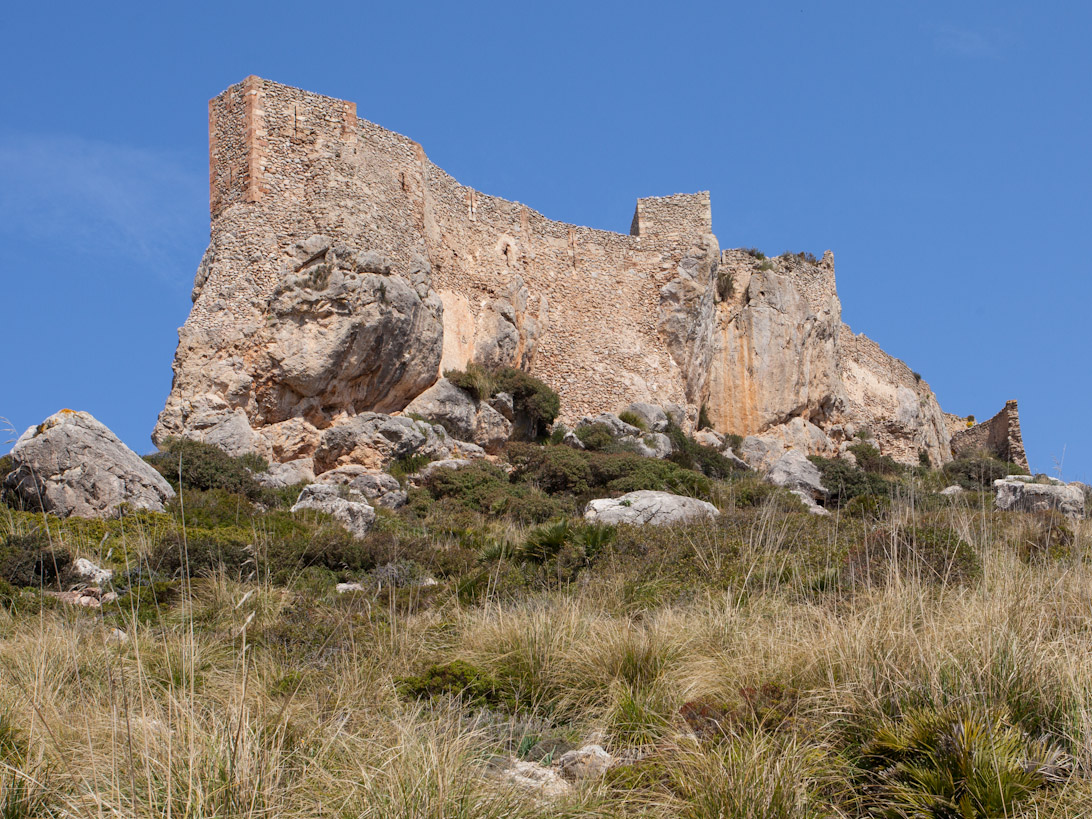
Castell del Rei is a ruined medieval castle perched on a rocky peak in the Ternelles valley, within the municipality of Pollença on Mallorca. Standing at 492 metres above sea level, the fortress once served as a key defensive stronghold guarding the island's northern coast.
What is the history behind the castle?
The site's fortifications date back to Roman times, when a simple defensive structure made use of the naturally inaccessible rock. During the Muslim period the stronghold grew in importance, becoming the last point of resistance against the forces of James I of Aragon during his conquest of Mallorca. While the rest of the island had already surrendered by 1229, the garrison at Castell del Rei held out until March 1231.
A second major chapter unfolded in 1343. After the Crown of Aragon annexed the Kingdom of Mallorca, loyalists to King James III took refuge in the castle and withstood a three-month siege by Aragonese troops before finally surrendering. The fortress remained in use for centuries afterward, but was abandoned in the 18th century and gradually fell into the ruined state it remains in today.
What will you actually see there?
What survives today are the remains of defensive walls and foundations rising above the Ternelles valley. The site itself is privately owned, and entry to the castle grounds is prohibited — even though the access road technically holds public status, the owners (the March family) have long managed to restrict access to it. This makes visiting the ruins a genuinely contested issue, and anyone planning a trip should check current access rules with Pollença's town hall or a local tourist information point beforehand.
Despite the access restrictions, the Ternelles valley itself and the view of the rock topped by the ruined castle remain one of the most recognisable landscapes in northern Mallorca. The site also inspired the Catalan poet Miquel Costa i Llobera, who wrote a poem titled "Castell del Rei" dedicated to it in 1896 — locally, in the Pollença dialect, the site is known as "U castell d'u rei."
Does the castle hold any official status?
On 30 November 1993, Castell del Rei was declared a Bien de Interés Cultural (an asset of cultural interest), formally recognising it as one of the region's significant historical monuments. That protected status, however, does not change the fact that the land remains privately owned, and free access to the ruins is not permitted.
When is the best time to visit?
Given the access restrictions, a visit centred on Castell del Rei mostly means admiring the Ternelles valley and the silhouette of the castle from the viewpoints where this is allowed. Spring and autumn offer the best conditions, with Mallorca's milder temperatures and quieter trails in this part of the Serra de Tramuntana compared to the busy summer months.
Frequently asked questions
Can you enter the Castell del Rei castle grounds? No — the site is privately owned and entry to the ruins is prohibited. The access road is technically public, but the owners have restricted access to it for years, so it's worth checking current rules with local authorities before planning a visit.
Where exactly is the castle located? On a 492-metre peak in the Ternelles valley, within the municipality of Pollença, in northern Mallorca.
What is the fortress's history? It dates back to Roman times, served as the last point of resistance during James I of Aragon's conquest of the island (holding out until 1231), and survived a three-month siege in 1343 during the war over the Mallorcan crown. Abandoned in the 18th century, it fell into ruin.
Does the castle have any protected status? Yes — since 30 November 1993, Castell del Rei has been listed as a Bien de Interés Cultural (asset of cultural interest).
Nearby places

Earn badges for the places you visit
Download NextOnTrip, discover new places and check off your trails.