About this place
Grotte du Revest is one of the largest and most frequently visited caves in the Alpes-Maritimes department, tucked into a rocky amphitheater above a valley within the commune of Gourdon, a village better known for its dramatic viewpoint over the Gorges du Loup. Unlike the village's famous panorama, this cave sits in a wilder, less-trodden corner of the commune, drawing both casual walkers looking for a short outing and cavers interested in one of the region's most extensive underground networks.
Where exactly is it?
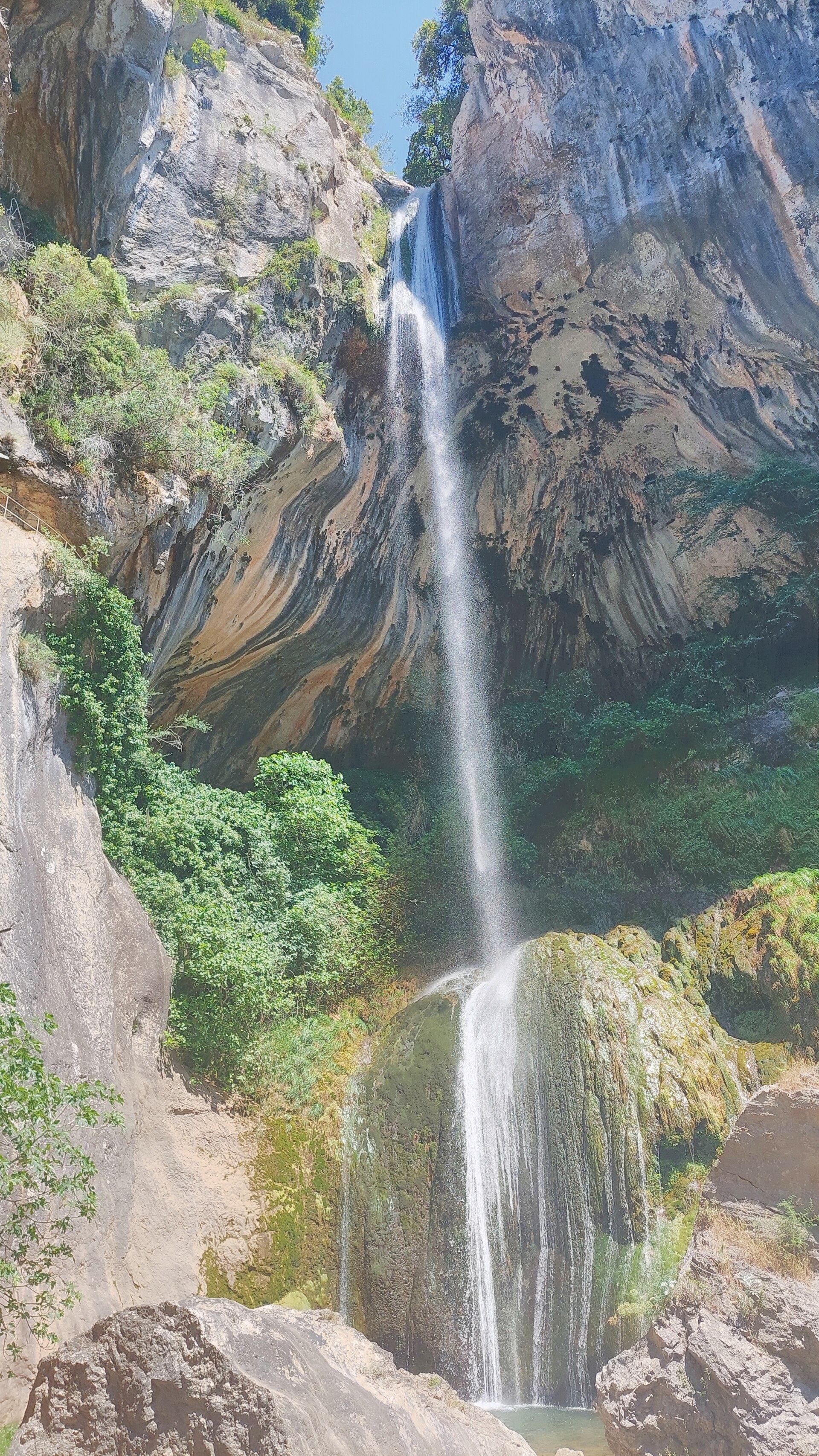
The cave lies a few kilometers outside central Gourdon, along the D3 road heading toward Gréolières. Visitors park near the junction with the road to Cipières, then follow a clearly marked, cairn-lined path running along the left bank of the valley toward the base of the cliffs. The walk is short enough to complete round-trip in well under an hour, making it more of an easy discovery stroll than a demanding hike. The cave mouth itself is unmistakable, opening at the foot of a striking cliff amphitheater.
What lies beneath the surface?
Grotte du Revest is not a single chamber but the visible entrance to a much larger underground network known as the Système Revest-Caranques. The full system stretches nearly 4 kilometers in length and reaches a depth of around 246 meters, ranking it among the most extensive cave systems in the Alpes-Maritimes. Over the decades, explorers linked it to the neighboring Baume des Caranques and to a smaller cavity, the Grotte du Feu.
A history of exploration
Because the entrance is so visible and easy to reach, locals likely knew of the cave long before it drew scientific attention. Organized speleological survey work began in 1947, carried out by the Club Martel de Nice. The major breakthroughs came decades later: starting in 1981, teams from the Abîme Club de Nice and the Centre Méditerranéen de Spéléologie pushed into significant new passages, ultimately connecting Grotte du Revest to Baume des Caranques. A further connection, to the Grotte du Feu, followed in 1993, completing the wider system as it is mapped today.
Traces from the Ice Age
Sediments within the cave have yielded remains of the cave bear (Ursus spelaeus), a species that died out at the end of the last Ice Age. Their presence shows the cave served as a natural shelter long before humans settled the area, giving the site genuine paleontological value alongside its geological interest.
A protected bat roost
Today, the cave's most sensitive role is as a refuge for bats. It shelters a colony of Schreiber's bent-winged bat (Miniopterus schreibersii), a species in sharp decline across Europe. The bats rest here by day and hibernate through winter, which is why the cave itself is kept closed to visitors — entering would risk disturbing a fragile, protected population. Hikers can reach the threshold of the cave and take in the entrance and surrounding cliffs, but going inside is reserved for authorized researchers and speleologists.
Frequently asked questions
Can visitors go inside Grotte du Revest? No. The cave is closed to the public to protect its bat colony; only the approach path and the entrance area are accessible.
How do you get there from Gourdon? Take the D3 toward Gréolières, park near the junction with the road to Cipières, and follow the short, well-marked trail along the valley to the foot of the cliffs.
How long does the walk take? It's a short, easy round trip suitable for most visitors, without any need for prior hiking experience.
Why is the cave scientifically important? Its combined system stretches nearly 4 kilometers underground, it has produced cave bear fossils, and it hosts a declining, protected bat species.
Is it connected to Gourdon's famous viewpoint? Both sit within the same commune, but the cave occupies a separate, quieter part of the territory from the well-known lookout over the Gorges du Loup — two distinct attractions sharing one address.
Nearby places

Earn badges for the places you visit
Download NextOnTrip, discover new places and check off your trails.