Save this place and discover nearby attractions with NextOnTrip
In the app you can add it to your favorites, see what else is worth visiting nearby on the map, and earn a badge for your visit.
The app is available for iPhone and Android.
About this place
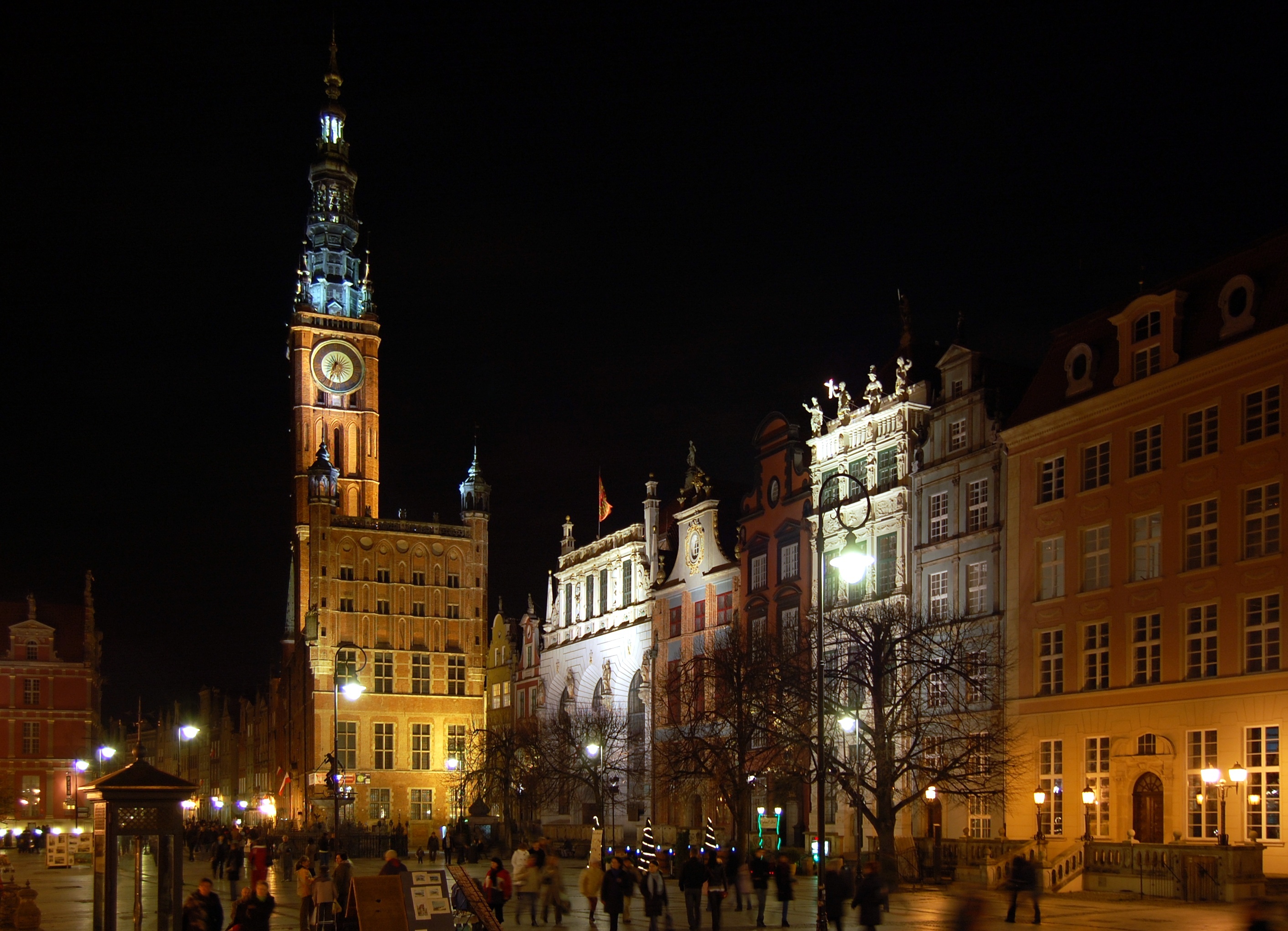
Golden House in Gdańsk is one of the most prestigious townhouses in the Main Town. It stands on Długi Targ (the Long Market), along the Royal Way, right next to Artus Court and the Main Town Hall. It is also known as Steffens House and Speymann House, and each name points to a different chapter of its history.
Who built it, and when?
The house was raised between 1609 and 1618 at what is today Długi Targ 41. It was commissioned by Johann Speymann, then mayor of Gdańsk, who had bought the plot in 1601. It was designed by Abraham van den Blocke, a leading Gdańsk architect and sculptor. His workshop also produced the gilded stone reliefs; Jan Voigt of Rostock, who worked there, is thought to have carved the battle scenes.
The plot had owners long before that. Records of the land go back to 1367, well before the present building existed.
Why "Golden"?
The name refers to the richly gilded façade, which set the house apart from its neighbours from the start. The narrow front is covered in sculptural decoration in the Flemish Mannerist style, with references to antiquity and to civic virtues. It features:
- twelve effigies of rulers and eminent statesmen, among them Sigismund III Vasa and Władysław Jagiełło,
- eight historical scenes on bas-relief panels, including battle scenes and episodes from ancient history,
- a field displaying the coats of arms of former owners.
The top of the façade is crowned with statues of Cleopatra, Oedipus, Achilles and Antigone.
A succession of owners
After 1660 the house was bought by Piotr Henrich, another mayor of Gdańsk, which shows how for decades it stayed in the hands of wealthy councillors and city officials. From 1786 to 1918 it belonged to the Steffens family of Gdańsk, and that is where the name Steffens House comes from. Between 1938 and 1945 it housed the West Prussian Provincial Museum, and after the war the building was taken over by the Maritime Institute.
Destruction and reconstruction
In the spring of 1945, at the end of the war, the building was almost entirely destroyed. Only the partly burnt, leaning façade survived, in danger of collapsing. The body of the building was rebuilt to a design by Marian Bajdo. The sculptural decoration was restored by Alfons Łosowski, a Gdańsk sculptor of Vilnius origin, who reused surviving fragments of the original carvings. About 70% of the façade is believed to be authentic. Gilding work was completed in 1955. A renovation in 2001 removed most of the gilding, which caused considerable controversy.
Visiting
The house is on the heritage register and ranks among the most important examples of secular architecture in old Gdańsk. It is admired from the street, together with the other buildings of Długi Targ. The street has carried its name for a long time: city documents have called it Longa Platea since 1331. The Royal Way, in turn, takes its name from the ceremonial royal entries held there between 1457 and 1552.
Frequently asked questions
Where is the Golden House? On Długi Targ in Gdańsk, along the Royal Way, next to Artus Court and the Main Town Hall.
Why is it called "Golden"? For its gilded façade with bas-reliefs of rulers and historical scenes.
Who built it? It was commissioned by mayor Johann Speymann and built in 1609–1618, to a design by Abraham van den Blocke.
Is the façade original? About 70% of it is. After the destruction of 1945 it was rebuilt using surviving fragments of the sculptures.
Where does the name Steffens House come from? From the Steffens family, who owned the house from 1786 to 1918.
Nearby places

Earn badges for the places you visit
Download NextOnTrip, discover new places and check off your trails.