Save this place and discover nearby attractions with NextOnTrip
In the app you can add it to your favorites, see what else is worth visiting nearby on the map, and earn a badge for your visit.
The app is available for iPhone and Android.
About this place
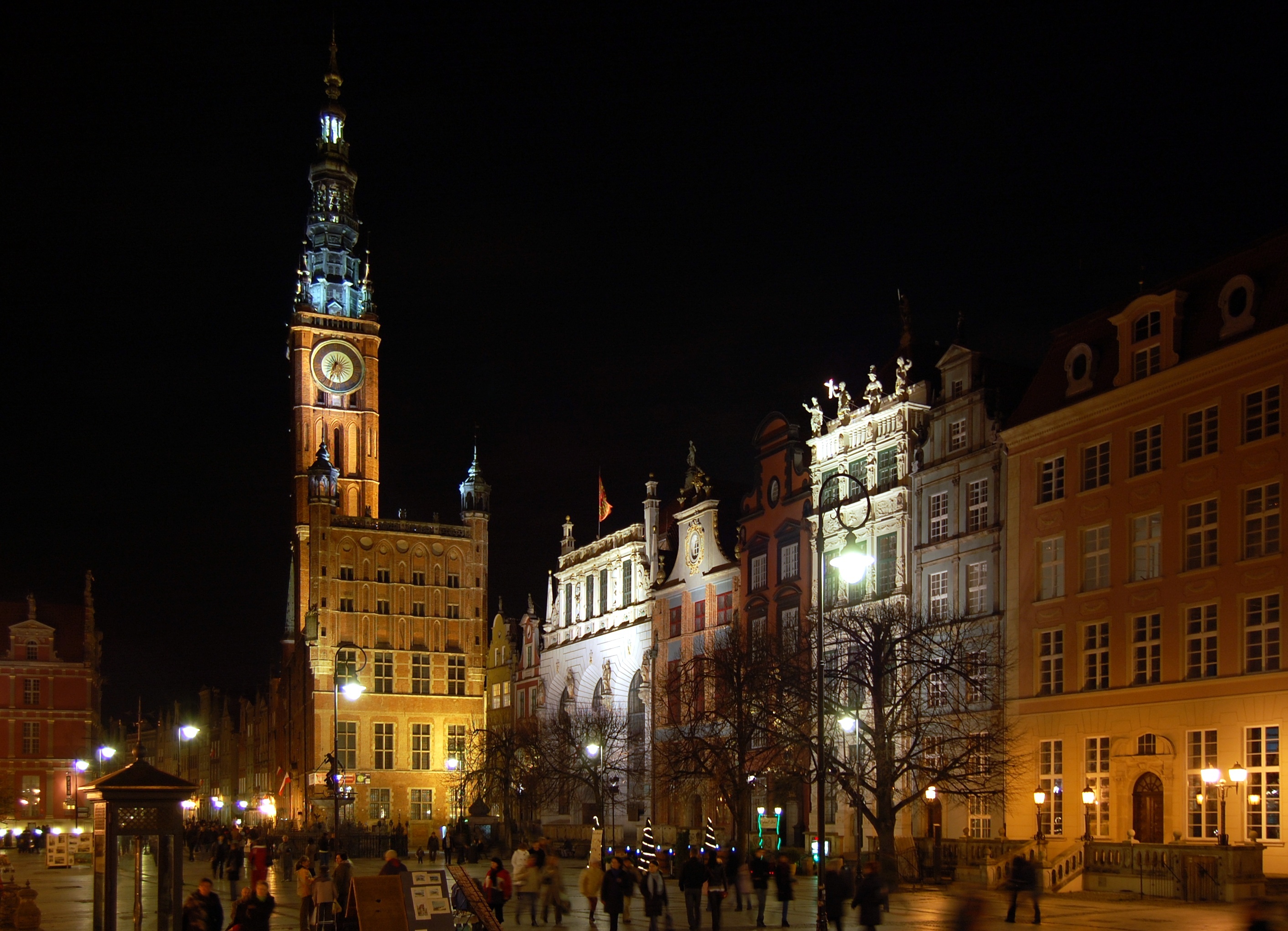
Lion Castle (Lwi Zamek) is a Renaissance townhouse at 35 Długa Street in the heart of Gdańsk's Main Town. It has four storeys and an attic, a three-bay façade with pilasters, and a portal watched over by two lions. It is on the heritage register, and Długa Street itself lies within the historic ensemble declared a Historic Monument of Poland in 1994.
Why is it called the Lion Castle?
The name comes from two small reclining lions placed on the portal in the 1870s, after the house's front terrace was dismantled in 1871–1872. The façade is articulated by pilasters in successive orders, from bottom to top: Doric, Ionic and Corinthian.
What is the architecture like?
The house is Renaissance, a style that shaped many buildings along the Royal Way. Długa Street, together with Długi Targ, forms this ceremonial route, which Polish kings used to enter the city. The wealthiest and most influential citizens of Gdańsk lived here, so the façades along this street were meant to impress. Originally the building also had side wings.
Who lived in the Lion Castle?
In the second half of the 14th century and the early 15th century the property belonged to the family of Bartholomäus Gross, a Gdańsk councillor who was killed by the Teutonic Knights at Gdańsk Castle in 1411. The present house was built for Arnold Schmidt, and the date 1569 appears on its gable. The design is attributed to Hans Kramer.
From 1615 it belonged to the lay judge Heinrich Schwarzwald (1582–1630) and then to his descendants. The Schwarzwald family was known for gatherings with scholars and artists. In 1636 a formal feast was held in the house in honour of King Władysław IV Vasa, who was visiting Gdańsk. Inside was one of the most magnificent halls in the city, recorded in a 19th-century engraving by J. C. Schulz.
What happened to the building after 1945?
The house was destroyed in 1945. It was rebuilt between 1950 and 1953 to a design by Jerzy Bojarski, and in 1953 Wojciech Zaleski reconstructed the façade using original fragments of the stonework. After the war it housed the drafting studios of Miastoprojekt, the city design office, and from the 1960s the Polish–Soviet Friendship Society.
From 1996 part of the building was used by the Russian Centre for Science and Culture. After Russia's invasion of Ukraine in 2022 the city ordered it to leave, and the building was officially vacated on 18 March 2022. In November 2022 a cultural space linked to the Gdańsk City of Literature project opened here.
Frequently asked questions
Where is the Lion Castle? At 35 Długa Street in Gdańsk's Main Town, along the Royal Way.
Is it a listed monument? Yes. It is on the heritage register and lies within the ensemble declared a Historic Monument of Poland in 1994.
Where does the name come from? From the two reclining lion sculptures on the portal, placed there in the 1870s.
Is this the original building? Not entirely. The house was destroyed in 1945 and rebuilt between 1950 and 1953, with original stonework fragments reused in the reconstructed façade.
What has the building housed recently? Until 2022 the Russian Centre for Science and Culture, and from November 2022 a space of the Gdańsk City of Literature project.
Who is it for?
The Lion Castle is a worthwhile stop for anyone interested in architectural history, the story of Gdańsk's patrician families and the city's more recent past. A look at the lions, the pilasters and the portal is enough to see what a showpiece townhouse looked like on the street that kings once rode along.
Nearby places

Earn badges for the places you visit
Download NextOnTrip, discover new places and check off your trails.