About this place
The Gardens of La Cambre Abbey form one of Brussels' most charming green enclaves, spread across the border of Brussels and Ixelles, right next to the Sonian Forest. The site's story begins in the 13th century, when a Benedictine nun who wished to follow the stricter Cistercian rule was granted land by Duke Henry I of Brabant that met the order's requirements: set apart from major roads, bordering the forest, and located near a water source known as the Maelbeek spring. The Cistercian abbey was formally established in 1201 and grew over the centuries into an important religious center in what was then the outskirts of Brussels.
The abbey's fortunes changed at the end of the 18th century. In 1796, during the period when church properties were sold off as national assets, the abbey's grounds and buildings passed into new ownership. Despite this upheaval, the complex survived largely intact and today stands as one of the region's best-preserved examples of former monastic architecture.
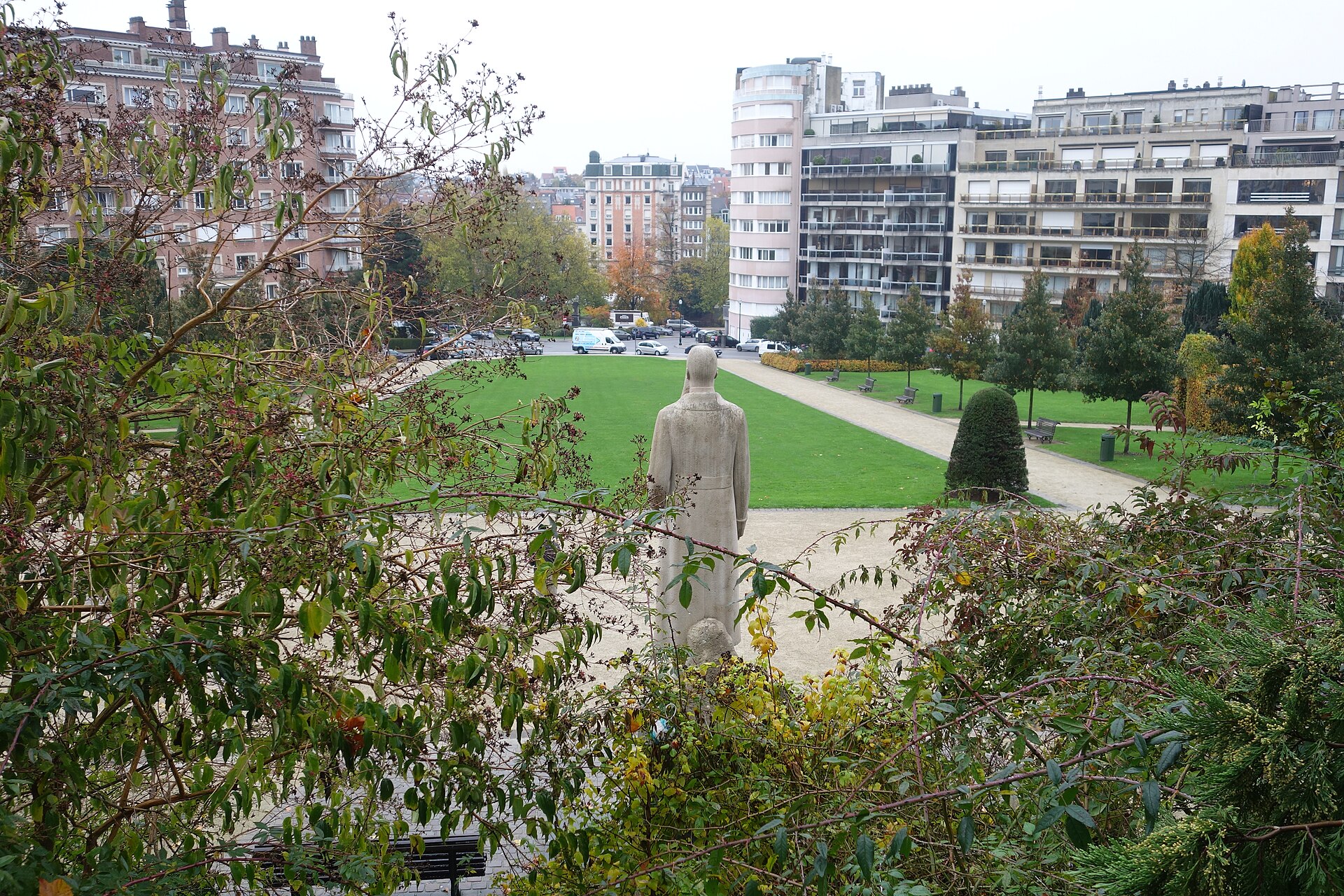
The gardens, covering roughly five hectares, owe their current appearance to several distinct phases of design. Their original French-style layout dates to around 1720, when the grounds were arranged in a series of terraces linked by monumental staircases. A signature feature from this period is the double staircase in Louis XIV style, dated to 1720, which leads from the south courtyard up to the first of five terraces extending into the property. This cascading, geometric arrangement of the terrain still gives the gardens a striking, ceremonial quality rarely found in Brussels' urban green spaces.
In the 20th century, the gardens underwent another significant transformation. In 1927, landscape architect Jules Buyssens restored them in a neo-Renaissance style, adding a new aesthetic dimension that blended the historical layout with the landscape design trends of his time. Buyssens, one of the most influential Belgian landscape architects of that era, preserved the gardens' orderly, ceremonial character while introducing new plantings and sightlines.
Today, the former abbey buildings house the National School of Visual Arts (École nationale supérieure des arts visuels), with the gardens serving as a picturesque backdrop for the institution. Given their historical and landscape value, the gardens have been officially protected as a classified site since March 30, 1989, and the architectural elements of the buildings and gardens located within Brussels territory are recognized as protected monuments.
For visitors, the Gardens of La Cambre Abbey offer a chance to stroll among carefully maintained greenery, terraced pathways, and historic staircases, away from the bustle of the city yet close to central Brussels. Its proximity to the Sonian Forest also makes it a natural starting point for longer walks through the green spaces on the city's southern edge.
Frequently Asked Questions
When was La Cambre Abbey founded? The abbey was established in 1201 as a Cistercian monastery, its origins tracing back to a Benedictine nun who sought to follow the stricter Cistercian rule.
How large are the gardens? The gardens cover approximately five hectares, straddling the border between Brussels and Ixelles.
Who designed the current layout of the gardens? The original French-style terraced layout dates to around 1720, and in 1927 landscape architect Jules Buyssens restored the gardens in a neo-Renaissance style.
What occupies the abbey grounds today? The former abbey buildings now house the National School of Visual Arts.
Are the gardens legally protected? Yes, since March 30, 1989, the gardens have been a classified protected site, with the architectural elements recognized as protected monuments.
Nearby places

Earn badges for the places you visit
Download NextOnTrip, discover new places and check off your trails.