About this place
The garden at Couvenplatz 1 is a small but picturesque green enclave in the Nispert district of Eupen, in the German-speaking part of Belgium, set right next to the eighteenth-century residence known as Haus Nispert.
Where does this place come from?
The story of the garden begins in the first half of the eighteenth century, when the wealthy wool dyer Erich Adolph Goertz commissioned an expansion of his estate. The work, carried out in 1747, was entrusted to the architect Johann Joseph Couven — the man whose name the square now carries. Alongside the enlargement of the house, a private baroque chapel and a French-style garden layout were built at the same time, positioned directly beside the building.
What does the garden look like today?
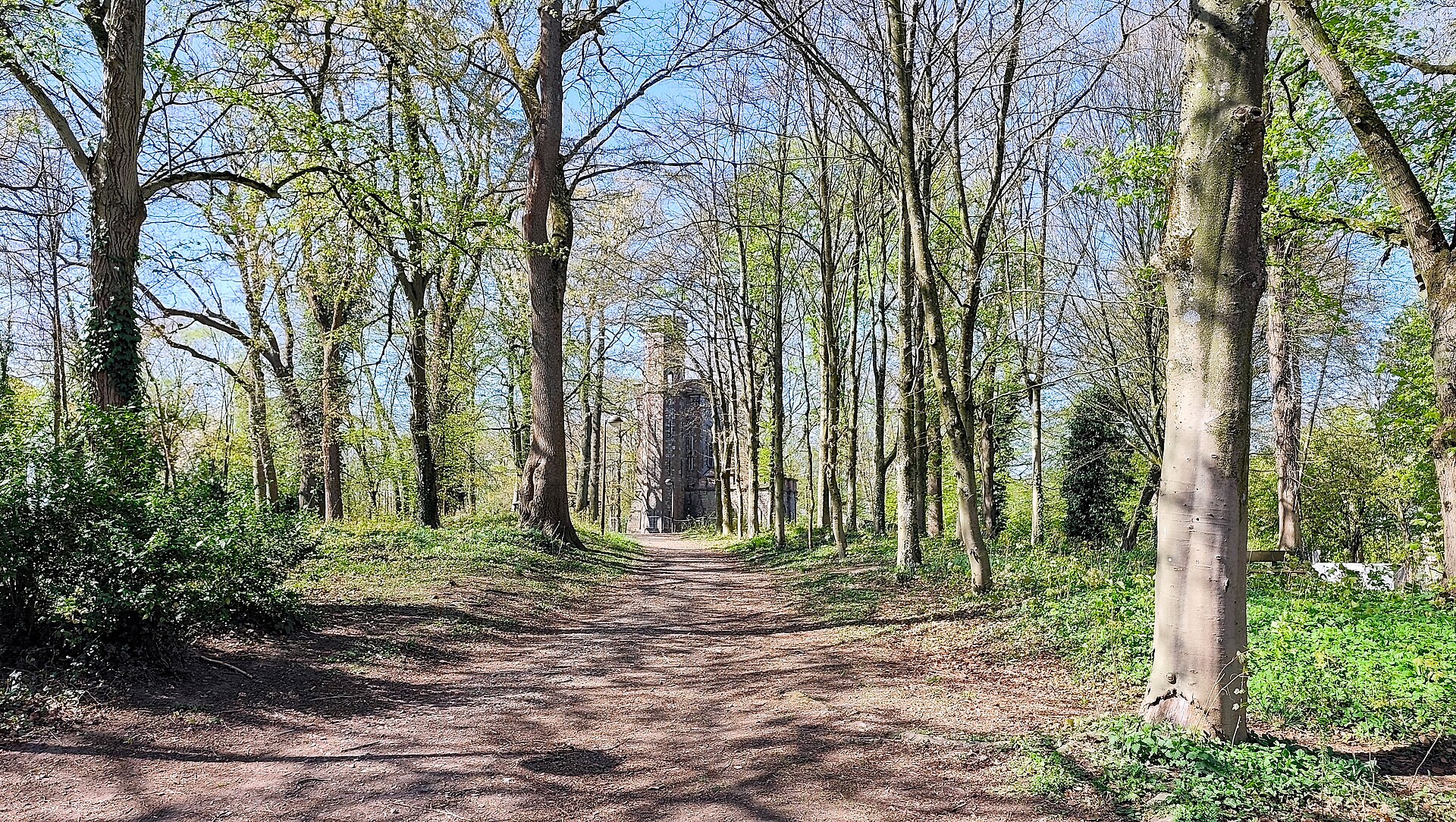
Behind the house stretches a carefully designed park, centred on a polygonal fountain and a pond set at a higher level. The garden adjoining the residence is kept in a baroque spirit, marked by ornamental staircases and further fountains arranged to create scenic axes and terraced transitions between the different levels of the grounds. This layout echoes typical eighteenth-century residential estates, where the garden was treated as a natural extension of the house's architecture rather than a separate, self-contained feature.
Where does the square's name come from?
What is now called Couvenplatz was long known simply as "Nisperter Platz." The renaming took place in 2001, as part of a local renovation project intended to commemorate the architect Couven. On that occasion, the square in front of the house was given a new look, including a fountain, and the public space was redesigned to match the historical character of its surroundings.
What else stands nearby?
Right next door, on the same property, stands a small baroque chapel dedicated to the beheading of St. John the Baptist, built in the very same year and to a design by the same architect responsible for the house's expansion. The chapel and the garden were therefore conceived as one coherent, simultaneous architectural project — not as separate elements added at different times — which explains why the two sit so well together in style and proportion.
Frequently asked questions
Is the garden open to the public? The garden and park belong to a formerly private residence, so it is worth checking current access conditions on site before visiting, as part of the grounds may have limited public access.
What else is worth seeing besides the garden itself? In the immediate vicinity, the baroque chapel and the Couvenplatz square itself, with its fountain restored in 2001, are worth attention — together they form a coherent architectural and landscape ensemble from the first half of the eighteenth century.
Why is the square called Couvenplatz? The name honours the architect Johann Joseph Couven, who designed the expansion of the house, the chapel and the garden; the square was renamed in 2001 during its renovation, having previously been known as Nisperter Platz.
What style does the garden represent? The garden was laid out in the spirit of French baroque garden design, with a symmetrical layout, staircases and fountains typical of residential estates of that era.
Nearby places

Earn badges for the places you visit
Download NextOnTrip, discover new places and check off your trails.