About this place
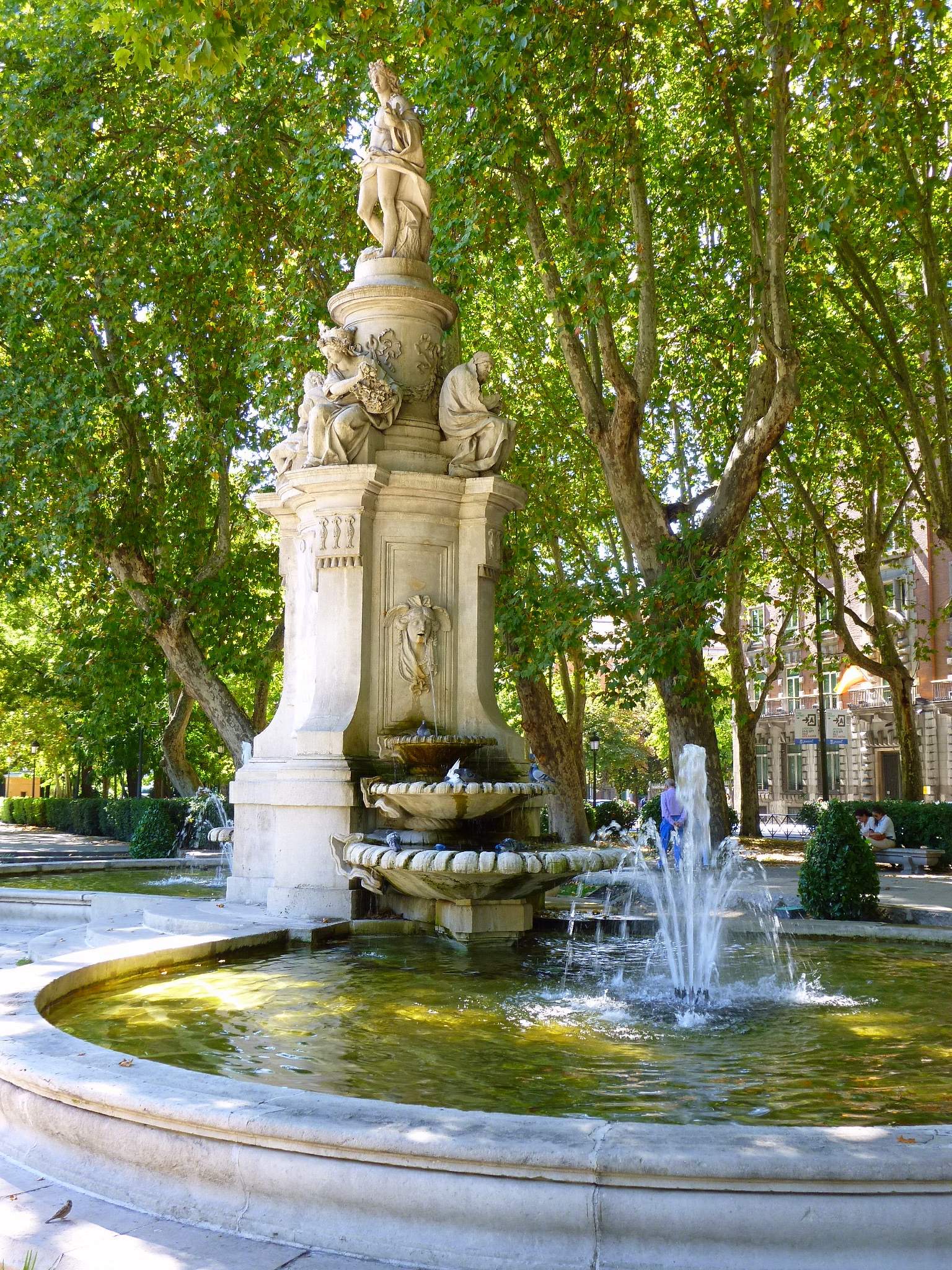
The Fountain of Apollo is one of three monumental fountains lining Paseo del Prado in Madrid, alongside the Fountain of Cibeles and the Fountain of Neptune. It stands at the heart of the boulevard, near the Prado Museum, and has marked this stretch of the city for more than two centuries.
Where exactly is the Fountain of Apollo?
The fountain occupies the middle of Paseo del Prado, on the section historically known as Salón del Prado — a grand promenade laid out in the 18th century under King Charles III. This entire area, together with the neighboring Retiro park, is recognized by UNESCO as part of Madrid's landscape and architectural heritage. The fountain sits only a few minutes' walk from the Prado Museum, Plaza de Cibeles, and the Neptune Fountain, so a visit here fits naturally into a walk along Madrid's main cultural axis.
What will you actually see?
The centerpiece is Apollo himself — the Greek god of light, reason, and the arts, presiding over harmony and knowledge. Four allegorical figures representing the seasons surround him, which is why the monument is also known as the Fountain of the Four Seasons. The architectural design dates to 1777 and was created by Ventura Rodríguez, one of the leading architects of the Spanish Enlightenment, while the sculptural work itself was carried out by Manuel Álvarez, a sculptor from Salamanca. The fountain took decades to complete: it was finally inaugurated in 1803 under King Charles IV, to mark the wedding of his son, the future King Ferdinand VII. Look closely at the stonework and the layout of the basin — the fountain isn't an isolated object but part of a wider urban composition that lines up all three Prado fountains along a single visual axis.
Why was it built exactly here?
Placing Apollo on Paseo del Prado was part of a much larger urban reform pushed by Charles III, who wanted to modernize Madrid and raise its standing among Europe's great capitals. The plan produced not just the three fountains but also the Alcalá Gate and the promenade layout itself. Apollo, as the god of reason and progress, fit perfectly into the Enlightenment-era symbolism of the project — a figure meant to represent the light of knowledge guiding the city toward modernity.
How do you get there?
The easiest way is by metro to Banco de España station (line 2) or Atocha (line 1 and Cercanías trains), both a short walk from the fountain along Paseo del Prado. Several bus lines also run along the boulevard. On foot, it's roughly a 15–20 minute walk from Puerta del Sol or Plaza Mayor, passing through some of the city center's most representative streets.
When is the best time to visit?
The fountain sits in open public space, so it can be seen at any time, day or night, all year round. Early morning or evening hours offer the calmest conditions for photos, with less traffic and fewer tourists crowding the boulevard. Spring and autumn bring the most comfortable temperatures, while midday sun in summer can be intense, so plan accordingly if visiting then.
Frequently asked questions
Is there an entrance fee? No, the fountain stands on a public street and can be viewed free of charge at any time.
Is the Fountain of Apollo the same as the Fountain of the Four Seasons? Yes, it's the same monument — the second name refers to the four allegorical figures surrounding Apollo.
How long does a visit take? Seeing the fountain itself takes only a few minutes, but combining it with a walk along the whole Paseo del Prado takes about 30 minutes to an hour.
Are there other attractions nearby? Yes, the Prado Museum, the Cibeles Fountain, and the Neptune Fountain are all within easy walking distance, making it simple to plan a single route covering all of them.
Nearby places

Earn badges for the places you visit
Download NextOnTrip, discover new places and check off your trails.