About this place
Parterre del Retiro is a formal French-style garden tucked into the western side of Madrid's Retiro Park, and one of the oldest and most photogenic corners of the entire grounds. While most visitors picture Retiro as sprawling tree-lined avenues and a large boating lake, the Parterre is something different: a compact, geometric composition designed according to the classical aesthetic of French palace gardens.
Where did this garden come from?
Retiro Park began taking shape in the first half of the 17th century as the grounds surrounding the Palacio del Buen Retiro, a palace built at the urging of Gaspar de Guzmán, Count-Duke of Olivares, for King Philip IV. The Parterre itself, however, is a later addition. It was King Philip V, the first Bourbon monarch of Spain, ruling in the 18th century, who commissioned it. Philip V reportedly disliked the surroundings of the old Retiro Palace where he lived, so he ordered a section of the grounds reshaped in the French style he had grown accustomed to before ascending the Spanish throne. The result was the only French garden within the whole Retiro complex.
How was the garden laid out?
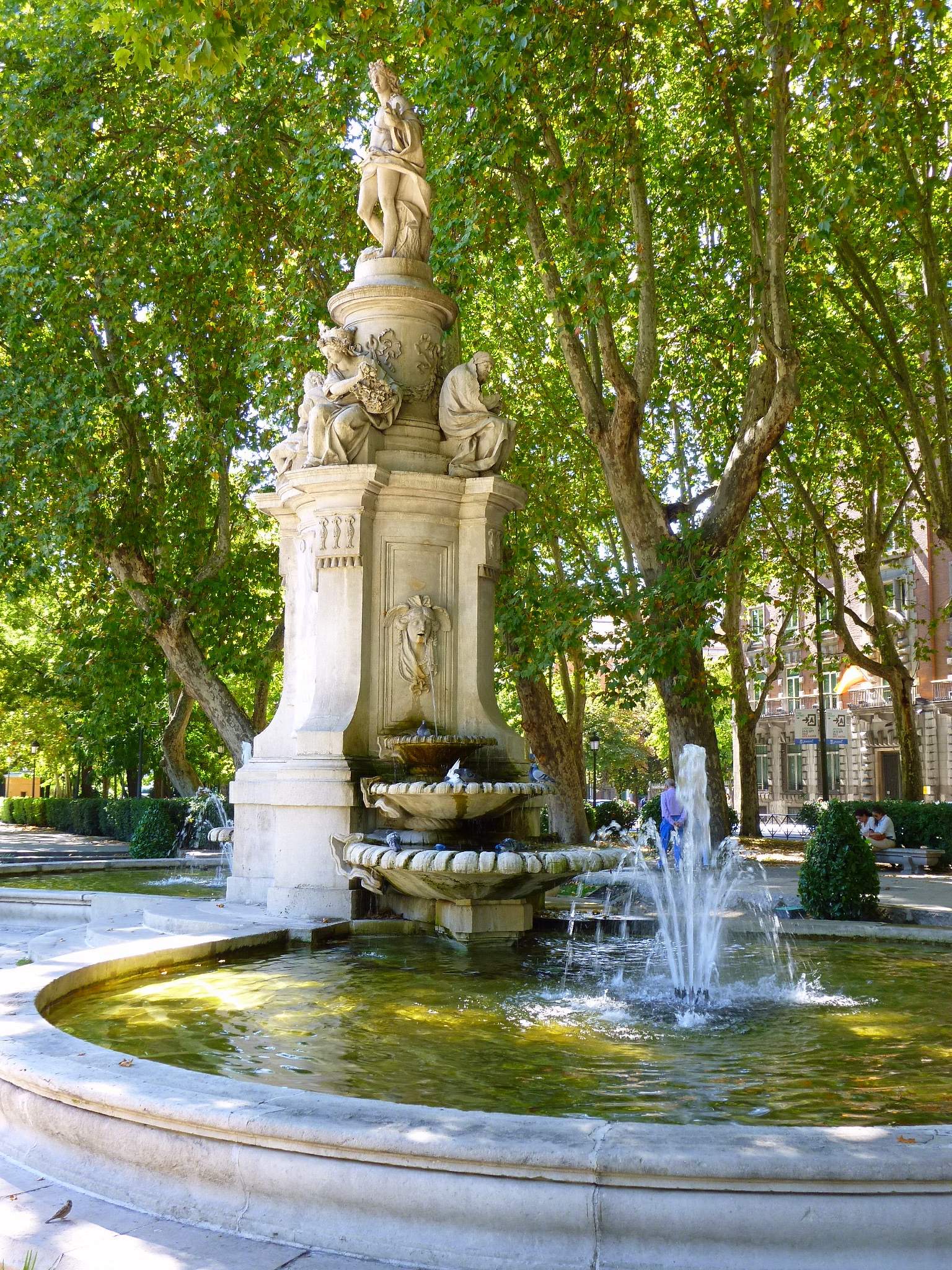
Visitors reach the Parterre through the Baroque Puerta de Felipe IV gate. Inside, eight paths — four running along the main axes and four diagonal — cross one another to form a regular, symmetrical grid. Two large fountains mark the central points of this layout. The arrangement of paths, fountains, sunken sections and ornamental details follows the classical principle of order and symmetry typical of French gardens, in clear contrast to the looser, more naturalistic design found in the rest of the park.
What is the garden's biggest attraction?
The Parterre's most valuable feature is a tree: a striking Montezuma cypress (Taxodium, a species native to Mexico), considered the oldest tree in Madrid. It was planted in 1633, almost at the same time the park itself came into being, and is now over 400 years old. Its massive trunk and wide canopy stand in deliberate contrast to the geometric regularity of the surrounding paths, making it one of the most photographed sights in all of Retiro.
How has the park's status changed over time?
Until 1868, the entire Retiro grounds, including the Parterre, belonged to the Spanish crown and were reserved for court use. Following the Glorious Revolution, a decree transferred management of the park to the City Council of Madrid, turning it into a public park. From that point on, the council carried out a series of reforms that shaped Retiro — the Parterre included — into the space that residents and tourists can freely enjoy today.
Why is it worth a visit?
In 2021, Buen Retiro Park, together with the nearby Paseo del Prado, was inscribed on the UNESCO World Heritage list as part of a larger combined site. The Parterre, though small compared to the park as a whole, condenses several centuries of history — from a Bourbon king's personal tastes to the everyday life of the city — into a single quiet corner where one of Madrid's oldest living witnesses to that history still grows.
Frequently asked questions
What makes the Parterre different from the rest of Retiro Park? The Parterre is a French-style garden with a symmetrical grid of paths and fountains, while the rest of the park has a looser, more naturalistic layout.
How old is the garden's oldest tree? The Montezuma cypress growing in the Parterre was planted in 1633 and is now more than 400 years old, making it the oldest tree in Madrid.
Who commissioned the Parterre? It was built at the request of King Philip V, who wanted a French-style garden around the old Retiro Palace.
Is there an entrance fee for the Parterre? No, Retiro Park, including the Parterre, is a public city park with free access.
Nearby places

Earn badges for the places you visit
Download NextOnTrip, discover new places and check off your trails.