About this place
Jardines del Arquitecto Ribera is a small, intimate garden in central Madrid, tucked between Calle Barceló and Calle Beneficencia, right on the border of the Tribunal and Malasaña neighborhoods. It's not a place most visitors plan a trip around, but it makes for a pleasant pause between exploring the surrounding streets.
Where does the name come from?
The garden takes its name from architect Pedro de Ribera, who designed the baroque building that now houses the Museo de Historia de Madrid (Madrid History Museum), originally built as the Royal Hospice of San Fernando. The building stands right next to the park, and its facade is one of the best views the garden offers.
What will you see there?
The park in its current form opened in 2017, after years of pressure from local residents. Before that, the site had been occupied since 2009 by a provisional pavilion for the Mercado de Barceló, put up while the market's permanent building underwent renovation; that building reopened in December 2014. Only then could the land be handed back to the neighborhood as public green space, and the redesign itself came about through a participatory process driven by residents who wanted a say in how the new garden would look.
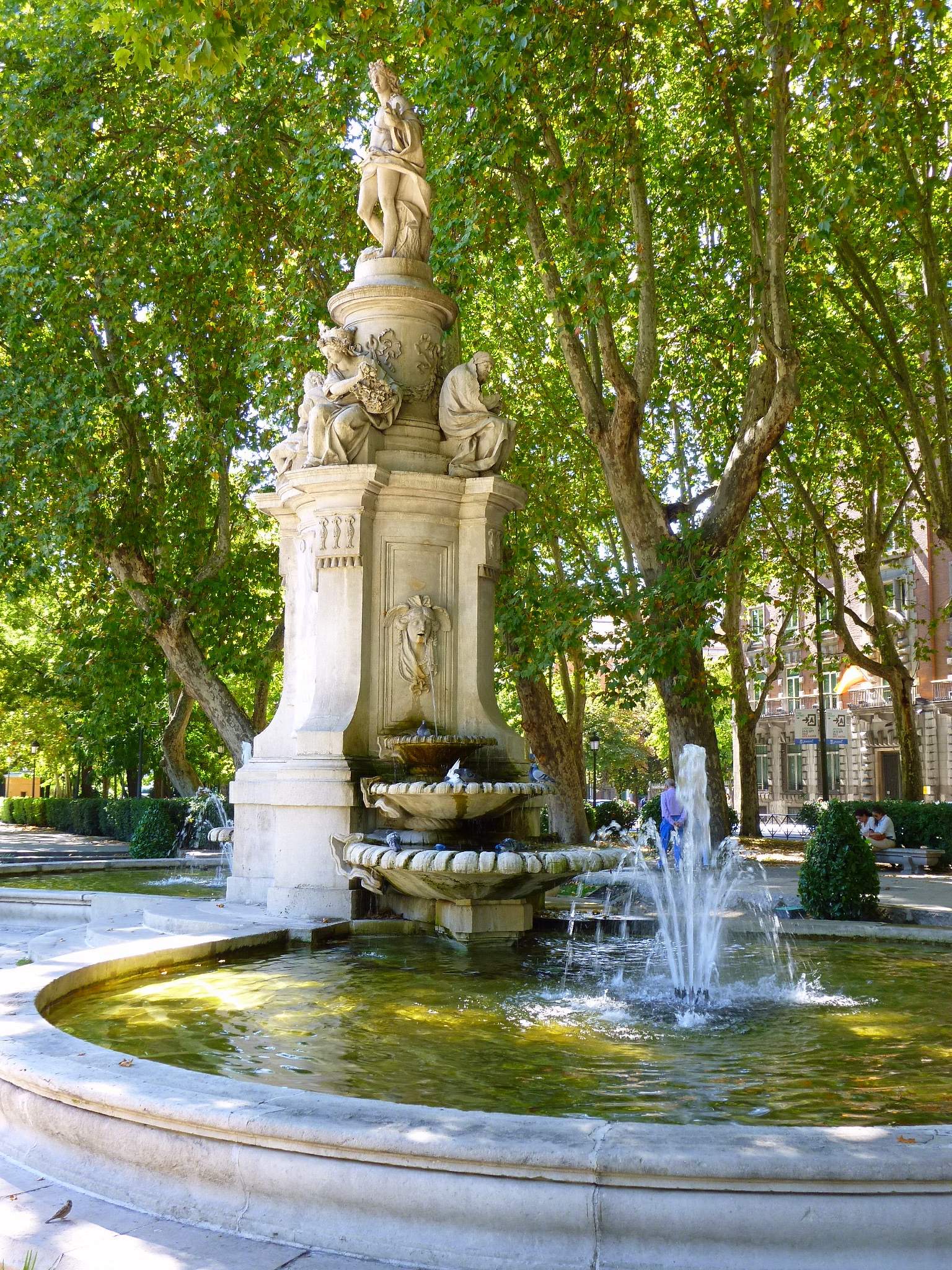
The current layout is split into a few distinct zones. One, facing the Isabel la Católica school, is planted with fruit trees and doubles as an educational garden used by the school's students. Another section, closer to the museum, features rarer and more ornamental tree specimens, functioning almost like a small arboretum. At the center of the garden stands a fountain-monument dedicated to Ramón Mesonero Romanos, the 19th-century chronicler and city librarian famous for his vivid accounts of everyday life in Madrid's streets.
How do you get there?
The garden sits right in the heart of Madrid, an easy walk from Plaza de Tribunal and from Malasaña, one of the city's most characterful neighborhoods, full of cafes, vintage shops, and street art. The nearest metro stations are Tribunal (lines 1 and 10) and Bilbao (lines 1 and 4), both just a few minutes on foot. It's also within easy walking distance from Gran Vía.
When should you visit?
The garden works year-round, but it's most enjoyable in spring and early summer, when the fruit trees blossom and temperatures are comfortable enough for a longer sit on a bench. In summer, during the middle of the day, look for shade near the museum side, where the older trees offer more cover from the sun.
Frequently asked questions
Is entry to the garden free? Yes, it's a public city park, open at no charge throughout the day.
How long does a visit take? It's a small space — walking through the whole garden takes 15–20 minutes, though it's worth staying longer if you're also planning to visit the adjacent Madrid History Museum.
Is there anything for children? The garden leans more contemplative than playful, but the fruit tree area and the school garden section can be interesting for younger visitors.
What else is worth seeing nearby? Besides the Madrid History Museum itself, a few minutes' walk brings you to the heart of Malasaña with its intimate squares, shops, and bars, as well as Plaza de Tribunal.
Nearby places

Earn badges for the places you visit
Download NextOnTrip, discover new places and check off your trails.