About this place
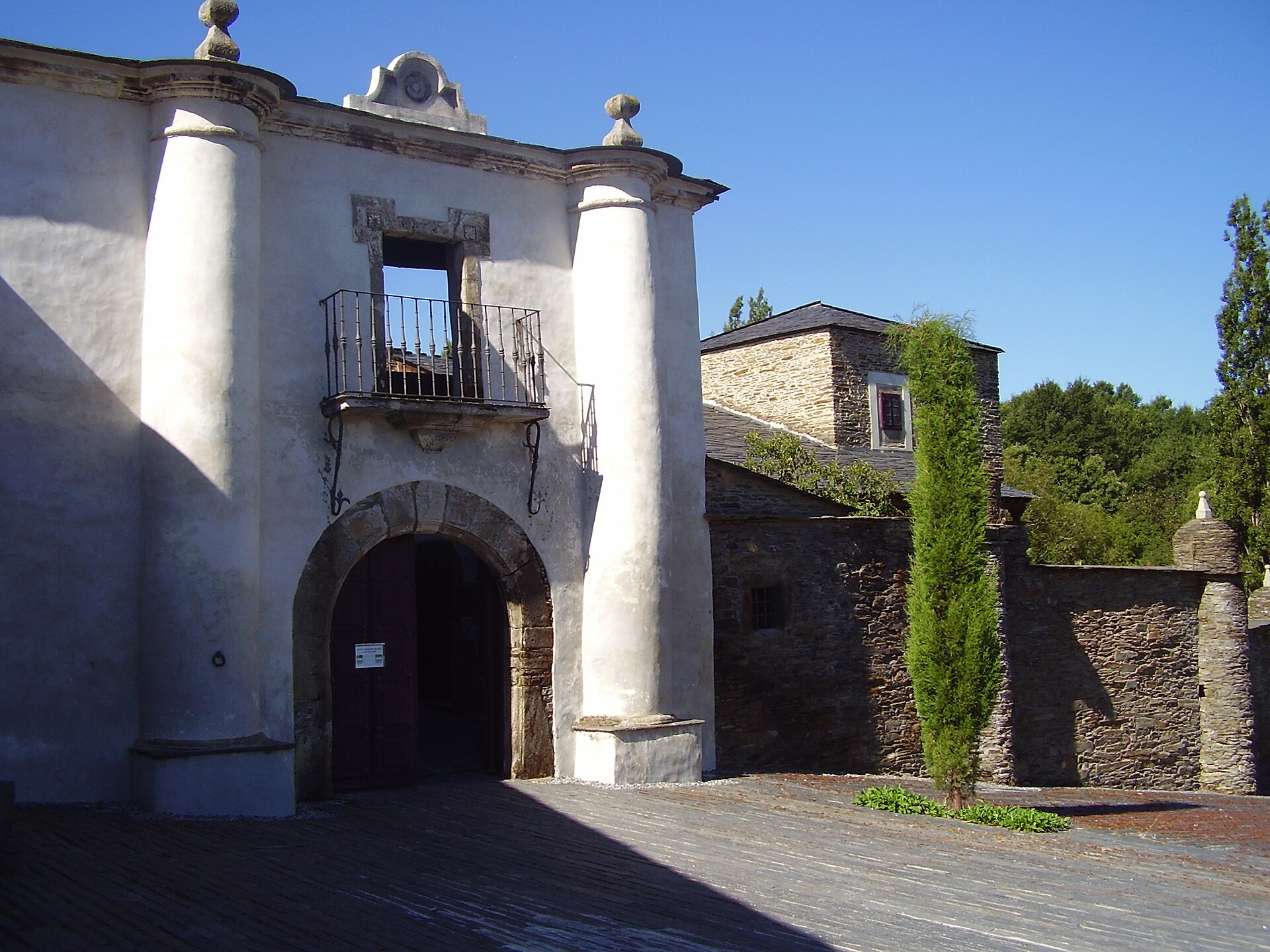
Casa Forte de Lusío (Fortified house in Lusio) is a fortified rural manor in the hamlet of Lusío, in the parish of San Cristovo do Real, municipality of Samos, province of Lugo, Galicia. The building sits just off the Camino Francés, one of the main pilgrim routes to Santiago de Compostela, and has served travelers on the Way of St. James as a resting point for years.
What kind of building is this?
Casa Forte de Lusío is a classic example of a Galician pazo — a fortified country residence combining domestic living quarters with defensive features typical of the region's minor nobility. The original structure dates back to 1551, and the house remained in the hands of local landed families for centuries. Among its notable residents was the mathematician Vicente Vázquez Queipo (1804–1893), a detail that hints at the intellectual standing of the family once connected to the estate. Today the property belongs to the Monastery of Samos, while day-to-day management falls to the regional government of Galicia, the Xunta.
How do you get there?
Lusío lies roughly 400 meters off the main Camino Francés route, on the stretch between Triacastela and Samos, near the villages of Renche and San Cristovo do Real. This section of the Way of St. James is one of the most walked in Galicia, crossing the green, hilly countryside of Lugo province. The easiest way to reach it is on foot or by bike, following the yellow arrows and scallop-shell markers of the Camino. Driving is possible via local roads connecting Samos with the surrounding villages, though the area itself remains distinctly rural and only loosely connected to larger towns.
What will you see on site?
The building retains the layout typical of a Galician pazo: solid stone walls, an austere, functional architectural form, and defensive elements that once protected residents from raids. The interior has been partially adapted to serve as a pilgrim hostel, but the exterior still reflects the house's historic, noble origins. The surrounding landscape is classic rural Galicia — stone houses, pastures, and small farms scattered along the Camino.
Where can you stay?
The building operates as an albergue de peregrinos — a pilgrim hostel run by the Xunta de Galicia. It offers four dormitories: two smaller rooms with eight beds each and two larger ones with twenty-two beds each, for sixty beds in total. Check-in starts at 13:00, and the hostel closes for the night at 22:00. It's a popular stopping point for pilgrims walking from Triacastela to Samos, where the next major landmark on the route is the imposing Monastery of Samos.
When is the best time to visit?
Spring and autumn are the best seasons to visit, when foot traffic on the Camino Francés is moderate and Galicia's weather is comfortable for walking. Summer brings the heaviest crowds on the route, meaning more company on the trail but also fuller hostels. Winter on this stretch tends to be cold and damp, in line with the region's typical Atlantic climate.
Frequently Asked Questions
Can you stay overnight at Casa Forte de Lusío? Yes, the building functions as an albergue de peregrinos with four dormitories and sixty beds in total. Check-in begins at 13:00 and the hostel closes at 22:00.
How do you reach Lusío without a car? The simplest way is on foot or by bicycle along the Camino Francés, on the stretch between Triacastela and Samos — the site lies about 400 meters off the main route.
Who manages the building? The property belongs to the Monastery of Samos, while its day-to-day operation as a pilgrim hostel is handled by the Xunta de Galicia.
Is it worth combining a visit with the Monastery of Samos? Yes, the Monastery of Samos is a short distance further along the same Camino route and is a natural, important stop for pilgrims staying overnight in Lusío.
Nearby places

Earn badges for the places you visit
Download NextOnTrip, discover new places and check off your trails.