About this place
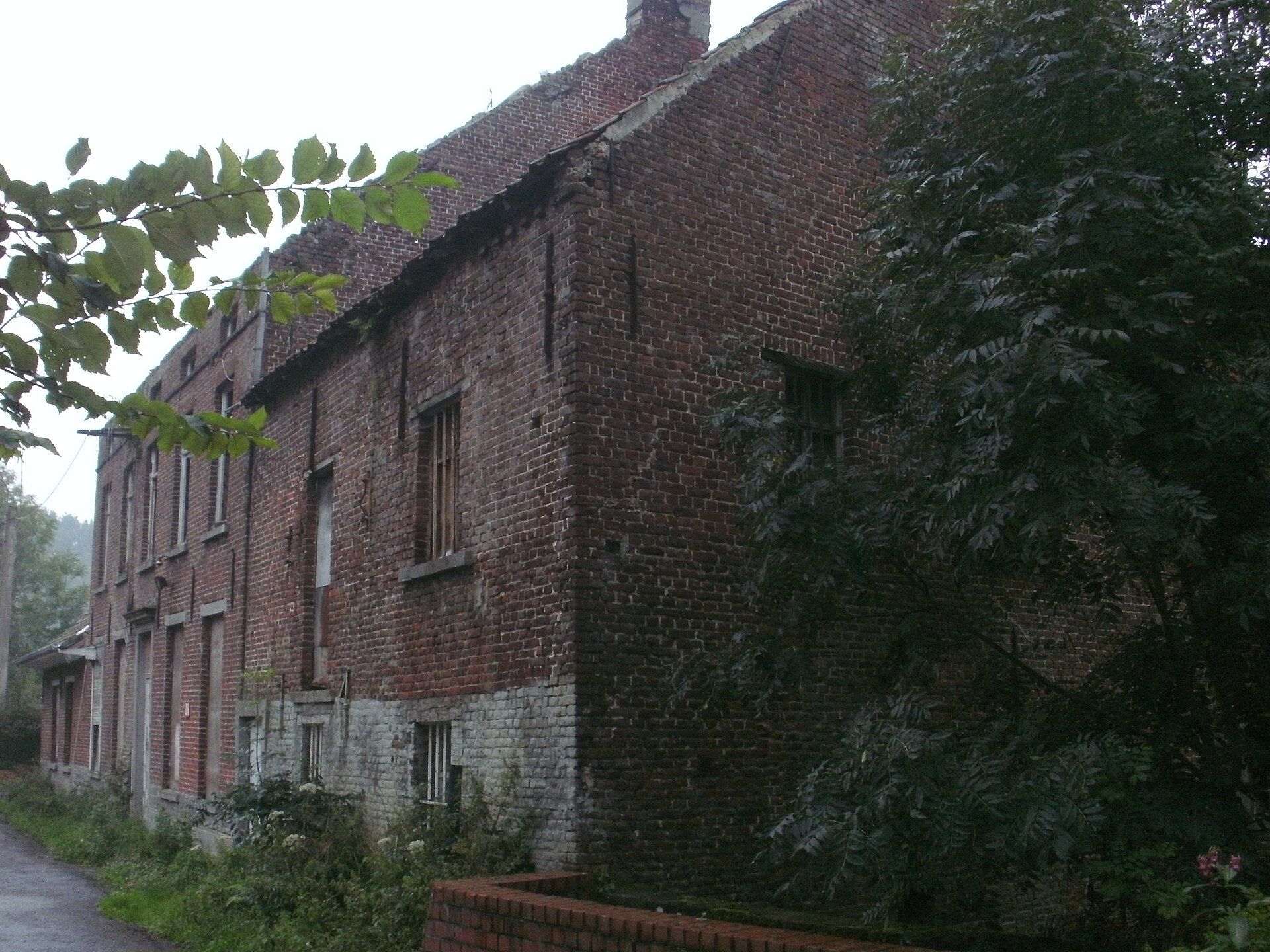
Fonteintjesmolen is a historic watermill in Meerbeke, a district of the Belgian town of Ninove in East Flanders. The building stands at Stenebrug 71, on the small Wolfputbeek stream, also known as the Elsbeek. It is an overshot watermill, meaning its wheel was driven by water falling from above — a design distinct from the undershot mills more commonly found along flatter river stretches.
Why was the mill built, and what was it originally used for?
The site's history dates back to the mid-16th century. On 28 October 1550, Guillaume II de Goux (Vanderghoest)-De Mol, lord of Meerbeke and Wedergraat, received a charter from Emperor Charles V to build a fulling mill. The decision was driven by economics: a substantial wool industry had grown up around Ninove, and sending woven cloth to be fulled in Ninove, Geraardsbergen, or Ath was expensive and slow. A local fulling mill solved that problem directly.
How did the mill's purpose change over time?
Over the following centuries, the building's function shifted repeatedly. The original fulling mill was eventually converted into a paper mill, and later into a grain mill. During the industrial revolution a steam engine was added to supplement water power, and in the 20th century a diesel engine took its place. This layered technical history — from waterwheel to steam to diesel — makes Fonteintjesmolen a compact record of milling technology across nearly five centuries.
What can visitors see at the site today?
The current structure, built of brick in the 19th century, incorporates an older sandstone wall section from earlier construction phases. Inside, much of the technical equipment has survived, including three pairs of millstones, offering a tangible sense of how grain was once processed here. The mill remained operational right up until 1986, when milling activity finally ceased.
Is the mill protected, and what has happened to it since?
In that same year, 1986, Fonteintjesmolen was listed as a protected monument, with its surroundings also designated a protected rural landscape. A decade later, in 1996, the building was purchased by Johan Bracke, who launched the first restoration project aimed at preserving and reviving the site.
Frequently asked questions
Where exactly is Fonteintjesmolen located? The mill is in Meerbeke, part of the town of Ninove in East Flanders, at Stenebrug 71, on the Wolfputbeek stream (also called the Elsbeek).
What was the mill used for over the centuries? It began in 1550 as a fulling mill for processing woolen cloth, later operated as a paper mill, and finally as a grain mill until production stopped in 1986.
Can the mill be visited? Fonteintjesmolen has been a protected heritage monument since 1986 and underwent restoration work started by a private owner in 1996; it's worth checking locally for current visiting access.
What original equipment has survived? Three pairs of millstones remain inside, along with an older sandstone wall section preserved within the 19th-century brick structure.
Nearby places

Earn badges for the places you visit
Download NextOnTrip, discover new places and check off your trails.