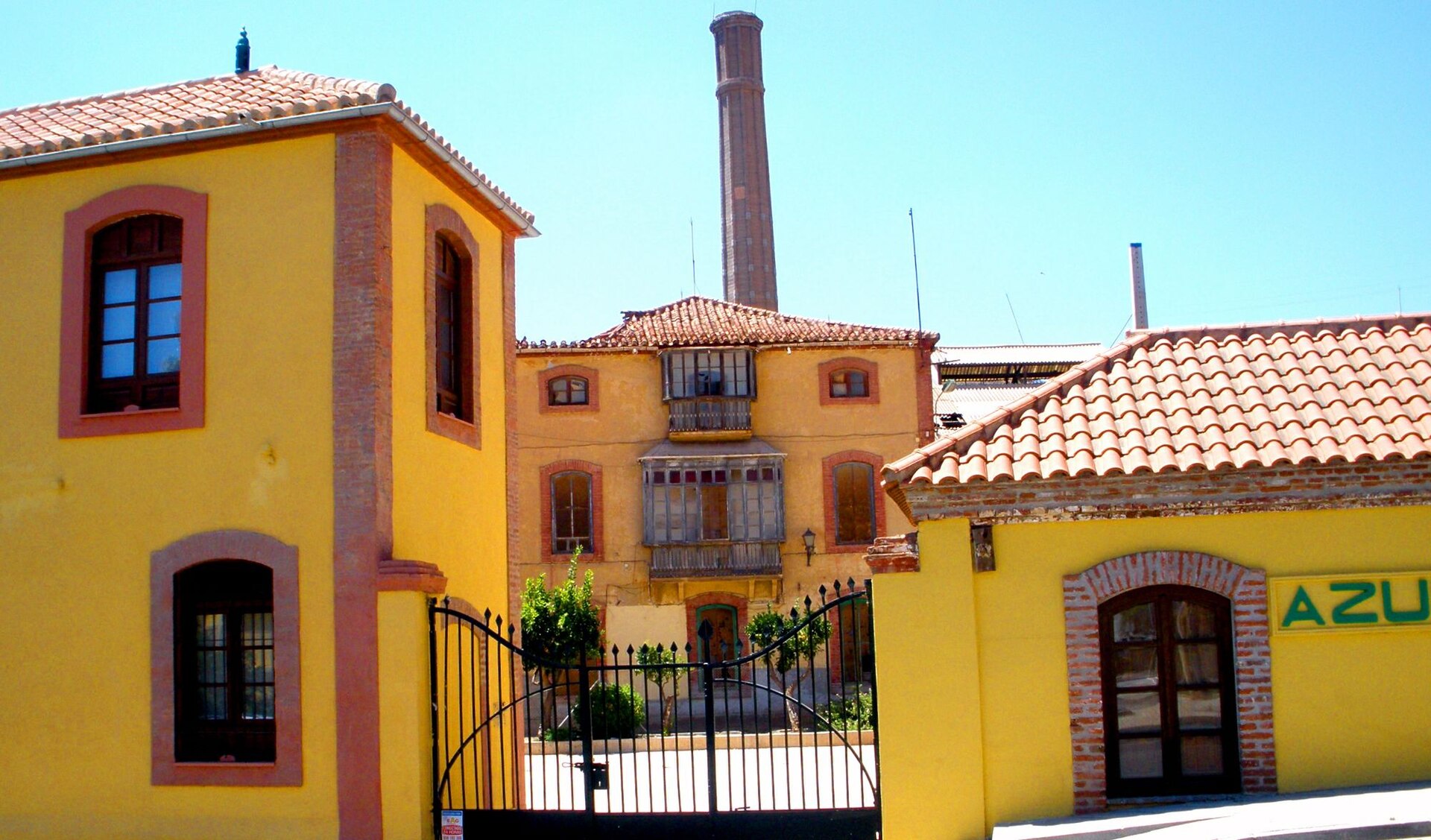
About this place
Fábrica Azucarera Nuestra Señora del Pilar is a former sugar factory in Motril, on the Granada coast, and one of the best-preserved 19th-century industrial complexes in Andalusia. It stands on a hill known as Rambla de las Brujas, on the eastern edge of the city, right at the edge of the fertile Vega of Motril-Salobreña, an area that supplied sugar cane to this stretch of coast for generations.
How did a sugar factory end up here?
Construction ran from 1881 to 1883 under the design of Granada-born architect Francisco Jiménez Arévalo. The manager's house and storage buildings went up first, followed a year later by four industrial halls housing steam-driven machinery. The factory operated continuously from 1883 to 1984 — more than a century — making it one of the longest-running plants of its kind in the region. Its construction coincided with the wave of mechanization that transformed sugar cane processing across the Guadalfeo valley, an area now recognized as home to the greatest concentration of preserved steam engines and industrial heritage in Europe.
What is there to see?
The centerpiece is the old machine hall, referred to locally as the "tren de molienda" (milling train) — a set of 19th-century steam machines considered technically unique on a European scale. This machinery was the main reason the site was declared a Bien de Interés Cultural (Cultural Heritage Asset) in 1991, Spain's highest level of heritage protection. Beyond the machine hall, the complex includes several separate buildings, each repurposed for a different use today. The former sugar warehouse now houses an exhibition space covering the history of Motril's sugar industry and its production technology. The old stables have become a restaurant, the manager's house now holds the city's heritage department, and another warehouse serves as the visitor reception point. The site is often referred to informally as the Museo del Azúcar (Sugar Museum), a name that captures its character even though it is technically a heritage complex rather than a single-building museum.
How do you get there?
The factory sits on the eastern side of Motril, a port town on the Costa Tropical, roughly an hour's drive from Granada city and under thirty minutes from Salobreña. Arriving by car is the most practical option — parking is available nearby, and the hilltop location on Rambla de las Brujas is visible from the main roads leading into town. Travelers relying on public transport can take a bus to central Motril and continue on foot or by taxi to the site.
When is the best time to visit?
Given its indoor, machinery-focused exhibits, the site works well year-round and offers welcome shelter from the summer heat typical of this coastline. It is still worth checking local opening hours before visiting, since the site is municipally managed and may run a reduced schedule outside peak season. Pairing a visit here with time in nearby Salobreña or on Motril's beaches makes for a natural full day on the Costa Tropical.
Frequently Asked Questions
Is the factory still producing sugar? No. Production ended in 1984 after more than a century of continuous operation. The site now serves a cultural and museum function.
What does the Bien de Interés Cultural status mean? It is Spain's highest heritage protection category, granted to this factory in 1991 because of its 19th-century steam machinery, considered unique in Europe.
Can you walk through the buildings on your own? The complex includes several buildings with different roles — some, like the old warehouse exhibition space and the machine hall, are open to visitors, while others, such as the heritage department offices, serve administrative purposes.
Is there anywhere to eat nearby? Yes, the former factory stables have been converted into a restaurant operating within the complex grounds.
Nearby places

Earn badges for the places you visit
Download NextOnTrip, discover new places and check off your trails.