About this place
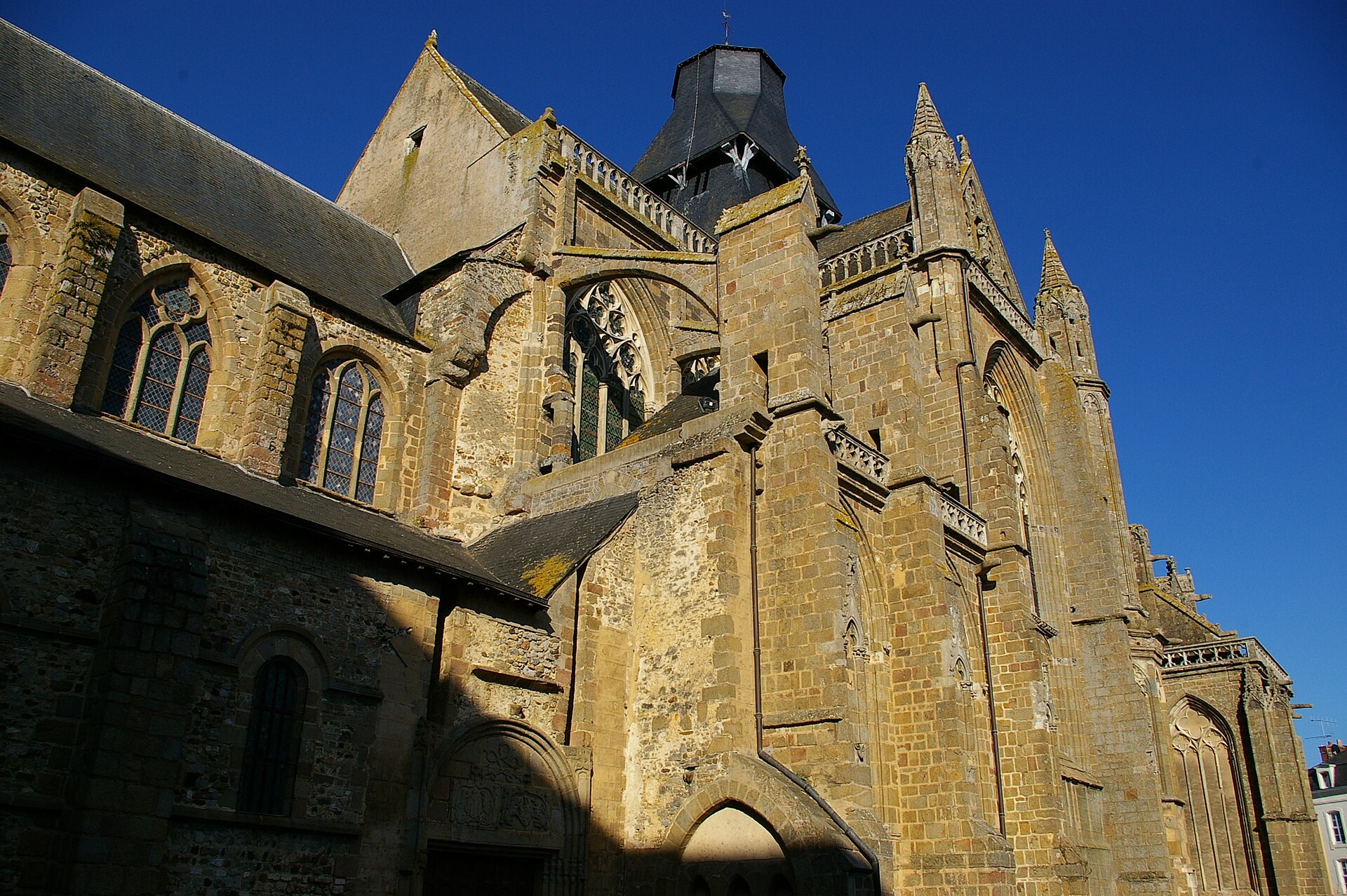
Évron Abbey, today known as the Basilica of Notre-Dame de l'Épine, ranks among the most significant medieval religious complexes in the Mayenne department of France. Tradition traces the founding of this Benedictine monastery to the 7th century, and over the following centuries the building was reshaped again and again — moving from austere Romanesque beginnings through an ambitious Gothic rebuilding to the classical monastic wings added in the 18th century.
Why is the church called "Notre-Dame de l'Épine"?
The name commemorates the abbey's founding legend. A pilgrim returning from the Holy Land is said to have carried home a rare relic — a few drops of the Virgin's milk. Worn out from his journey, he hung his bag on a hawthorn bush and fell asleep. While he slept, the bush grew so tall that he could no longer reach his belongings. Only after Saint Hadouin prayed did the branches bend down on their own, placing the relic into the bishop's hands. The grateful pilgrim then vowed to found a monastery on the spot, and the French word for the thorny hawthorn, "épine," has stayed attached to the church's name ever since.
How did the abbey church's architecture evolve?
Nothing remains of the earliest building; it was destroyed toward the end of the 9th century, likely during raids on the region. The monks rebuilt in the 10th century in Romanesque style, raising a wide nave and a crypt that still survive largely intact. New additions followed over the centuries: in the 12th century, a nobleman returning from a pilgrimage to Santiago de Compostela funded a small chapel beside the abbey church, built with Arab-Byzantine influences. In the 13th century the monks set out to replace their Romanesque church with a Gothic one, adding a new choir and transepts — but the outbreak of the Hundred Years' War cut off the funds and stability needed to finish the project. As a result, the basilica standing today combines three architectural layers: Romanesque (nave, crypt), Gothic (choir, transepts), and classical, the last visible in the 18th-century monastic buildings.
What is worth seeing inside?
The interior holds stained-glass windows from the 14th and 15th centuries, among the finest surviving examples in the region. The treasury houses a wooden statue of the Virgin dating from the 13th century, sheathed in silver. A separate highlight is the 12th-century chapel of Saint-Crépin, decorated with 13th-century murals; it once held the reliquary containing drops of the Virgin's milk, cast in silver-gilt in 1516 at the expense of François de Châteaubriant.
What happened to the abbey after the French Revolution?
Monastic life at Évron came to an end during the French Revolution, when the abbey was suppressed in 1791 and its property scattered or sold off. The abbey church itself survived largely untouched and, after the suppression, took on the role of parish church before later being elevated to the rank of basilica — the title it still carries as the Basilica of Notre-Dame de l'Épine.
Frequently asked questions
Is Évron Abbey still an active monastery? No. Monastic life ended with the suppression of 1791, and the former abbey church now functions as a parish basilica.
What relic was the abbey built around? Tradition holds that the monastery grew up around a relic of the Virgin's milk, brought back by a pilgrim from the Holy Land and later kept in an elaborate reliquary.
What architectural styles can visitors see in the basilica? The building blends three periods: a Romanesque nave and crypt from the 10th century, a Gothic choir and transepts begun in the 13th century, and classical monastic wings from the 18th century.
Where exactly is Évron located? The town lies in the Mayenne department, in the Pays de la Loire region of France.
Nearby places

Earn badges for the places you visit
Download NextOnTrip, discover new places and check off your trails.